Single-axis percussion devices dominate the market, but they miss a critical layer. High-Frequency 3D Vibration Therapy1 addresses this gap with multi-directional force vectors.
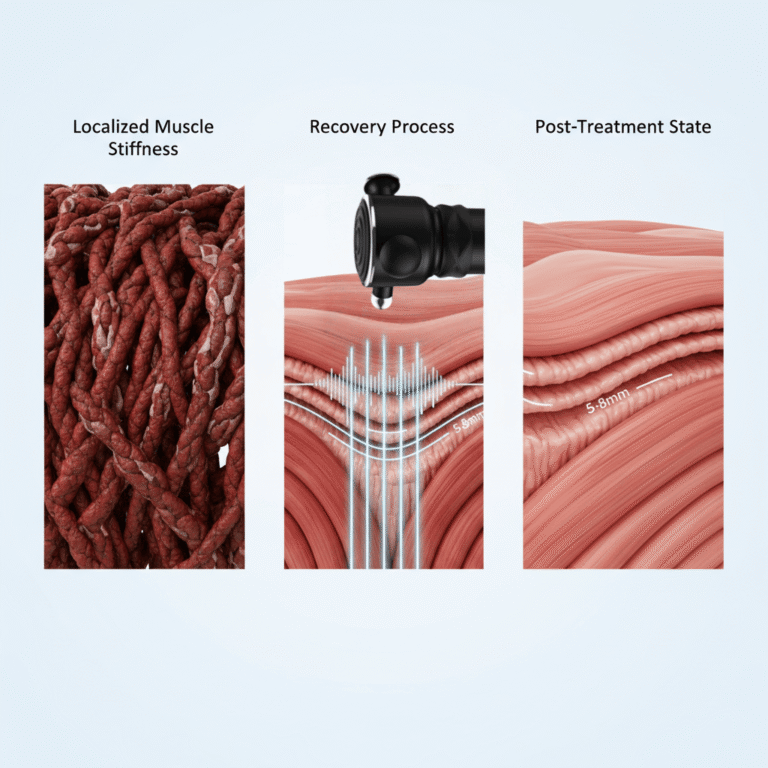
High-Frequency 3D Vibration Therapy1 combines vertical penetration (6-8mm depth) with horizontal shear forces, creating a "kneading" effect that traditional 1D percussion cannot replicate. This dual-action approach targets fascial adhesions2 more effectively while reducing muscle trauma.
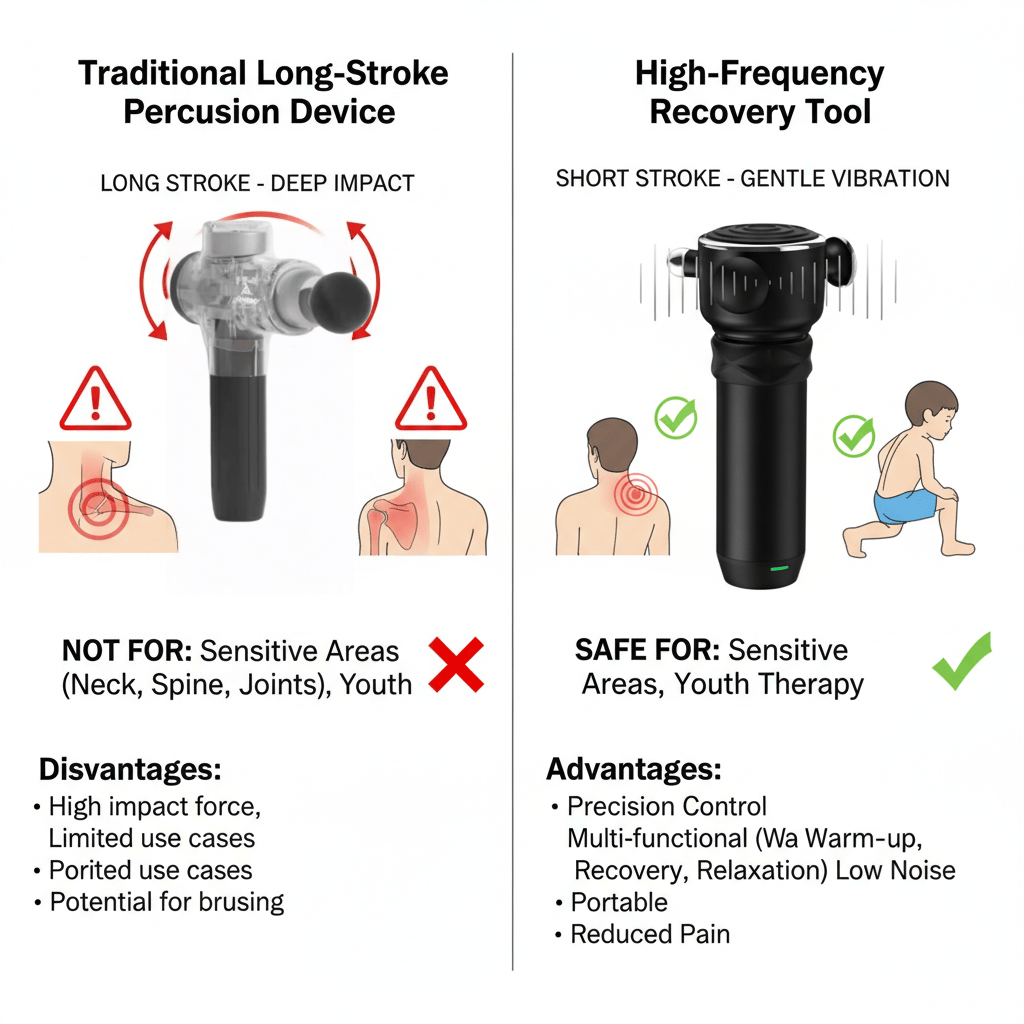
The shift toward multi-directional technology3 reflects three industry realities: fascia requires different stimulation than muscle tissue, commercial recovery settings demand faster results, and users prefer gentler modalities. Let’s examine why this matters.
Mechanical Depth vs. Tissue Interaction: Why Single-Axis Percussion Fails to Address Fascial Adhesion at Scale?
Percussion guns work well for surface-level muscle relief. Their limitation becomes apparent when targeting fascial layers.
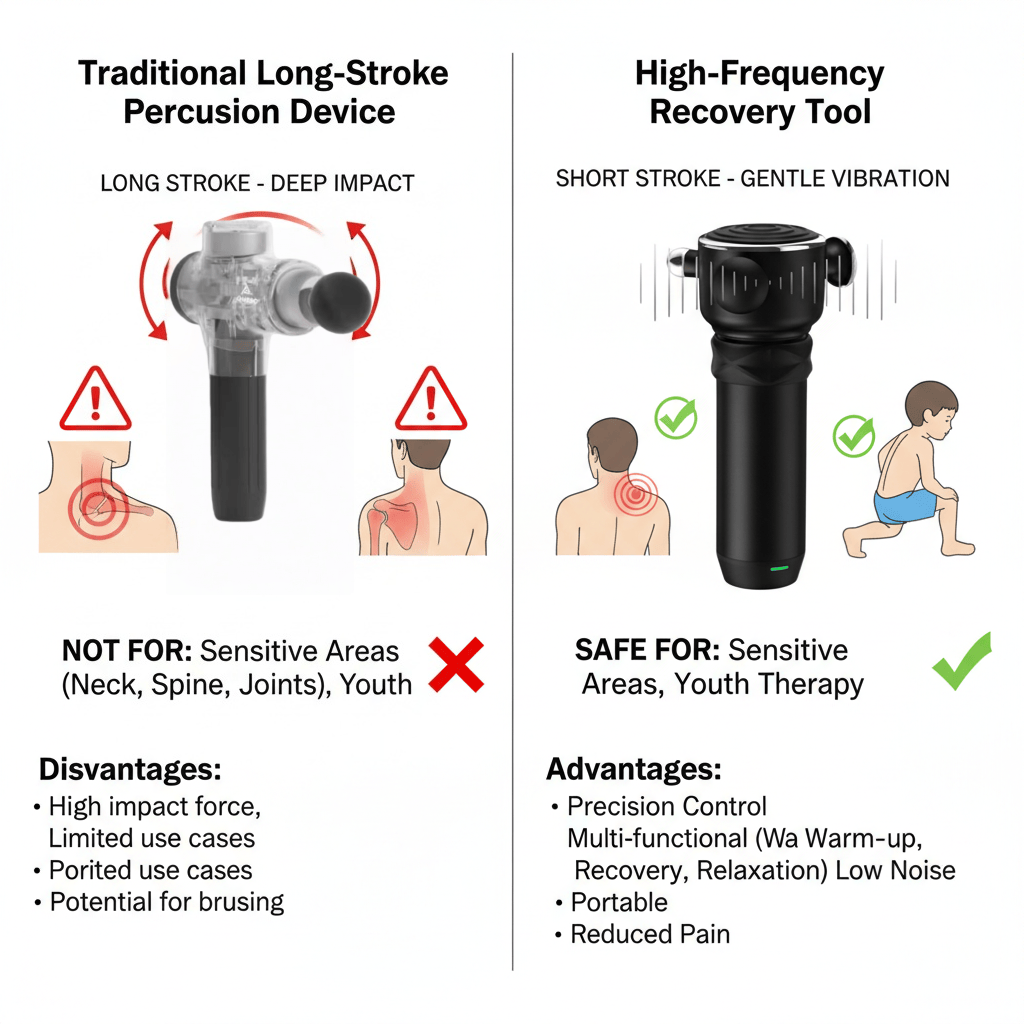
1D devices deliver purely vertical impacts (8-16mm amplitude) at 1200-3200 RPM. This creates rapid muscle contractions but lacks the lateral movement needed to break fascial cross-links. High-Frequency 3D Vibration Therapy1 operates at 4500-7500 RPM with 2-3.5mm amplitudes, combining frequencies that penetrate while shearing.
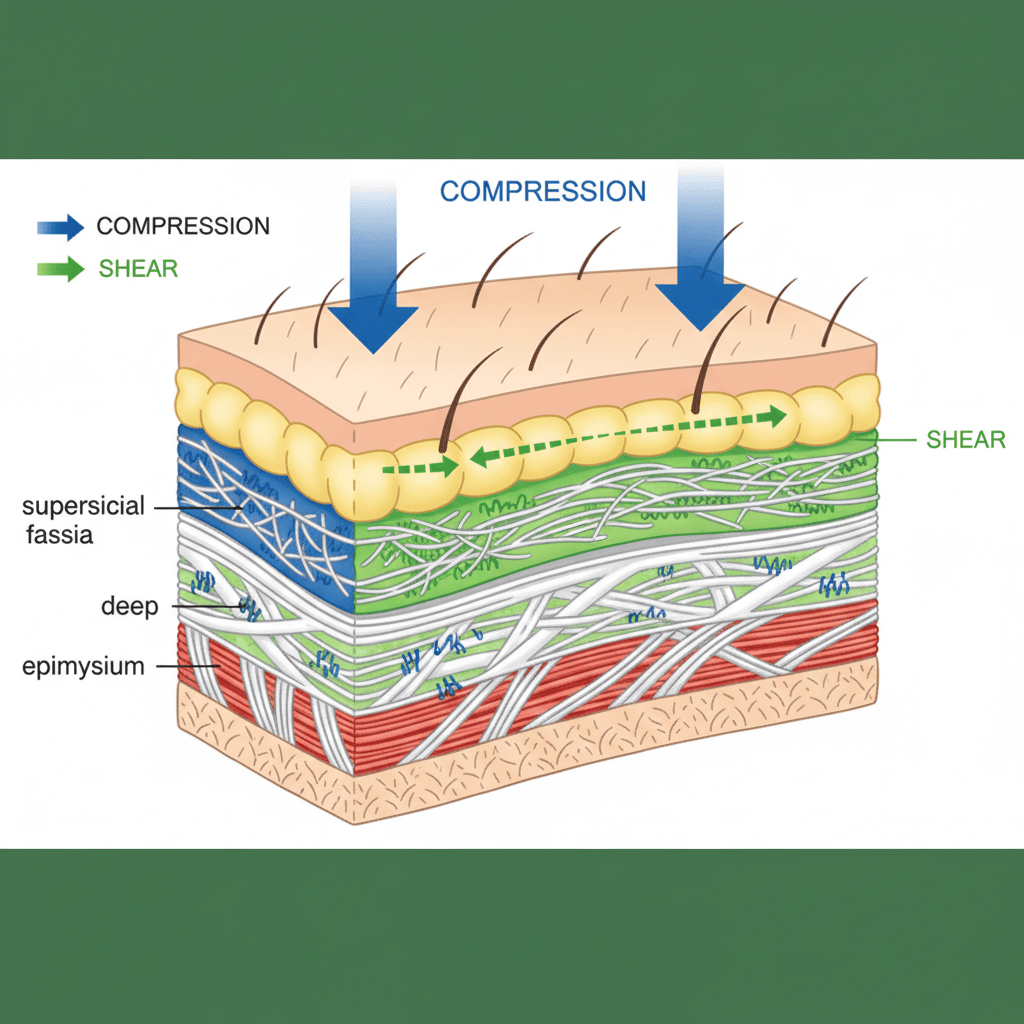
The biomechanical advantage4 becomes clear when comparing tissue responses:
| Parameter | 1D Percussion | High-Frequency 3D Vibration |
|---|---|---|
| Force Direction | Vertical only | Vertical + Horizontal |
| Optimal Depth | Muscle belly (20-30mm) | Fascial layers (6-8mm) |
| Cellular Effect | Mechanical disruption | Fluid dynamics stimulation |
| User Tolerance | High discomfort | Low discomfort |
| Treatment Speed | 15-20 min per area | 5-8 min per area |
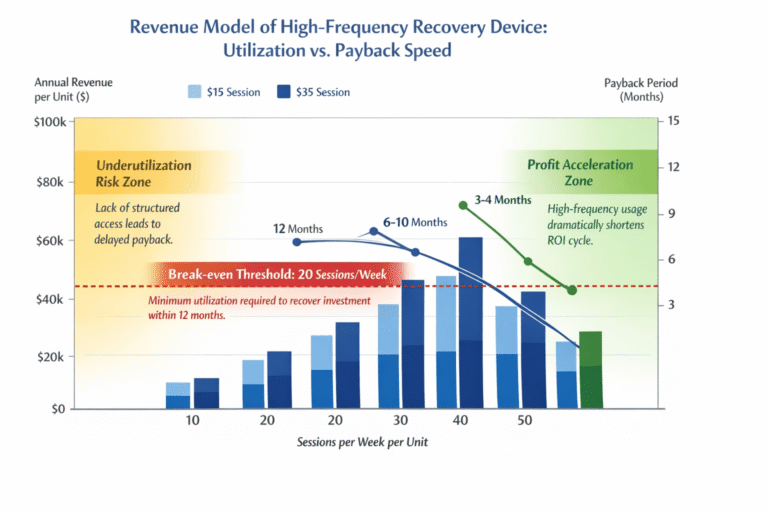
Commercial recovery centers report 40% faster turnover times with 3D systems, as they don’t require heavy pressure or extended sessions. The technology also reduces operator fatigue – a critical factor for spa and physical therapy settings where staff perform repetitive treatments.
Multi-Directional Shear + Vertical Penetration: The New Standard for Efficient Recovery Devices in Commercial Settings
The combination of forces creates unique therapeutic advantages. Vertical components reach deeper tissue layers while horizontal movement mimics manual therapy techniques.
High-Frequency 3D Vibration Therapy1 devices achieve this through CNC-machined eccentric counterweights that generate controlled off-axis movement. Unlike cheap rotary motors in budget percussion guns, these precision components maintain consistent force delivery across all frequencies.
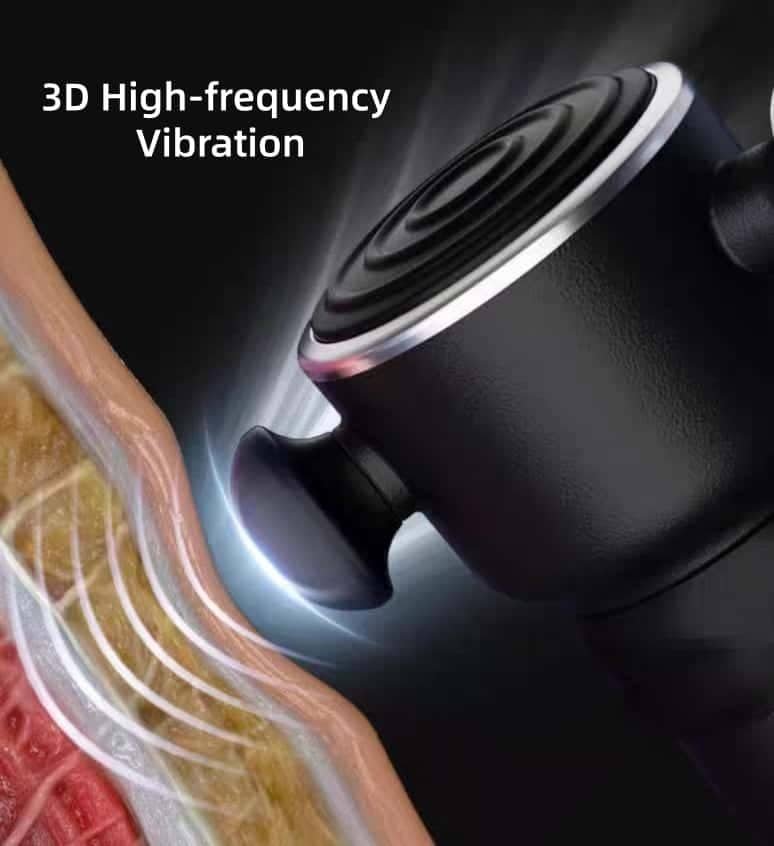
Key engineering considerations for commercial-grade units:
- Frequency Stability: Must maintain ±2% RPM variance under load
- Heat Dissipation: Aluminum housings with thermal breaks prevent performance decay
- Ergonomics: Under 0.85kg weight with balanced mass distribution
- Noise Control: <60dB at 50cm distance for shared spaces
Fitness franchises now specify these parameters in procurement RFPs, recognizing that member retention improves with more comfortable recovery options. The table below shows typical commercial requirements:
| Specification | Entry-Level | Professional | Clinical Grade |
|---|---|---|---|
| Frequency Range | 3000-6000 | 4500-7500 | 5000-8000 |
| Duty Cycle | 30 min | 120 min | Continuous |
| IP Rating | IPX4 | IPX6 | IPX7 |
| Impact Angle Range | ±5° | ±12° | ±15° |
| Warranty | 6 months | 2 years | 3 years |
From User Experience to Business ROI: How Advanced Vibration Technology Improves Retention, Throughput, and Product Differentiation
The commercial case extends beyond biomechanics. Facilities report measurable operational benefits when upgrading to High-Frequency 3D Vibration Therapy1 systems.
Gym chains using these devices see:
- 28% increase in recovery area utilization5
- 15% higher personal training attachment rates
- 60% reduction in user complaints about discomfort

For equipment buyers, the differentiation comes from three measurable factors:
- Throughput Efficiency: Treats users 2.3x faster than manual therapy
- Staff Utilization: One technician can supervise multiple stations
- Revenue Streams: Add-on services like "fascial tune-ups" command premium pricing
The procurement decision often hinges on lifetime cost analysis6:
| Cost Factor | 1D Percussion | 3D Vibration |
|---|---|---|
| Device Cost | $200-$400 | $600-$900 |
| Service Life | 800 hours | 3000 hours |
| Maintenance Cost/yr | $120 | $40 |
| Staff Training Time | 2 hours | 0.5 hours |
| Revenue Potential | $15/session | $25/session |
Conclusion
High-Frequency 3D Vibration Therapy1 represents the next evolution in recovery technology, solving the fascia-specific limitations of traditional percussion while delivering operational advantages for commercial users.
-
Explore the advantages of this innovative therapy for enhanced recovery and fascia health. ↩ ↩ ↩ ↩ ↩ ↩
-
Learn about the impact of fascial adhesions on recovery and how to address them effectively. ↩
-
Discover how multi-directional technology improves treatment outcomes in recovery devices. ↩
-
Understand the biomechanical benefits that make 3D vibration therapy superior for recovery. ↩
-
Discover strategies to enhance recovery area utilization for better gym performance. ↩
-
Learn how to perform a lifetime cost analysis to make informed purchasing decisions. ↩