Physical therapy clinics need professional-grade massage guns that deliver precise, efficient treatments. But with so many options, how do you choose the right one?
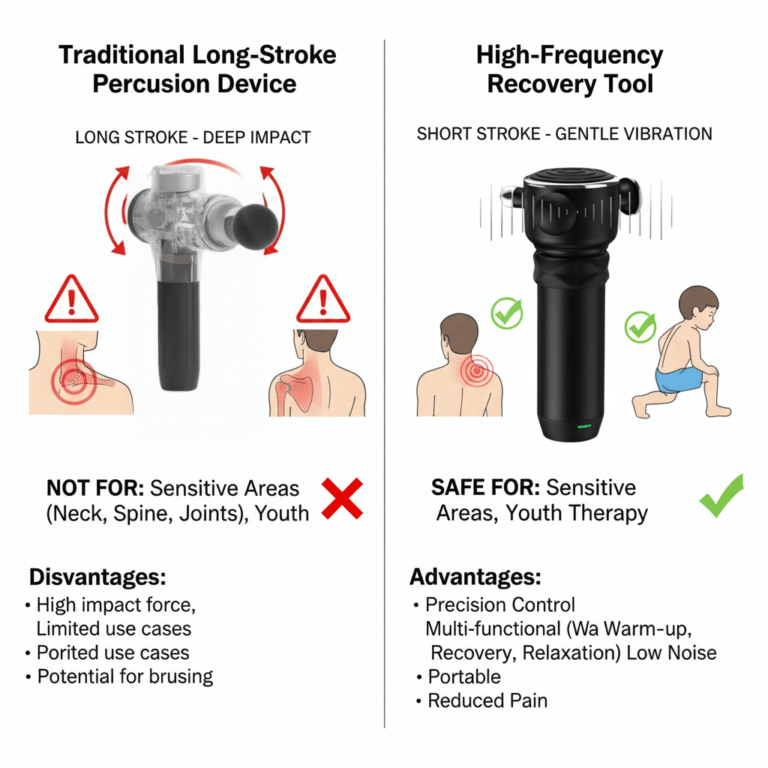
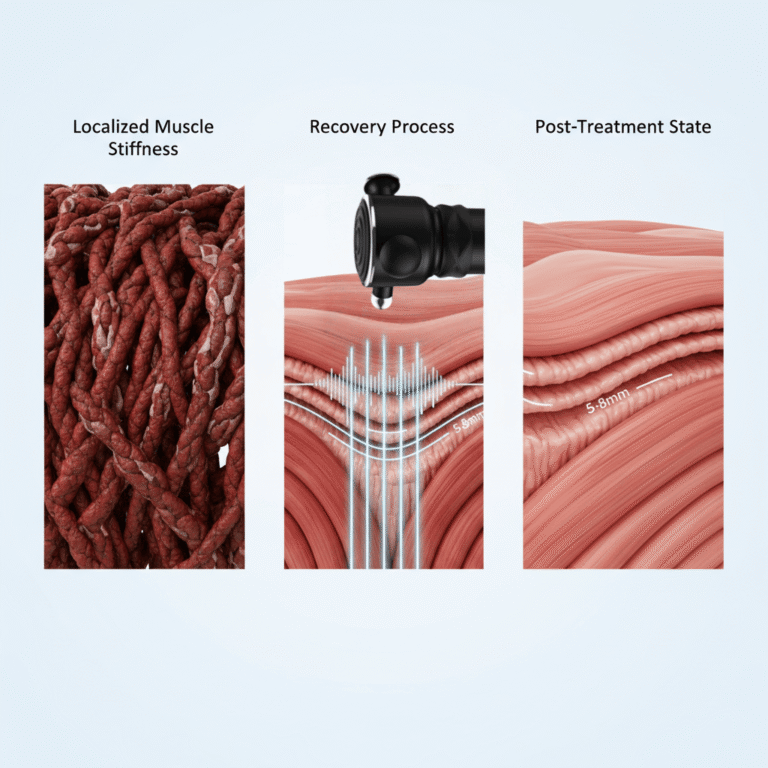
The best massage gun for physiotherapy clinics combines high-frequency vibrations1 (5000-7000 rpm) with 2mm micro-amplitude2 and stable core structure – enabling precise, controlled treatments that match modern clinic workflows.
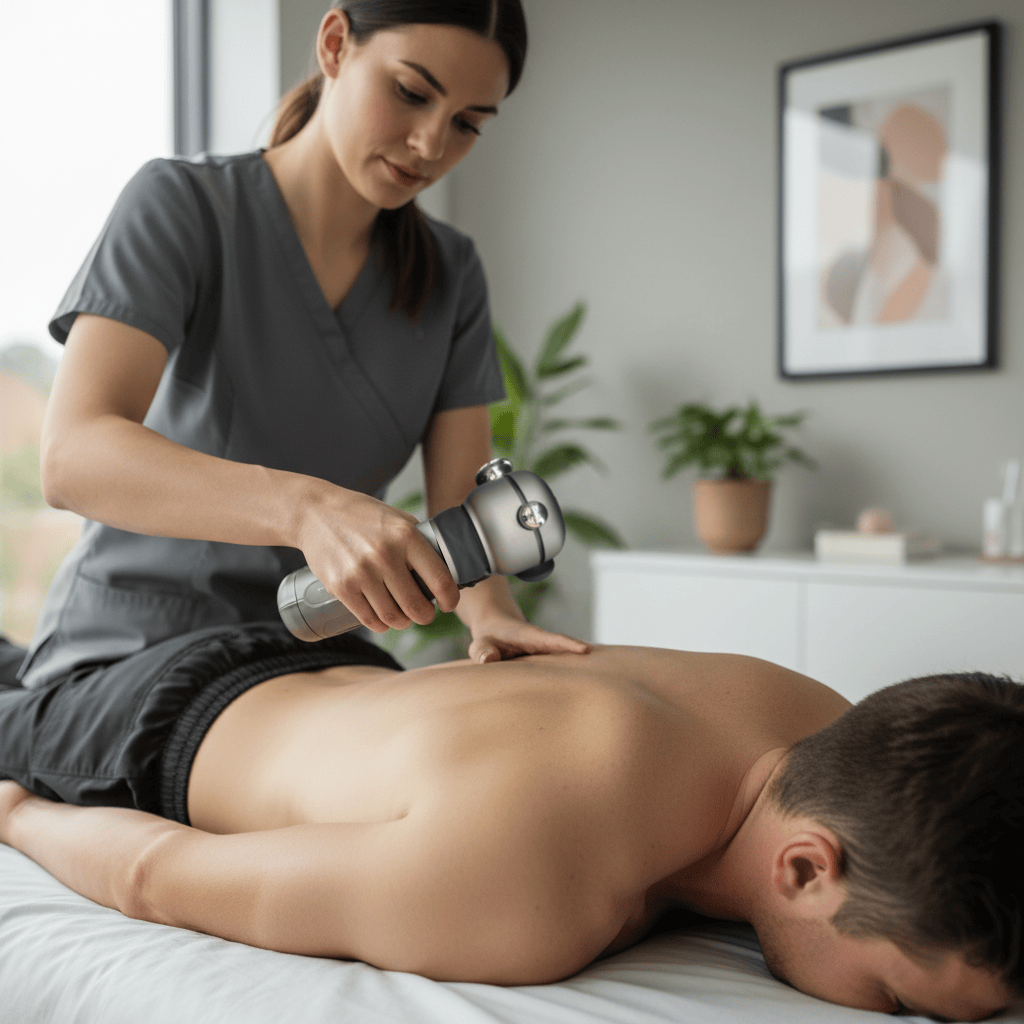
Modern physiotherapy has shifted toward shorter, more efficient treatment sessions. Let’s examine what really matters when selecting equipment for professional use.
What Makes a Massage Gun Truly Professional for Clinics?
Many assume “more power = more professional” but this misses key clinical realities.
Professional clinics need equipment offering: high-frequency vibration for rapid tissue response (5000-7000 rpm), micro-amplitude2 (2mm) for precise control, lightweight design3 (0.54kg) for continuous use, and stable core technology4 for consistent performance.
The trend in modern physiotherapy is toward:
- Short-duration treatments (10-20 minutes)
- Precise, targeted interventions
- High-frequency sessions
- Efficient workflow integration
Key specifications to evaluate:
| Feature | Clinic Requirement | Consumer Grade |
|---|---|---|
| Frequency | 5000-7000 rpm | 2000-3200 rpm |
| Amplitude | 2mm micro | 10-16mm |
| Weight<0.6kg | 0.8-1.2kg | |
| Stability | Professional core | Basic motor |
| Treatment Time | Continuous use | 15min max |
How to Match Massage Gun Specs to Common Treatments?
Different patient conditions require specific equipment capabilities.
For trigger point therapy5: High-frequency (6000+rpm) with micro-amplitude2 provides rapid relief without overstimulation. For post-surgical rehab: Stable, consistent pressure at 5000rpm promotes circulation safely.
Common treatment matches:
- Myofascial release – Requires consistent 2mm depth at 5500-6500rpm
- Pre-activity warmup – Best with rapid 7000rpm stimulation
- Post-activity recovery – 5000rpm with controlled pressure
- Chronic pain management – Sustained 6000rpm sessions
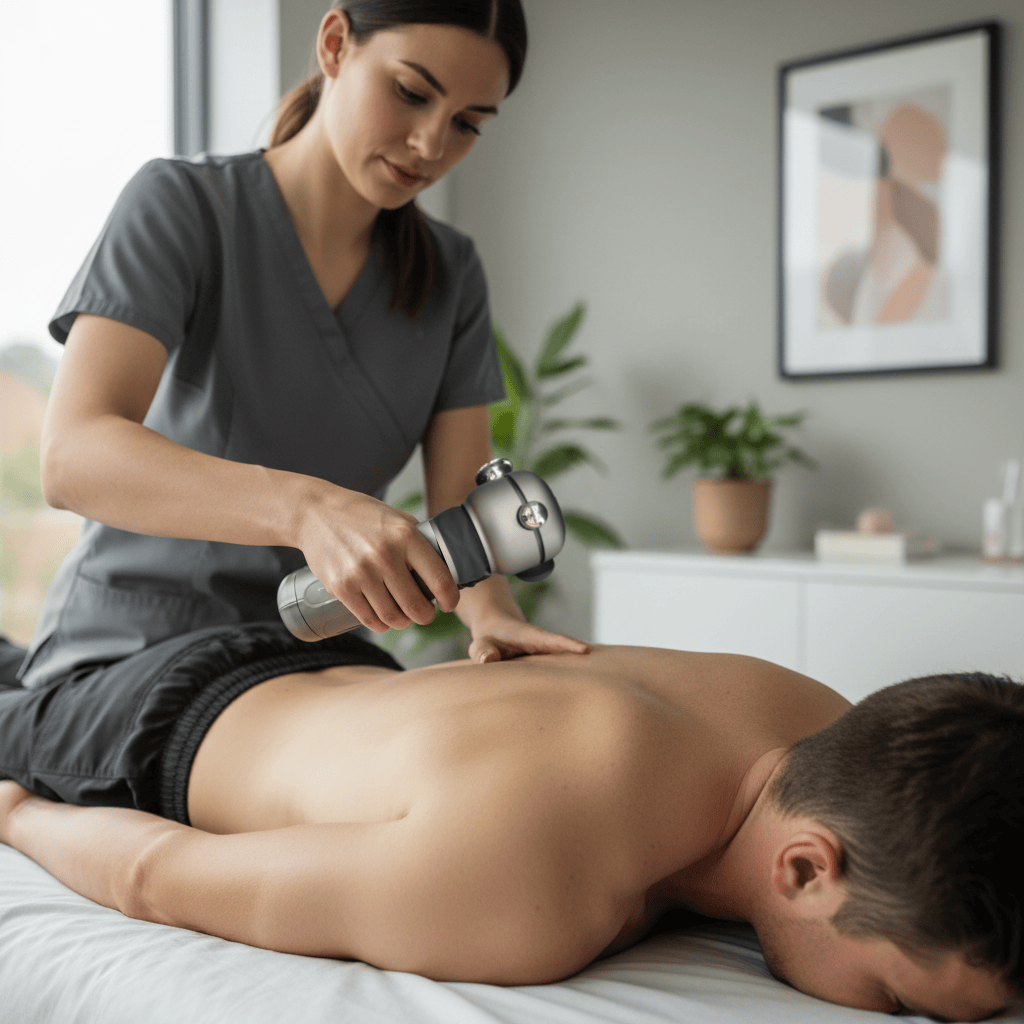
The lightweight design3 (0.54kg) allows therapists to:
- Maintain proper technique
- Treat multiple patients consecutively
- Reduce fatigue during long clinic days
Pricing, ROI and Supplier Checklist
Professional equipment requires different evaluation criteria than consumer products.
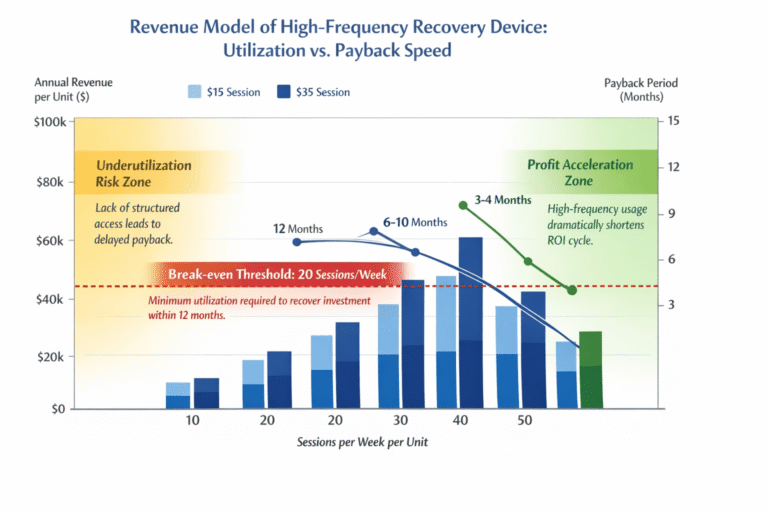
Calculate ROI by: treatment time savings (15-20% faster sessions), staff fatigue reduction (enables 3-5 more patients/day), and patient outcomes improvement (better compliance with precise equipment).
Supplier evaluation checklist:
- Medical-grade materials
- Clinic-specific warranty
- Service/maintenance support
- Staff training included
- Replacement part availability
- Compliance documentation
Price comparison (5-year clinic use):
| Factor | Professional | Consumer |
|---|---|---|
| Initial Cost | $600-$900 | $200-$400 |
| Sessions/Day | 25-30 | 15-18 |
| Maintenance | Annual service | Replace yearly |
| Total 5yr Cost | $900-$1200 | $1000-$1500 |
Conclusion
Modern physiotherapy clinics need massage guns with high-frequency vibration, micro-amplitude2 and lightweight design3 – enabling precise, efficient treatments that improve both patient outcomes and clinic workflow.
- Explore how high-frequency vibrations enhance treatment effectiveness and patient outcomes in physiotherapy. ↩
- Learn about the importance of micro-amplitude in providing precise control during therapy sessions. ↩ ↩ ↩ ↩
- Discover how a lightweight design can reduce therapist fatigue and improve treatment efficiency. ↩ ↩ ↩
- Understand how stable core technology ensures consistent performance and reliability in clinical settings. ↩
- Find out how massage guns can effectively aid in trigger point therapy for rapid relief. ↩