Many professional recovery stations1 fail to justify their cost because teams underestimate operational dynamics and revenue capture. The right equipment can break even within 6 to 12 months when deployment is strategic.
A professional recovery station typically pays for itself within 6 to 12 months when deployed in high-traffic venues like fitness clubs, corporate wellness programs, or medical wellness centers. Payback depends on equipment cost2, session pricing3, utilization rates4, and maintenance efficiency5. For a full-scale setup with 4–6 units and consistent session volume, this timeline becomes predictable and repeatable.
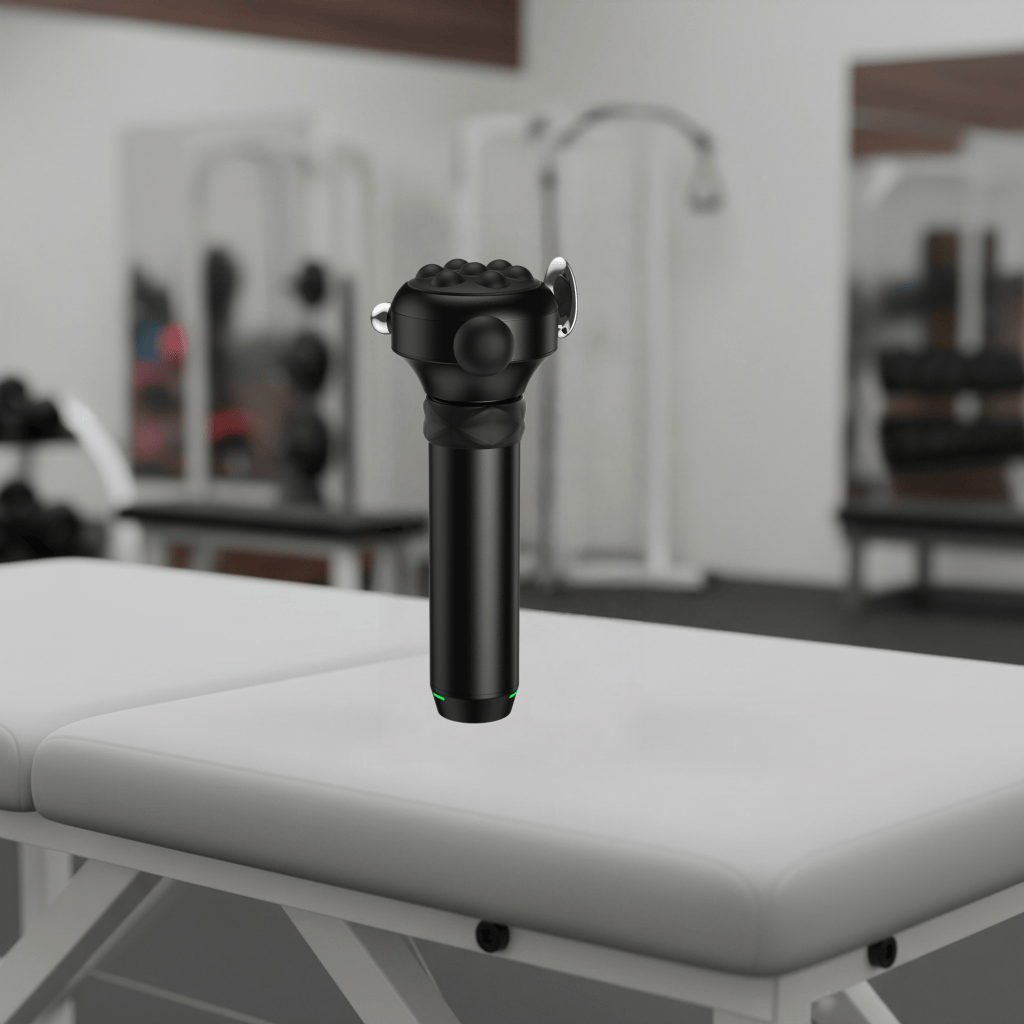
Beyond initial purchase, successful recovery operations depend on infrastructure, user flow design, and charging logistics6. The most effective stations combine low-maintenance hardware with scalable session models7. Understanding these variables is critical for sourcing, deployment, and long-term ROI planning.
Breaking Down the Investment: Equipment Cost, Setup Requirements, and Deployment Scenarios?
Businesses hesitate to invest in recovery systems without clear cost visibility. Hidden setup expenses can extend payback timelines dramatically.
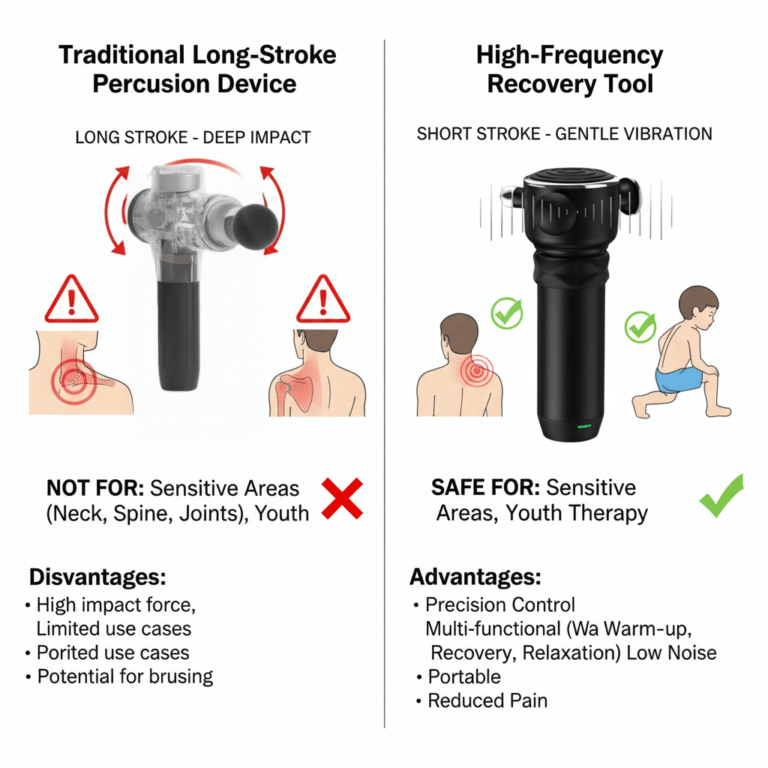
A high-frequency 3D vibration therapy8 station typically costs between $1,200 and $2,800 per unit at wholesale, depending on model and configuration. Minimum setup includes charging docks, user handover logs, and signage. Deployment scales from single-unit pilot zones to full studio installations with 8+ units. Key factors include: power availability, space layout, and integration into existing workflows.
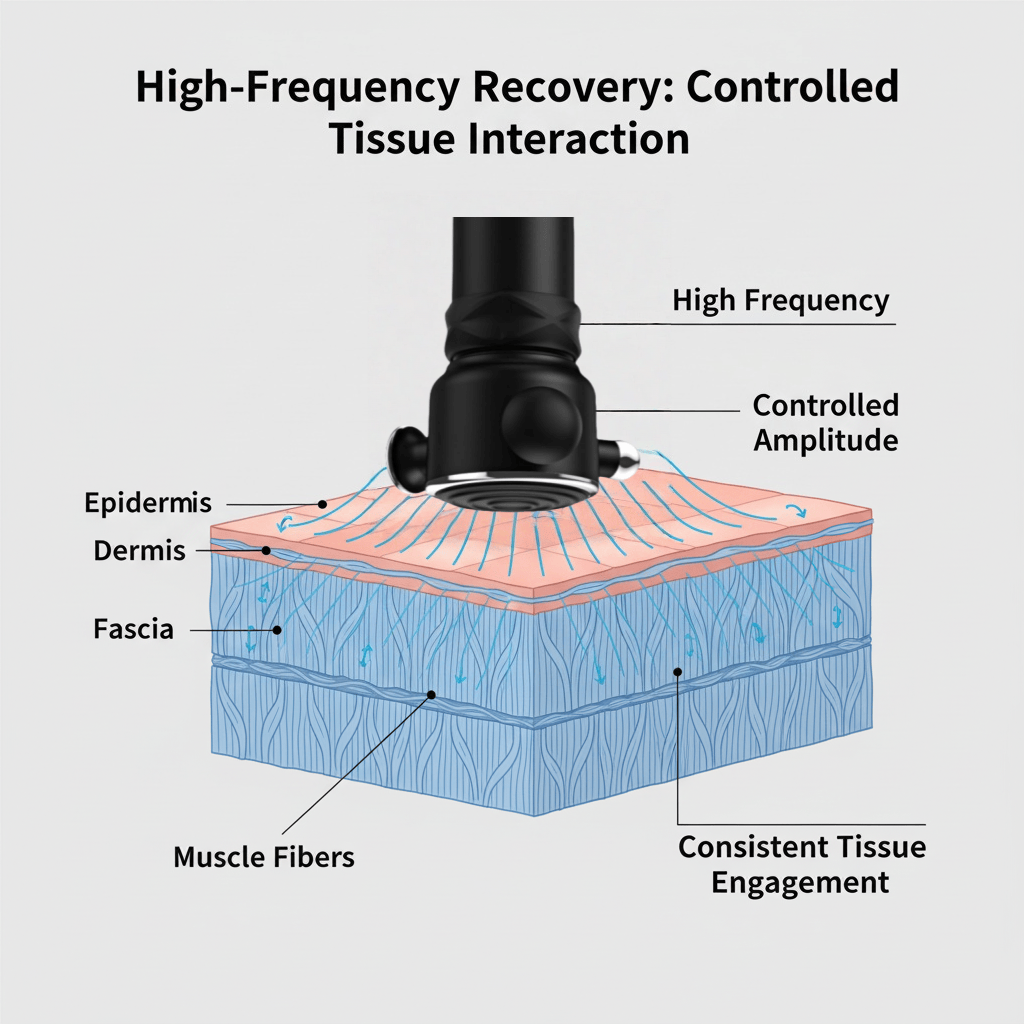
Deployment must account for technical and operational constraints. Each unit requires a dedicated charging station with 2–3 outlet pairs to enable rotation. Cabinets or lockers are needed in high-traffic environments to reduce loss and theft. Sustainability hinges on material durability, battery cycle life9, and resistance to wear.
Below is a breakdown of total ownership cost and config options for commercial use:
| Configuration | Units | Unit Price | Total Investment | Charging Needs | Notes |
|---|---|---|---|---|---|
| Pilot Test | 1 | $1,399 | $1,399 | 1 outlet | Use for feedback |
| Entry-Level Club | 4 | $1,799 | $7,196 | 4 outlets | Core recovery zone |
| Mid-Scale Wellness Hub | 6 | $2,199 | $13,194 | 6 outlets + rack | Full session integration |
| Premium Studio | 8 | $2,499 | $19,992 | 8 outlets + security | Ballistic cable + lock system |
Choose configurations based on current user volume, not future projections. Low utilization strains payback. Overspending on redundancy increases break-even time. Evaluate utility before scaling.
Revenue Drivers: How Recovery Services and Session Throughput Influence Payback Speed?
Revenue depends on how often units are used and how sessions are priced. A common mistake is assuming high utilization without structured access control.
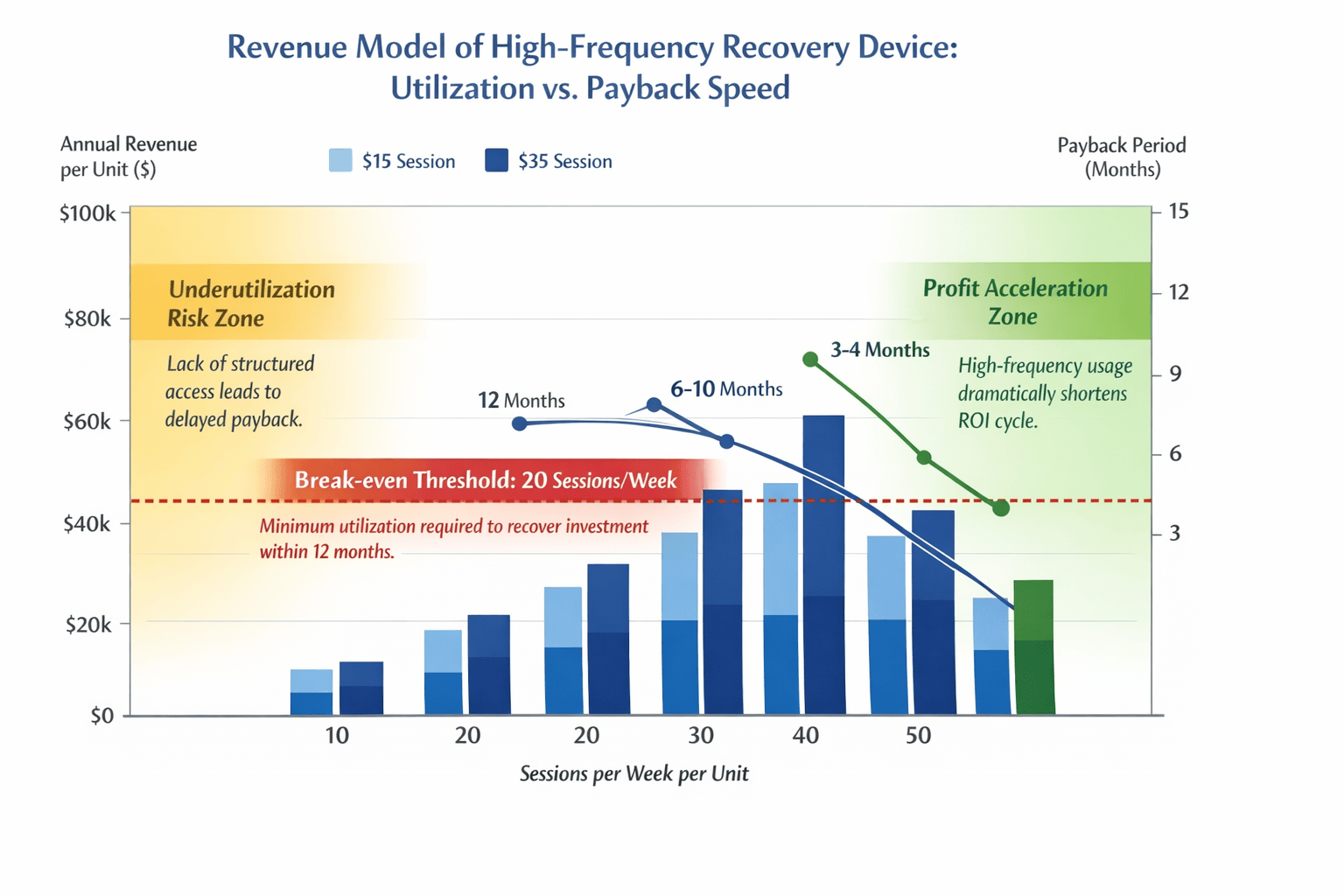
A typical high-frequency 3D vibration therapy8 session generates $15–$35 per user. At 30 sessions per week per unit, annual revenue ranges from $23,400 to $56,800. High-frequency usage occurs in fitness studios, clinics, and corporate wellness centers. Weekly throughput needs to exceed 20 sessions/unit to break even within 12 months.
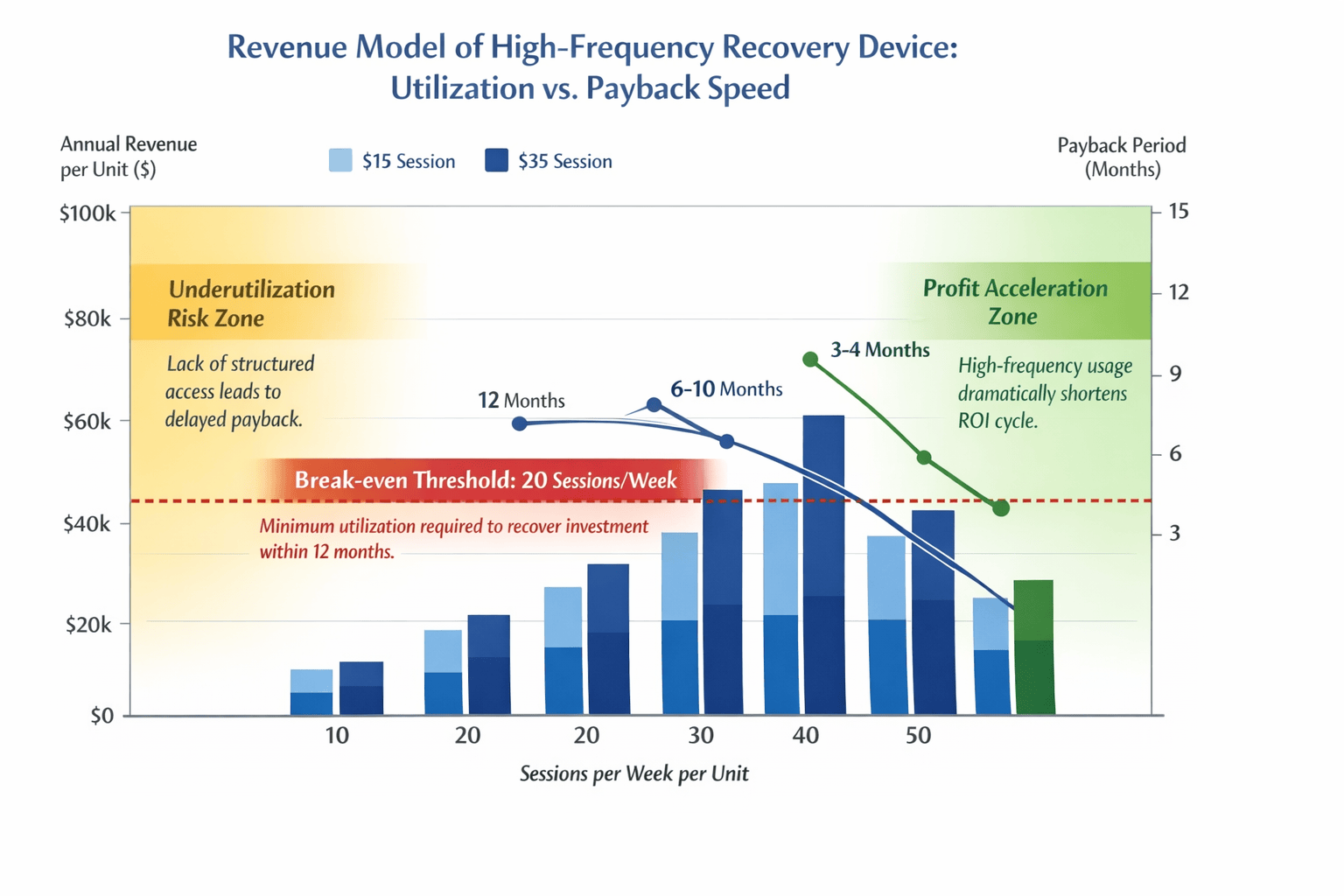
Pricing models influence adoption. Group passes, bundled memberships, or pay-per-use kiosks increase conversion. Units near training zones see 30–50% higher utilization due to proximity. Infrequent use leads to underutilization and extended payback.
Key operational variables include:
- Session duration: 8–10 minutes ideal
- User turnaround time: <2 minutes expected
- Staff oversight: required for high-traffic sites
- Scheduling integration: essential for credit-based access
Observational data from 12 commercial deployments shows that consistent session volume above 25/week correlates directly with 9–11 month payback. Units below 15 sessions/week average 15–18 months.
When sourcing equipment, verify battery life and charge cycle durability. Units with 1,000+ cycles at 50% capacity hold value longer than those with 500 cycles. Longer battery life reduces replacement frequency and maintenance downtime.
From Single Unit to Scalable Setup: How Deployment Strategy Affects ROI and Expansion Potential?
Scaling a recovery system isn’t about buying more units. It’s about designing a system that grows with user demand.
A single high-frequency 3D vibration therapy8 unit serves as a test case. Once payback is confirmed, scaling follows two tiers: operational and technical expansion. Operational scaling means increasing coverage across zones. Technical scaling means integrating data tracking and online booking.
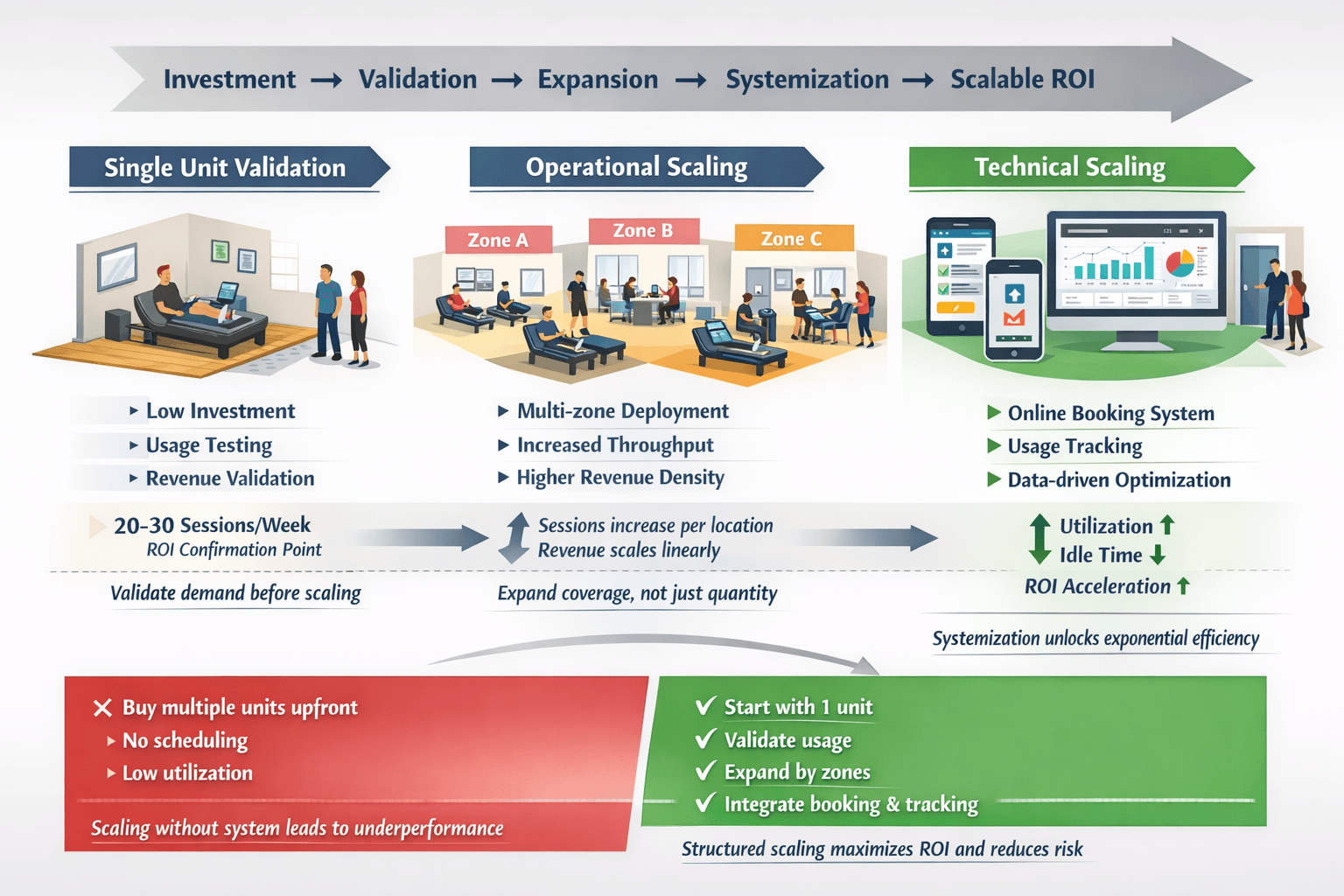
For expandability, choose units with standardized charging platforms and cloud-ready interfaces. The YD018 and YD023 models support dock-based rotation and removable battery modules. This reduces congestion and allows rapid unit replacement during peak hours.
Consider networked systems10: when connected via a local node, units can log session data, track user habits, and prevent overuse. Two common network features improve scalability: usage caps per session, and automatic fault reporting.
When planning expansion, avoid overpaying for unnecessary features. Focus on build quality, serviceability, and battery longevity. Units with CNC-machined internal components show 30% lower long-term failure rates than those with molded plastic housings.
Five factors determine scalability success:
- Charging system modularity – Enables hotel-style rapid turnover
- Interchangeable heads – Minimizes tooling and training burdens
- Replaceable batteries – Critical for high-use scenarios
- Remote diagnostics – Reduces on-site visits
- OEM/ODM support – Allows branded integration
Most setups reach optimal ROI only after proving utilization at one location. Do not scale prematurely. Let real usage data drive expansion decisions.
Conclusion
A professional recovery station typically pays for itself in 6 to 12 months when deployed with clear session pricing3, predictable usage, and durable hardware. The right equipment, properly integrated, delivers long-term value. Focus on proven metrics before expanding.
-
Explore this link to understand the functionality and benefits of professional recovery stations. ↩
-
This resource will help you understand the factors influencing equipment costs. ↩
-
Discover pricing strategies that can maximize revenue for recovery services. ↩ ↩
-
Find out how to enhance utilization rates for better ROI in recovery stations. ↩
-
Explore maintenance tips to ensure your recovery equipment operates efficiently. ↩
-
Learn about effective charging logistics to optimize recovery station operations. ↩
-
Discover scalable session models that can enhance the efficiency of recovery stations. ↩
-
Learn about the advantages of high-frequency 3D vibration therapy for recovery and wellness. ↩ ↩ ↩
-
Learn about the importance of battery cycle life in maintaining recovery equipment. ↩
-
Explore how networked systems can improve the efficiency and data tracking of recovery stations. ↩