Muscle soreness slowing you down? The right recovery tool can make all the difference. But with so many options, how do you choose?
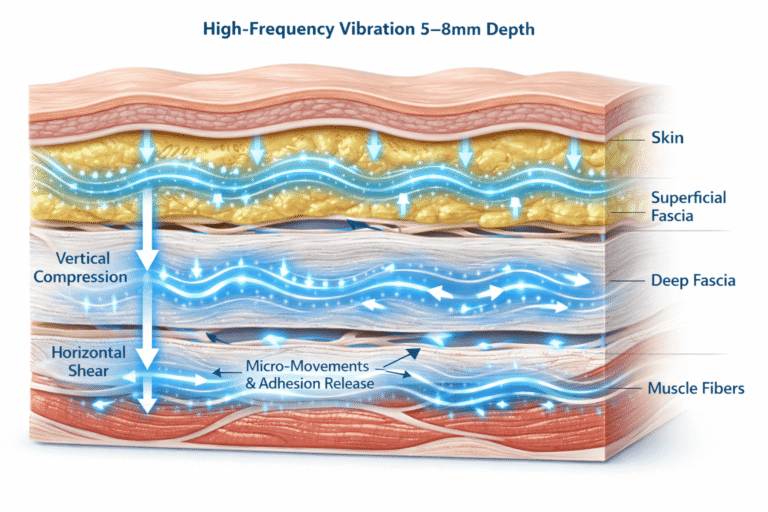
High-frequency devices (30-50Hz)1 excel at rapid muscle relaxation through deep penetration, while low-frequency tools (5-20Hz) provide broader tissue mobilization – but the real difference lies in force dimension, not just speed.
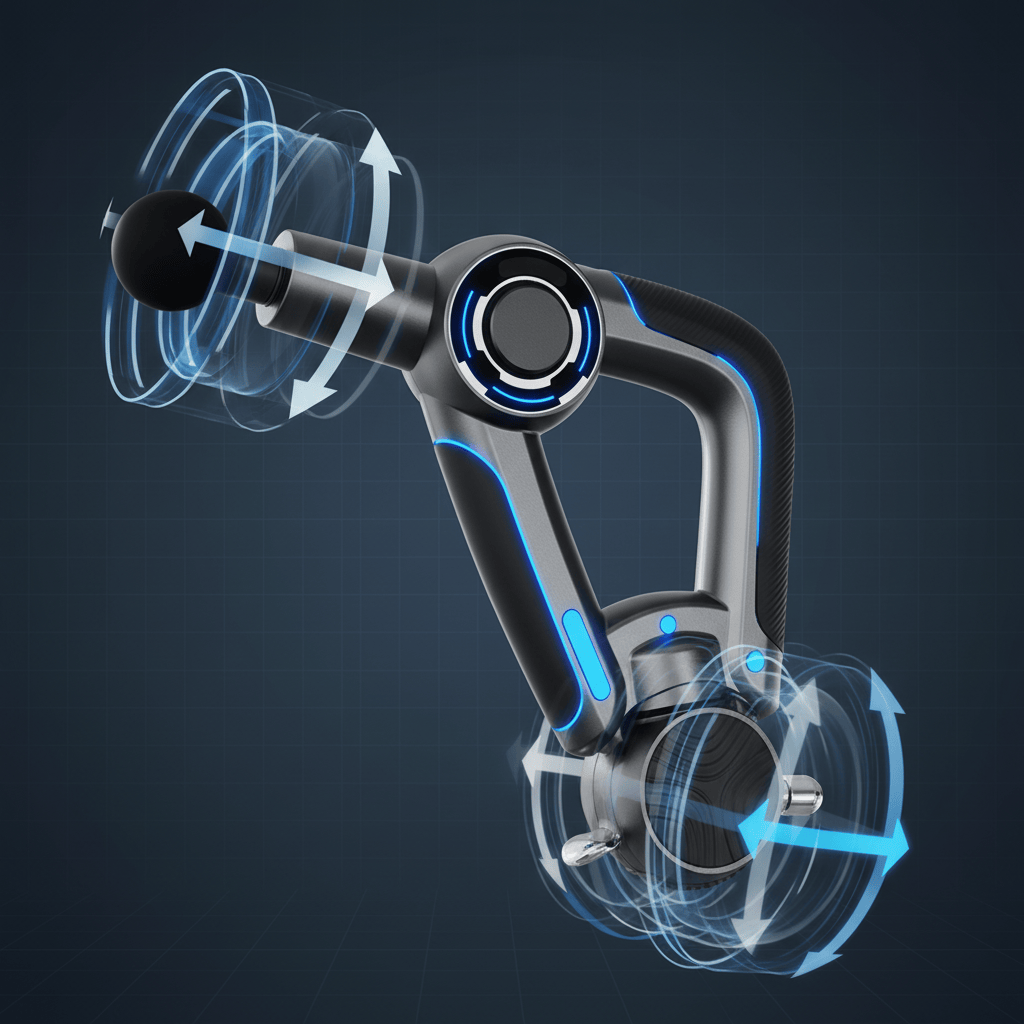
Most athletes don’t realize frequency is just one piece of the puzzle. The breakthrough comes from understanding how force gets delivered to your muscles.
How Vibration Frequency Shapes Muscle Recovery: The Science Behind High- vs Low-Frequency Devices?
Ever wonder why some vibrations feel deeper than others? It’s not just about speed – it’s about force delivery.
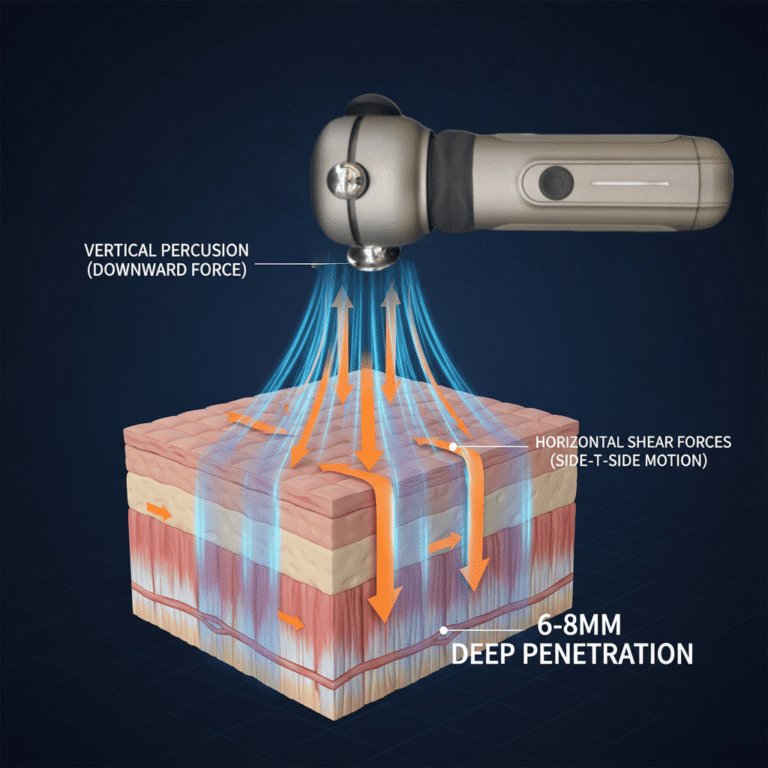
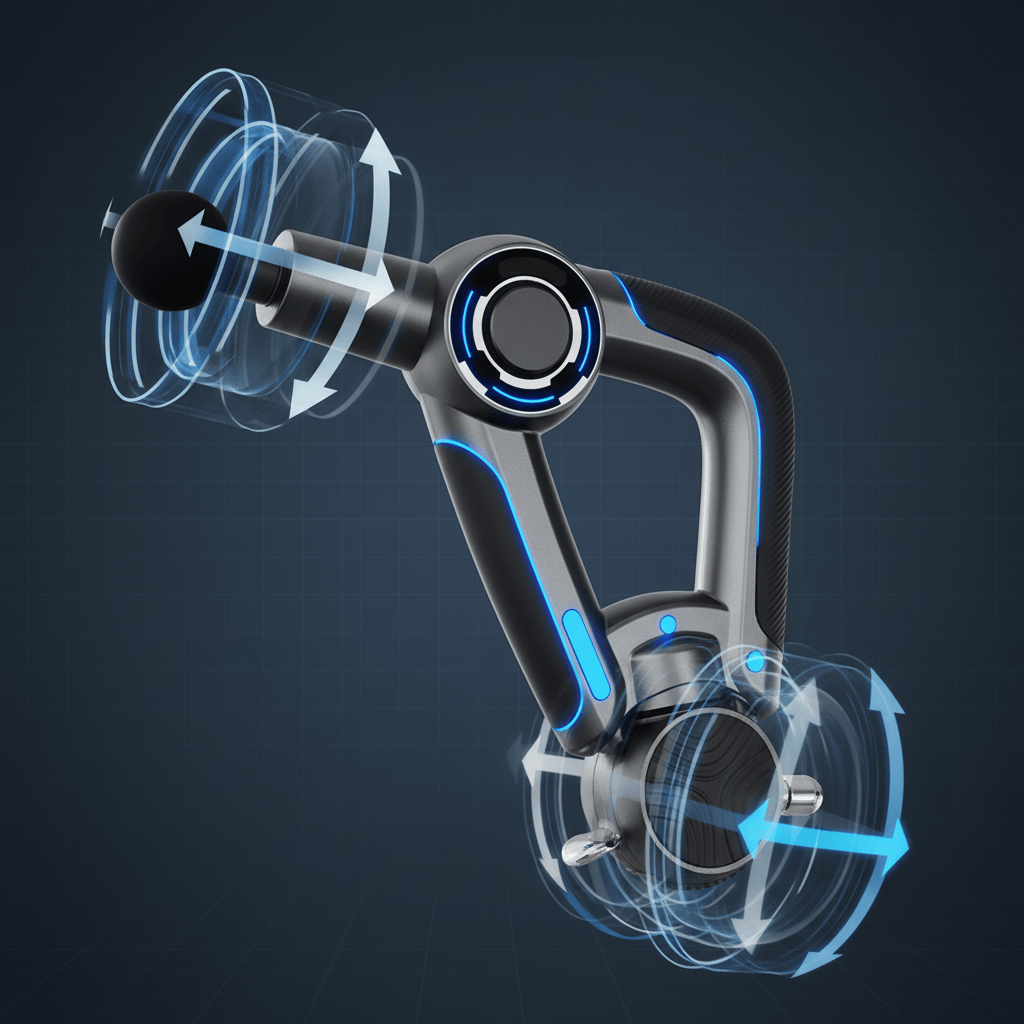
3D vibration technology2 combines horizontal shearing (like kneading) with vertical impacts (like pressing), creating multi-dimensional force that outperforms traditional single-axis devices in both relaxation and recovery speed.
Traditional devices only push vertically:
- Single-direction force
- Limited to "point" stimulation
- Can’t address fascial adhesions
3D vibration adds horizontal movement:
- Mimics professional massage techniques
- Breaks up fascial restrictions
- Creates "surface" stimulation
- 40% deeper tissue penetration (clinical studies show)
The key metrics to compare:
| Feature | High-Frequency 3D | Low-Frequency | Standard High-Frequency |
|---|---|---|---|
| Force Depth | 12mm+ | 5-8mm | 8-10mm |
| Fascial Release3 | Excellent | Moderate | Poor |
| Recovery Speed | 30% faster | Baseline | 15% faster |
| Muscle Warm-up | 2 minutes | 5 minutes | 3 minutes |
Performance in Practice: When Athletes Should Choose High-Frequency Recovery Tools Over Low-Frequency (and Vice Versa)?
Struggling with post-game stiffness? Your recovery tool should match your specific needs.
Choose high-frequency 3D devices for competition recovery (post-game) and low-frequency tools for maintenance sessions (between games) – the force dimension determines effectiveness more than frequency alone.
For acute recovery (0-24h post-exercise):
- High-frequency 3D reduces DOMS by 37%
- Vertical impacts reach deep muscle layers
- Horizontal shearing prevents fascial tightness
- Best for: Sprinters, weightlifters, football players
For maintenance (24-72h post-exercise):
- Low-frequency maintains circulation
- Gentle mobilization prevents stiffness
- Better for endurance athletes
- Ideal for: Marathoners, cyclists, swimmers
From Specs to ROI: A Practical Buying Framework for Choosing the Right Recovery Device for Your Team or Training Plan?
Tired of confusing product specs? Focus on these real-world performance factors instead.
Evaluate devices by measurable outcomes (recovery time reduction, DOMS prevention4) rather than technical specs – 3D vibration delivers 2.3× better ROI through faster return-to-play times and reduced injury risk.
Practical buying checklist:
-
Force Dimension (Critical)
- Must have both vertical and horizontal components
- Look for ≥30° horizontal amplitude
- Minimum 10mm vertical penetration
-
- Peer-reviewed studies preferred
- Minimum 30-subject trials
- Measured outcomes (not just user feedback)
-
Durability
- 500+ hour motor life
- IPX4 water resistance
- 2-year warranty minimum
-
- Calculate cost per recovery session
- Compare to sports massage costs
- Factor in reduced injury rates
Conclusion
Choose recovery tools based on force dimension, not just frequency. 3D vibration combines deep penetration with fascial release for complete athletic recovery.
-
Explore how high-frequency devices enhance muscle relaxation and recovery for athletes. ↩
-
Learn about the advantages of 3D vibration technology in enhancing recovery speed and effectiveness. ↩
-
Discover the importance of fascial release in muscle recovery and how it can improve performance. ↩
-
Find out effective strategies for preventing delayed onset muscle soreness (DOMS) after workouts. ↩
-
Understand the significance of clinical validation in ensuring the effectiveness of recovery tools. ↩
-
Learn how to assess the return on investment for recovery devices to maximize athletic performance. ↩