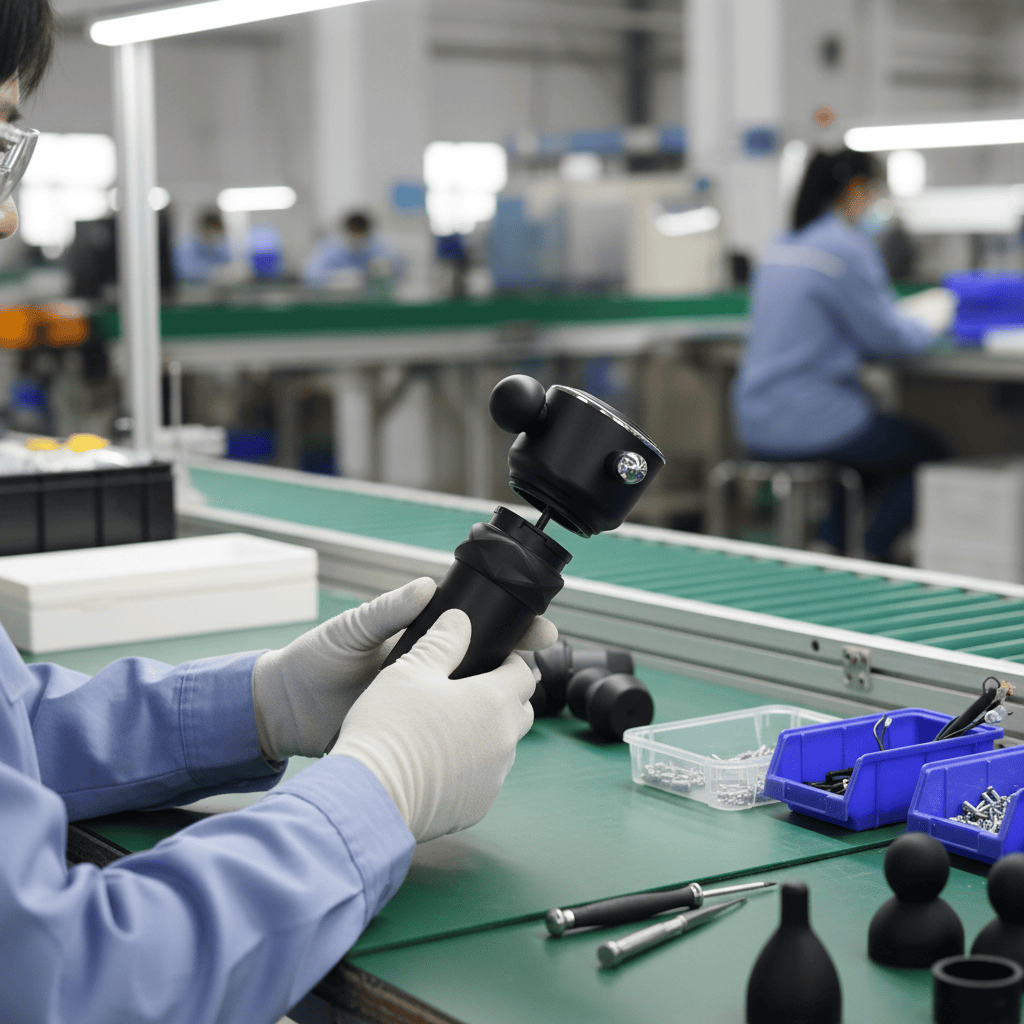
When you’re sourcing sports recovery devices for your brand, it’s easy to assume “OEM” means simply adding your logo. But the reality is far more complex—and the decision between custom logo and full custom engineering1 can impact your product’s performance, cost, and long-term viability.
Custom logo services2 involve branding elements3 like labels, packaging, and instructions. Custom engineering goes beyond that—redefining the device’s structure, components, and function based on your market’s specific needs. True OEM support4 requires a manufacturer with proven R&D capability5.
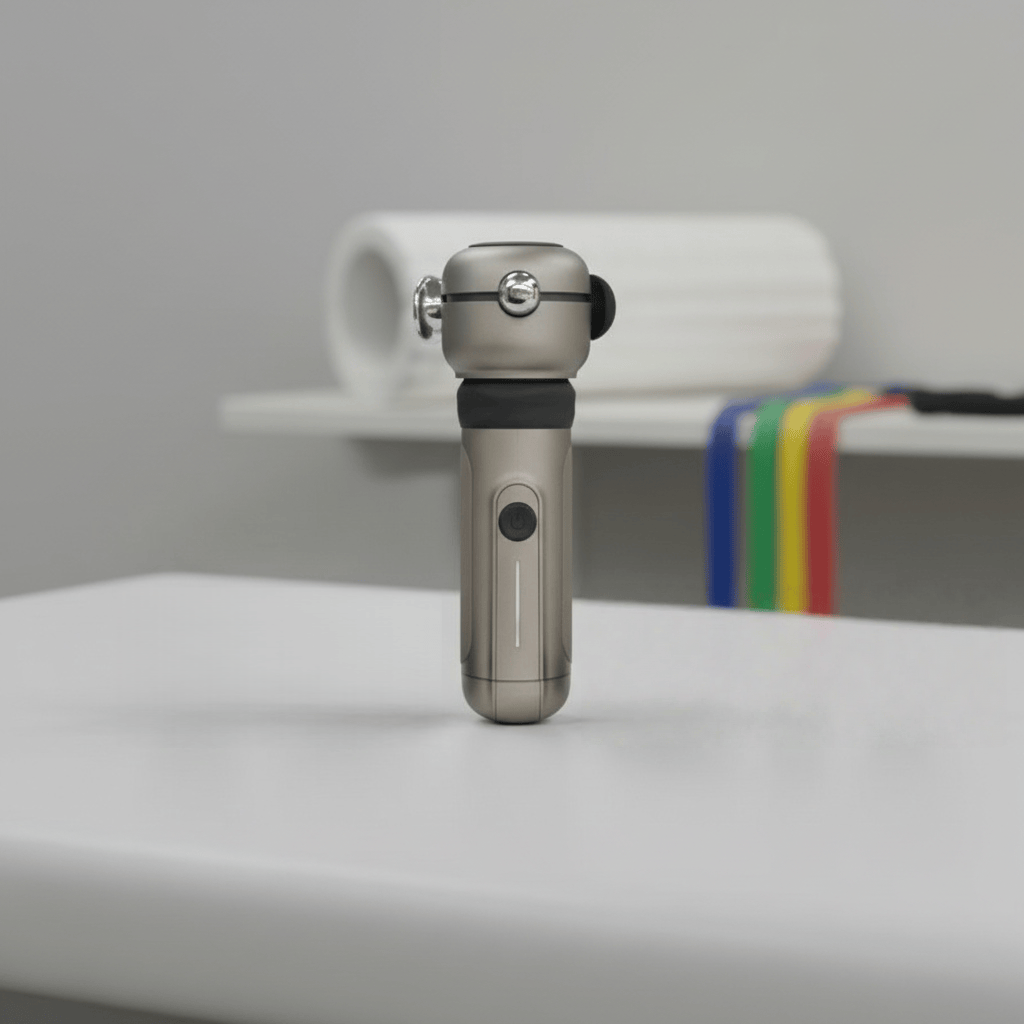
This distinction is critical whether you’re launching a wellness line for office workers, developing a fitness brand for athletes, or expanding into B2B corporate wellness programs. The engineering depth behind a product determines how well it performs under real-world use, how long it lasts, and whether it delivers on your brand promise.
LOOP START
What’s the Difference Between Custom Logo and Full Custom Engineering in OEM?
Many suppliers offer "custom logos" as a standalone option. But this is often just branding. If the product is already designed by the manufacturer, you’re limited to what exists on the shelf.
True custom engineering includes modifying the hardware structure, selecting alternative motors or bearings, adjusting vibration profiles6, even redesigning the grip or ergonomics based on your customer profile. Custom logos are surface-level; custom engineering redefines the product.
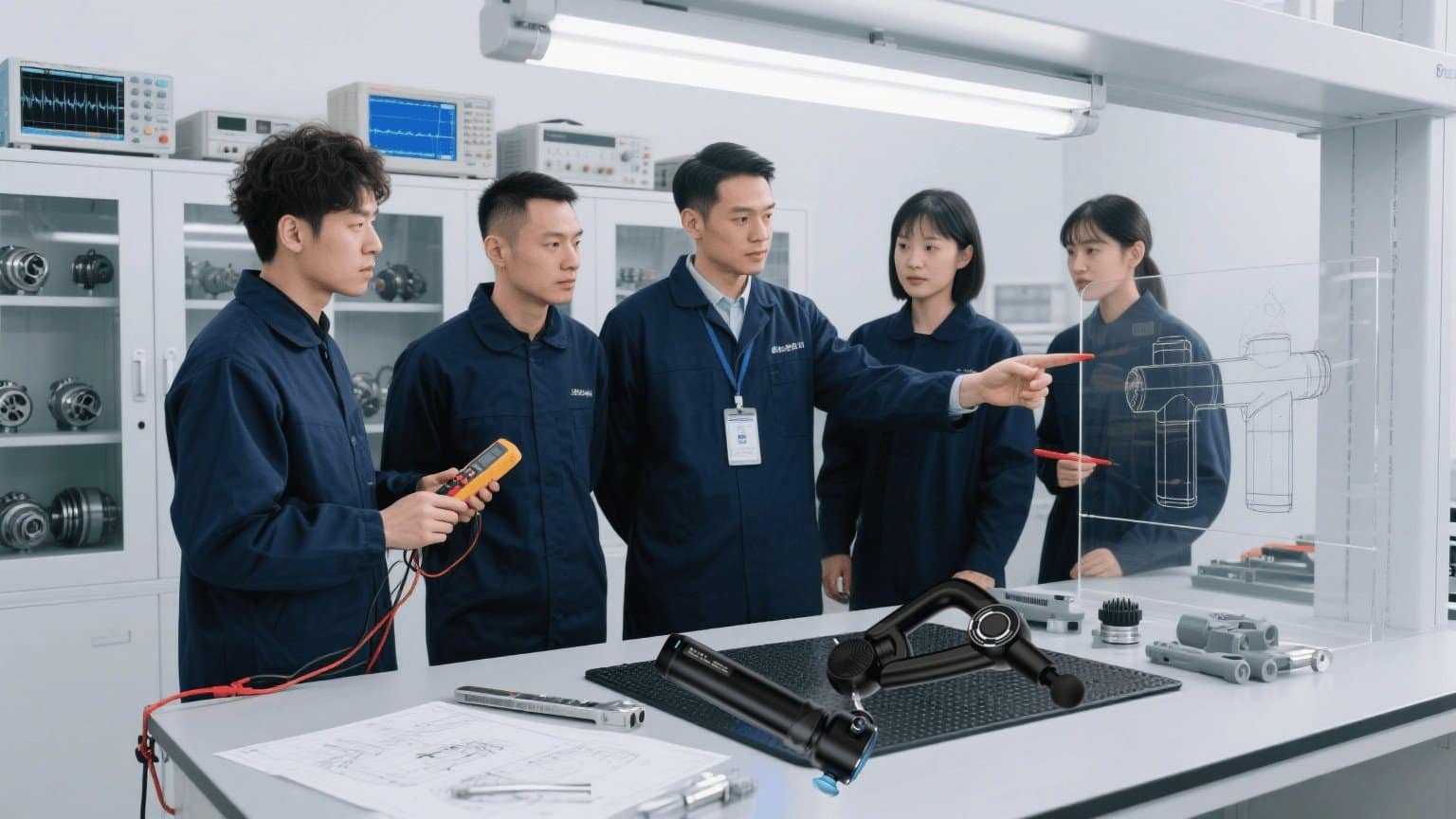
When evaluating a manufacturer’s capability, the key question isn’t whether they can print your logo—but whether they can modify the core mechanism to meet your specifications. At our facility, custom engineering starts with understanding your target user: are they athletes needing high-torque performance? Or office workers requiring quiet, low-weight operation?
This requires more than just a design team. It calls for engineers who understand load dynamics7, material fatigue8, and vibration dampening9. A supplier that only offers logo customization may not have the in-house expertise to handle these challenges.
The table below outlines the operational differences between standard branding and full engineering support:
| Feature | Custom Logo (Private Label) | Full Custom Engineering (OEM/ODM) |
|---|---|---|
| Branding Elements | Logo, packaging, instruction manual | All branding, plus design for market specificity |
| Modify Vibration Profile | No | Yes (frequency, amplitude, mode type) |
| Change Motor or Drive System | No | Yes (e.g., switch to higher torque for continuous load) |
| Redesign Housing or Ergonomics | No | Yes (e.g., low-profile for corporate use) |
| Material Selection Changes | No | Yes (e.g., switch to aerospace-grade alloy for durability) |
| R&D Involvement | Minimal | Full product lifecycle support |
| Lead Time | 2–4 weeks | 6–12 weeks (depends on complexity) |
| MOQ (Minimum Order Quantity) | 100 sets | 10000+ sets (higher for custom parts) |
Real-world trade-offs emerge when doing full engineering. For example, upgrading from a standard motor to a higher-torque variant increases cost and heat output. But if your application is continuous operation—like in a factory wellness room—this trade-off is justified by performance durability10 and user satisfaction.
We’ve worked with clients who needed devices that operate 4 hours/day across 30 workstations. A generic model failed after 6 weeks due to bearing wear and noise spikes. A custom-engineered version with CNC-machined load-bearing components11 and heat-dissipating housing met that demand for over 18 months.
For sourcing managers and product designers, the choice isn’t just about cost—it’s about risk mitigation. A supplier who can iterate designs based on test data12 is more reliable than one who only provides pre-made shells. The deeper the engineering support, the lower your failure risk in volume production.
LOOP END
How Do You Simulate Real-World Use Before Committing to Bulk Orders?
You can’t fully assess product reliability by reviewing specs alone. Early-stage engineering validation13—especially under sustained load—is essential.
Laboratory testing under simulated conditions that match your real use case is the only way to evaluate long-term durability. For high-frequency 3D vibration therapy devices, this means measuring performance decay, noise growth, and motor stability after extended operation.
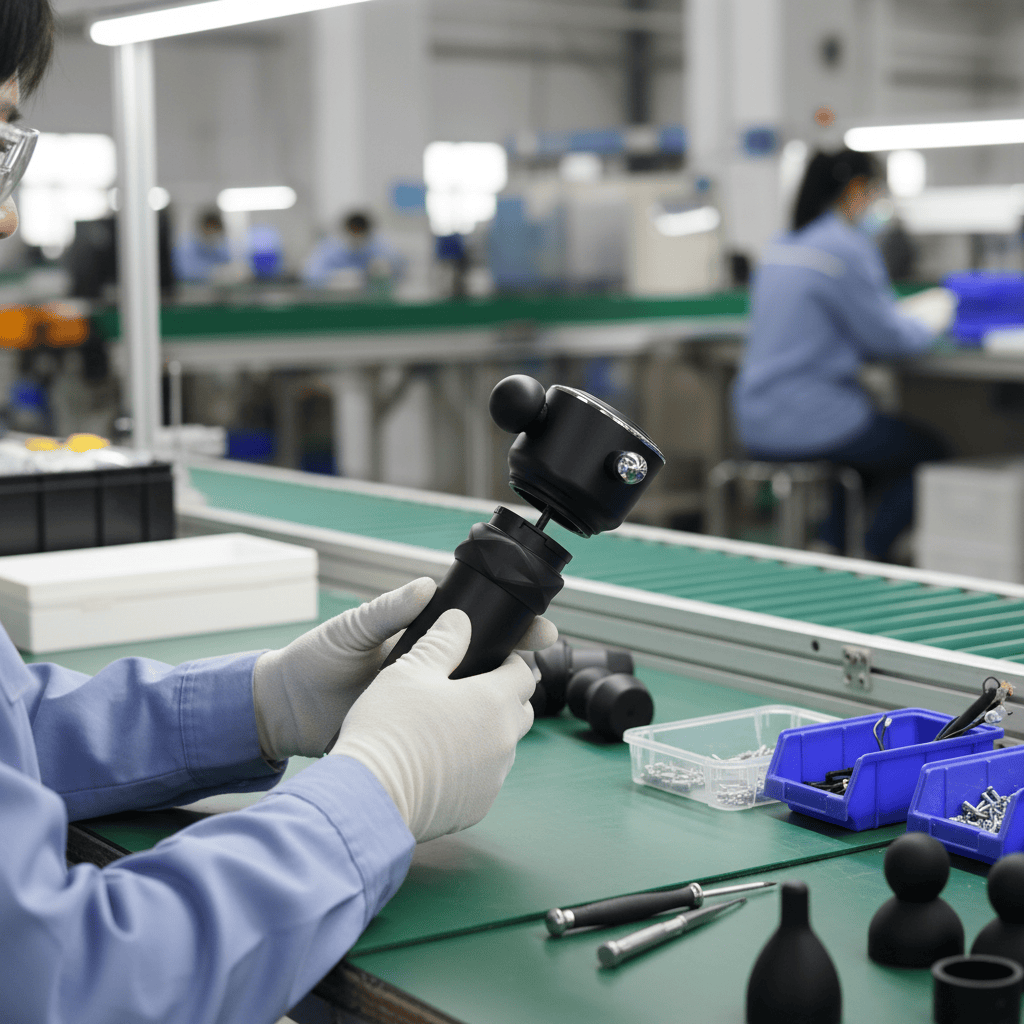
In our facility, we deploy a standardized test protocol for all OEM prototypes. Devices are run at 70% of peak frequency, 5-hour cycles, and 30-minute rest intervals—mimicking a corporate wellness room in operation over a full workweek.
Key metrics we track:
- Peak output frequency stability (±50 RPM)
- Vibration transmission to housing (measured via accelerometer)
- Motor temperature rise (target: under 55°C after 3 hours)
- Bearing noise level (dB-A, measured at 1m distance)
- Battery consistency after 100 full charge-discharge cycles
One recent client needed a model for use in international markets with lower voltage stability. We ran 72-hour cycling tests using fluctuating 100–120V AC input. The result? Generation 1 failed due to power regulation instability. We redesigned the power regulation module and retested—success.
For buyers, this test phase is where risk is exposed. A supplier without access to real-time monitoring and instrumentation cannot provide meaningful data. That’s why we require all prototypes to be tested in our test lab before moving to tooling.
Performance under load isn’t just about function—it’s about reputation. A device that hums louder after two weeks of use may seem fine for a demo. But in a hotel guest room or office workspace, it becomes a complaint item.
We’ve also seen cases where standard plastic housings cracked under thermal stress after only 80 hours of operation. Switching to CNC aluminum not only solved the issue—it improved signal transmission and reduced vibration feedback to the user.
This is where OEM engineering delivers real ROI. It’s not just about making something that works once. It’s about making sure it works consistently over thousands of cycles, in the hands of your customers.
How Should You Interpret Test Results Before Proceeding to Bulk Purchase?
Test results carry more weight when they’re structured, repeatable, and tied to user conditions—not just lab isolation.
A single low-noise value doesn’t mean much without context. You need to see patterns: does noise increase consistently over time? Does frequency drift under thermal load? Does the device shut down unexpectedly during a high-demand wave?

We use a scoring framework across three dimensions:
- Performance Consistency (e.g., frequency maintained within 4500–7500 RPM)
- Longevity Indicators (e.g., no bearing wear after 150 hours)
- User Experience Metrics (e.g., vibration dampening9 below 0.5mm peak-to-peak)
Results are shared in a detailed report that includes:
- Time-stamped data logs
- Thermal imaging snapshots
- Audio frequency analysis
- Motor current draw trends
In one case, a client expected a lighter device for female users. Our prototype was under 0.5kg but began reversing stroke pattern after 90 minutes of continuous use, causing user discomfort. The engineering team identified a resonance point in the drive shaft. After redesigning the shaft geometry and shifting the motor mount, the device returned to stable operation.
For purchasing teams, this means: don’t accept "it works" as validation. Look for repeatable failure points. Ask for the test environment setup. Request access to raw data. If a supplier can’t provide this, they may not have a proper engineering process.
Also, consider the defect rate thresholds14. A 2% failure during testing might seem low—but in a 5,000-unit order, that’s 100 units that need repair or recall. We only proceed to production once test failure rates fall below 0.5%.
Conclusion
With OEM, the real decision isn’t between logo and engineering—it’s between risk and control. Custom logo is lowest effort, but exposes you to unknown performance limits. Custom engineering demands more time and investment—but gives you full control over quality, reliability, and differentiation. The right partner doesn’t just build what you design. They help you define what your product must achieve.
-
Learn about the advantages of full custom engineering for product performance and longevity. ↩
-
Explore how custom logo services can enhance your brand identity and market presence. ↩
-
Discover how effective branding elements can impact consumer perception and sales. ↩
-
Understand the importance of OEM support in ensuring product quality and reliability. ↩
-
Explore the role of R&D in developing innovative and high-quality products. ↩
-
Explore the significance of vibration profiles in enhancing product durability and user experience. ↩
-
Learn about load dynamics and their role in designing reliable and efficient products. ↩
-
Understand material fatigue and its implications for product durability and safety. ↩
-
Discover how vibration dampening techniques can enhance user comfort and product reliability. ↩ ↩
-
Find out what influences performance durability and how to ensure long-lasting products. ↩
-
Explore the advantages of CNC machining in enhancing product strength and performance. ↩
-
Learn how to effectively interpret test data to make informed production decisions. ↩
-
Understand the importance of engineering validation in ensuring product reliability. ↩
-
Explore the significance of defect rate thresholds in maintaining product quality. ↩