For a long time, percussion-based recovery devices dominated the market.
They were powerful, visually impressive, and easy to evaluate during short demonstrations.
But as recovery shifts from occasional treatment to daily performance maintenance, the underlying technology behind recovery devices is undergoing a quiet but fundamental change.
This article examines how recovery tools are evolving from impact-based percussion toward frequency-driven recovery, and why this shift reflects real-world usage rather than marketing trends.
The Early Stage: When Percussion Made Sense
Percussion technology emerged to solve a specific problem:
delivering rapid, deep stimulation to large muscle groups after intense activity.
At the time, recovery use cases were:
- Short
- Infrequent
- Focused on large muscle areas
In that context, strong vertical impact provided an immediate sensation of effectiveness.
The Market Changed — Recovery Became Routine
Over time, recovery stopped being limited to post-competition scenarios.
Today, recovery is:
- Performed daily
- Integrated into training routines
- Used across multiple body areas
- Expected to be portable and repeatable
This shift toward routine recovery aligns with broader discussions in sports performance and workload management, where consistency and controllability are increasingly emphasized
(American College of Sports Medicine – Performance & Recovery).
Why Impact-Centered Design No Longer Scales
As recovery frequency increased, several issues became apparent.
1. Impact Is Difficult to Regulate Over Time
What feels effective for 30 seconds can become excessive when repeated daily.
High-impact systems are harder to scale down for:
- Light recovery
- Localized tension
- Long-duration sessions
2. One-Dimensional Force Limits Adaptability
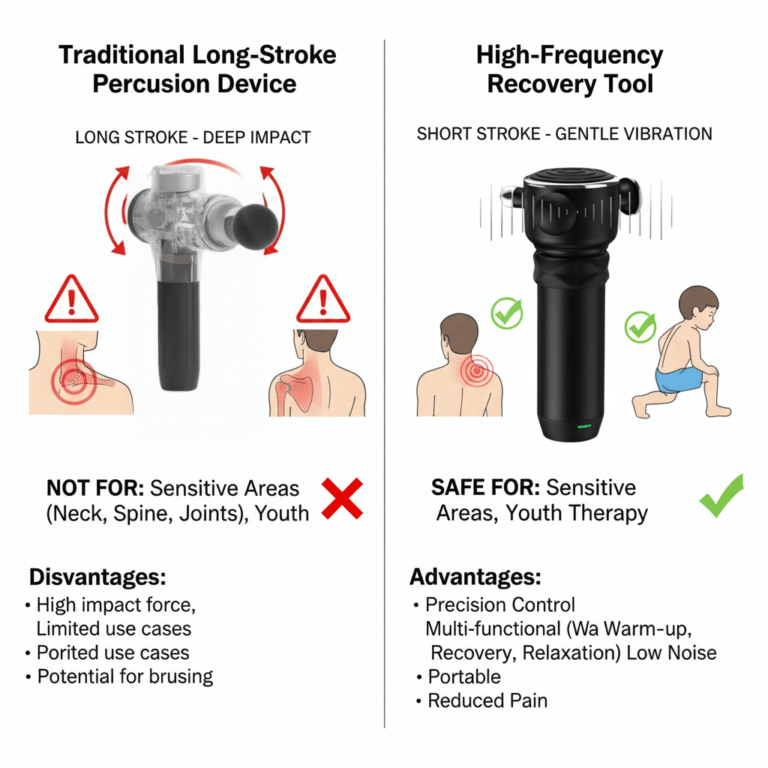
Percussion focuses on vertical force.
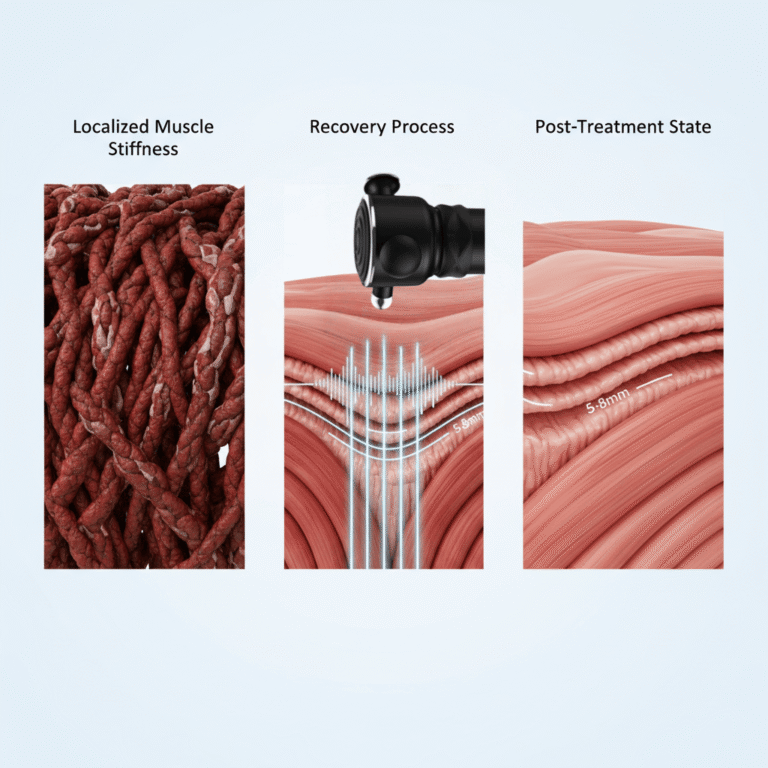
However, muscle and fascia respond better to controlled, continuous stimulation rather than repeated shock.
This mismatch reduces consistency across different use cases.
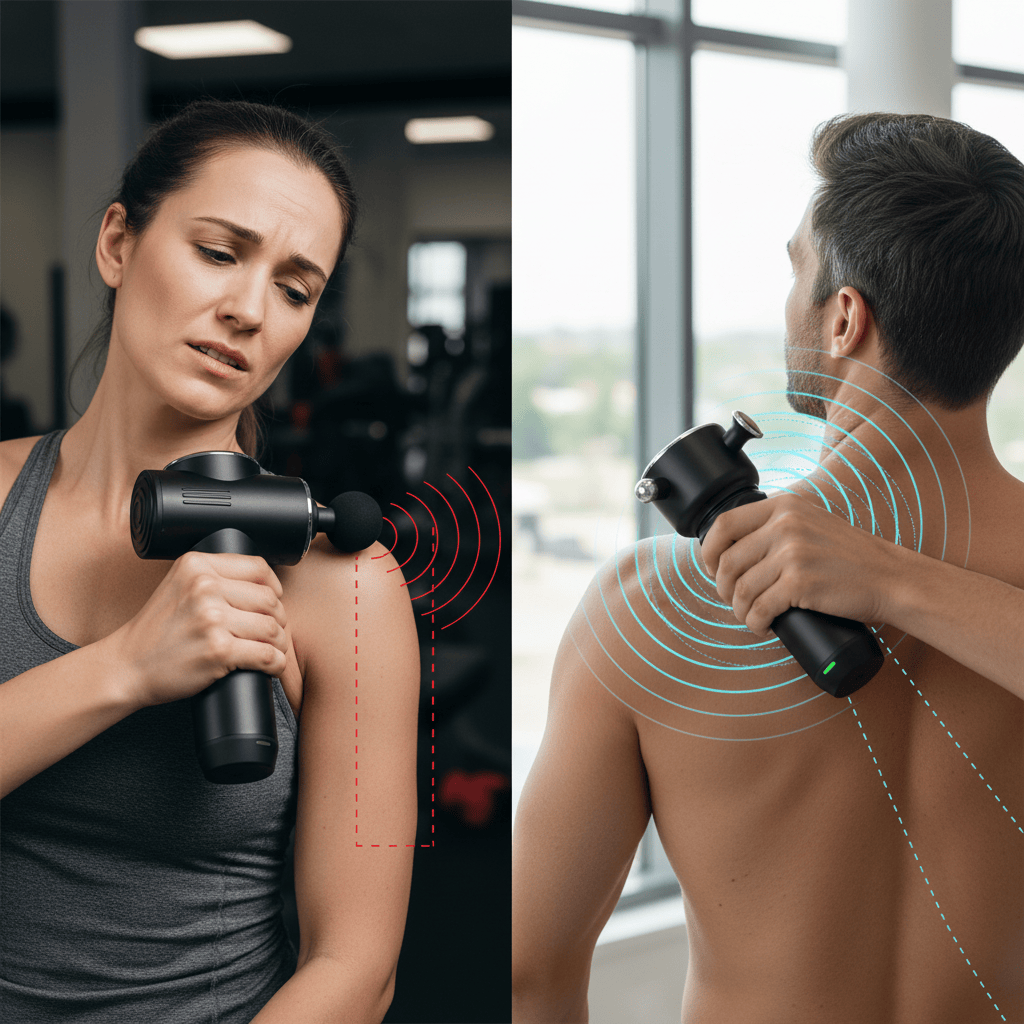
The Transition Phase: Frequency Enters the Equation
To address these challenges, recovery technology began shifting toward frequency-driven systems.
Instead of maximizing stroke length, designers started prioritizing:
- Stable vibration frequency
- Controlled amplitude
- Consistent tissue interaction
This transition reflects a broader trend in recovery and rehabilitation toward repeatable, low-load interventions, rather than peak-force solutions
(National Strength and Conditioning Association – Recovery Trends).
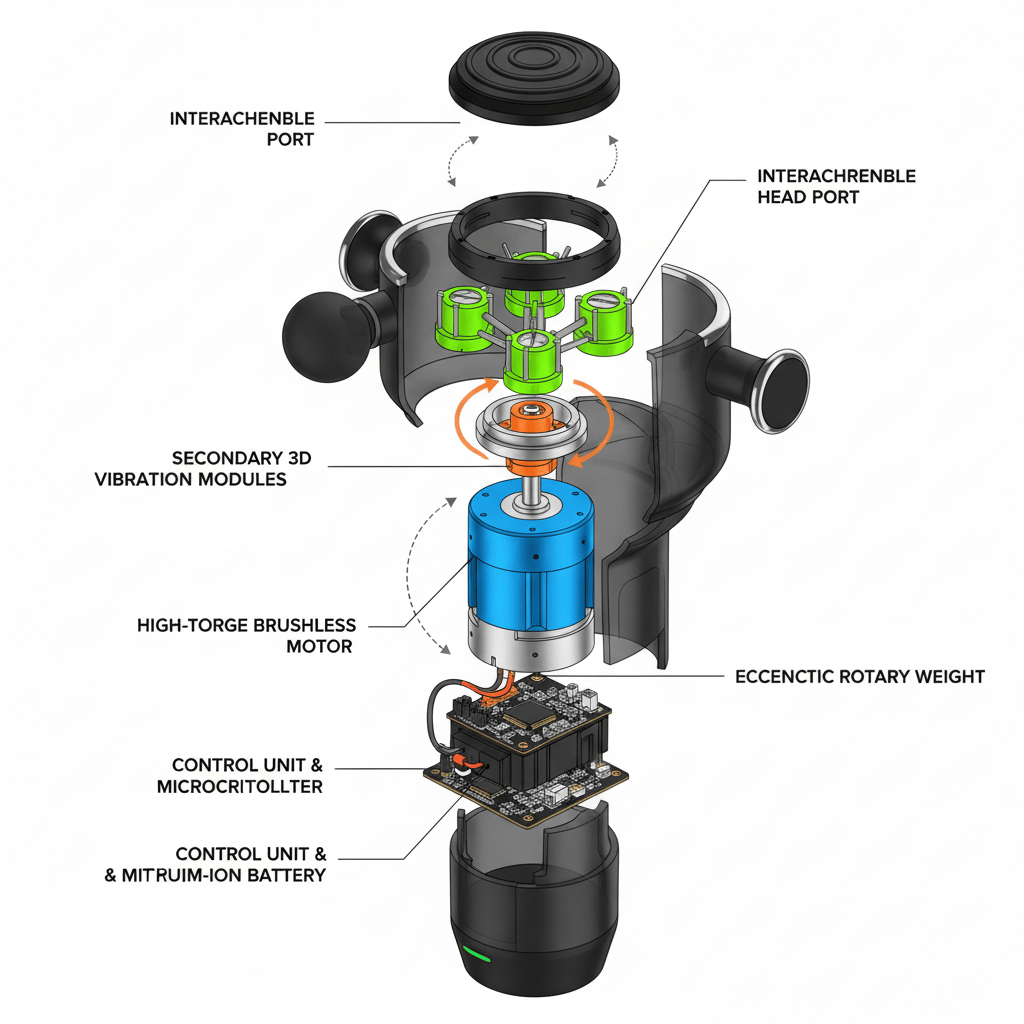
High-Frequency Recovery: Designed for Modern Use
High-frequency recovery tools are built around how recovery is actually used today.
They support:
- Repeated daily sessions
- Multiple body areas
- Different recovery intensities
- Portable, real-world environments
Rather than relying on visible power, they focus on controlled effectiveness.
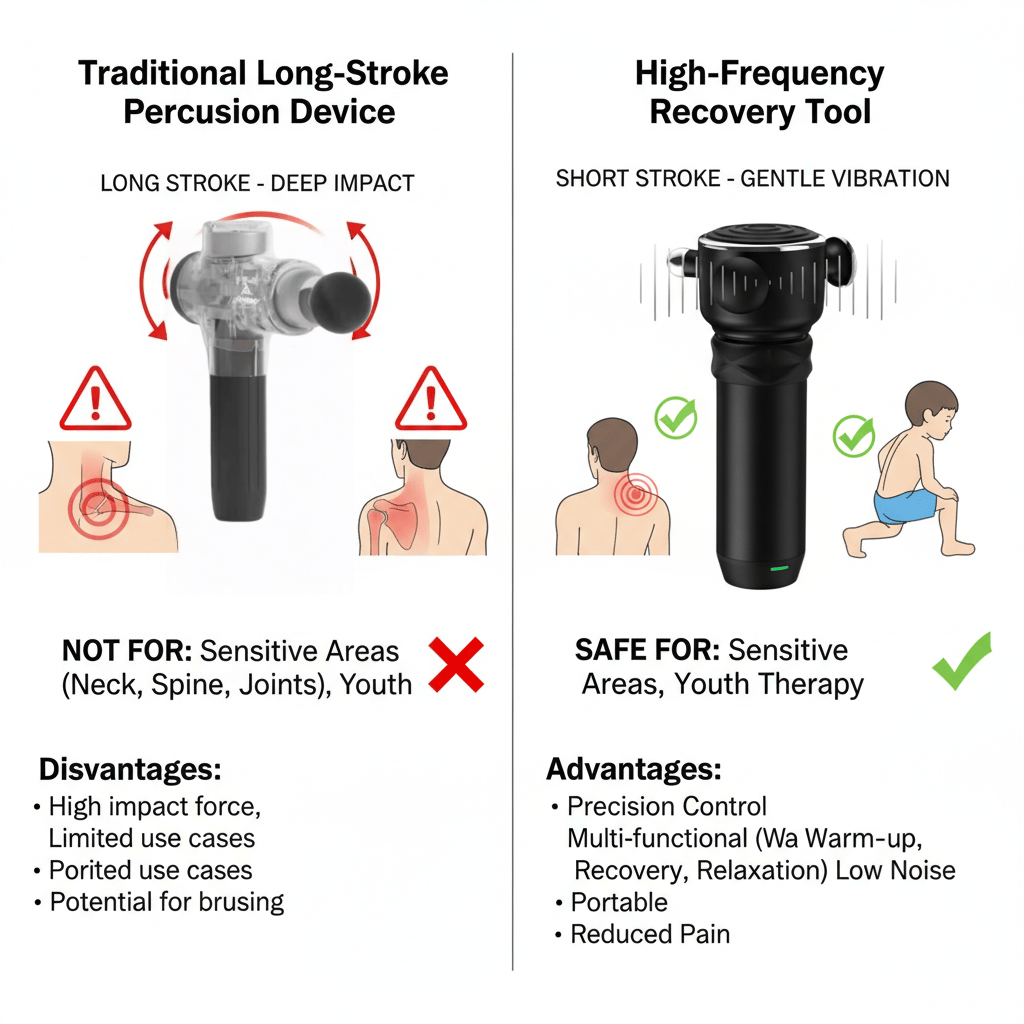
A Broader Shift in Recovery Philosophy
This evolution mirrors changes seen in other performance technologies:
- From brute force to precision
- From maximum output to controllable input
- From single-purpose tools to adaptable systems
Recovery devices are no longer evaluated by how strong they feel in a demo,
but by how reliably they perform across time and context.
What This Means for the Future of Recovery Devices
As recovery continues to evolve, the most effective tools will be those that:
- Integrate seamlessly into daily routines
- Adapt to different recovery needs
- Deliver consistent results without overstimulation
The move from percussion to high-frequency recovery is not about replacing one technology with another —
it is about aligning recovery tools with real usage patterns.
Final Thought
Recovery is no longer an event.
It is a system.
And systems require technologies designed for control, repeatability, and adaptability — not just impact.
Interested in discussing recovery system design or next-generation recovery strategies?
You’re welcome to reach out for a professional conversation.