For years, recovery devices have been evaluated primarily by one visible parameter: stroke length.
The longer the stroke, the deeper the impact — or so the assumption goes.
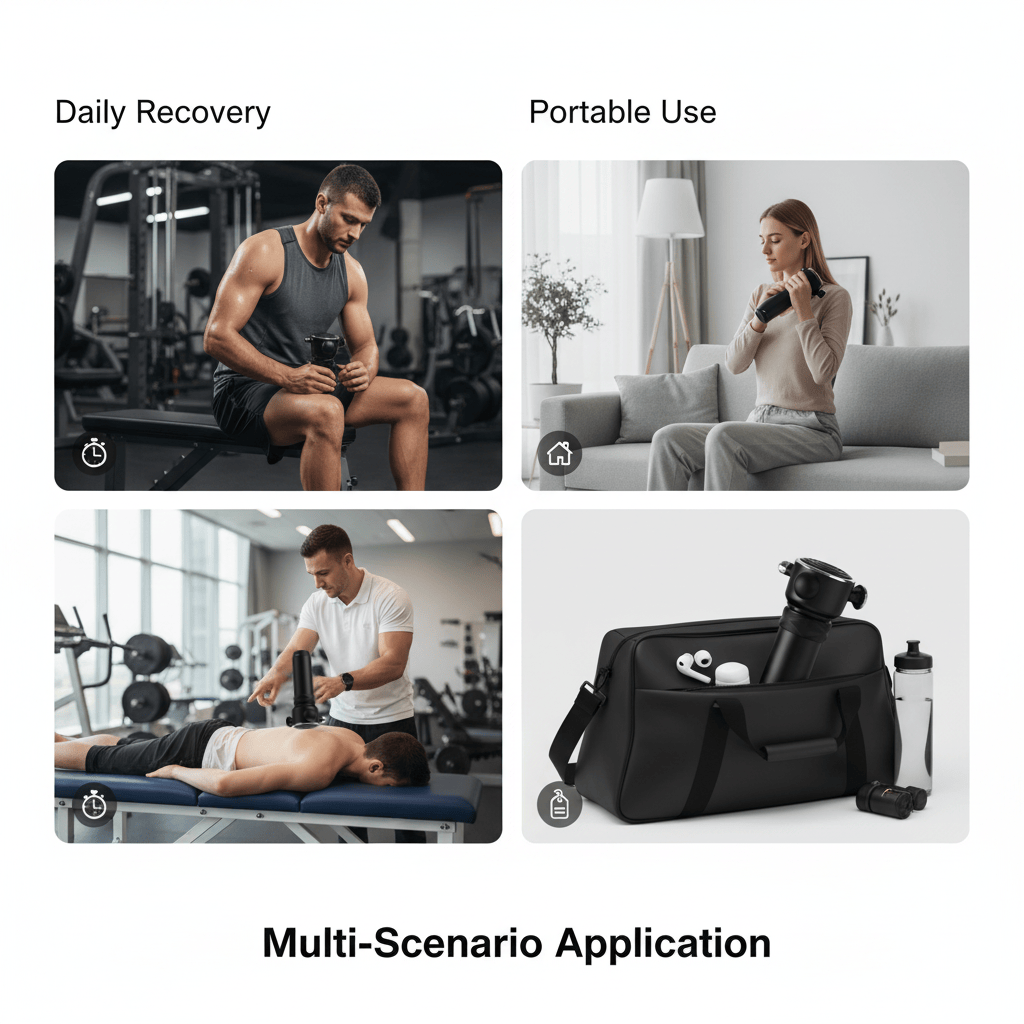
However, as recovery usage expands beyond elite athletes into daily recovery, portable use, and multi-scenario applications, this assumption is increasingly being challenged.
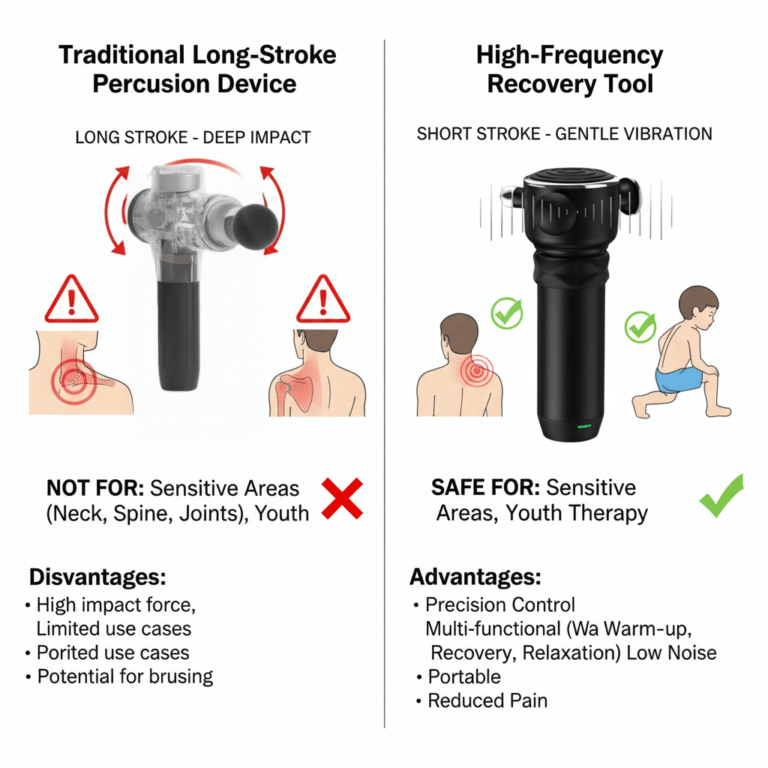
This article explores the real functional differences between large-stroke percussion devices and high-frequency recovery tools, and why effectiveness in modern recovery is no longer defined by stroke length alone.
The Traditional Logic: Why Large-Stroke Became the Industry Default
Large-stroke percussion devices were originally developed for short-duration, high-intensity muscle stimulation, mainly targeting large muscle groups.
Their popularity was driven by three factors:
- Strong immediate sensation during demos
- Simple mechanical structure
- Easy-to-market performance metrics (stroke length, stall force)
In controlled or brief use cases, these devices can deliver noticeable impact.
However, impact intensity does not equal recovery quality — especially when usage extends beyond short, isolated sessions.
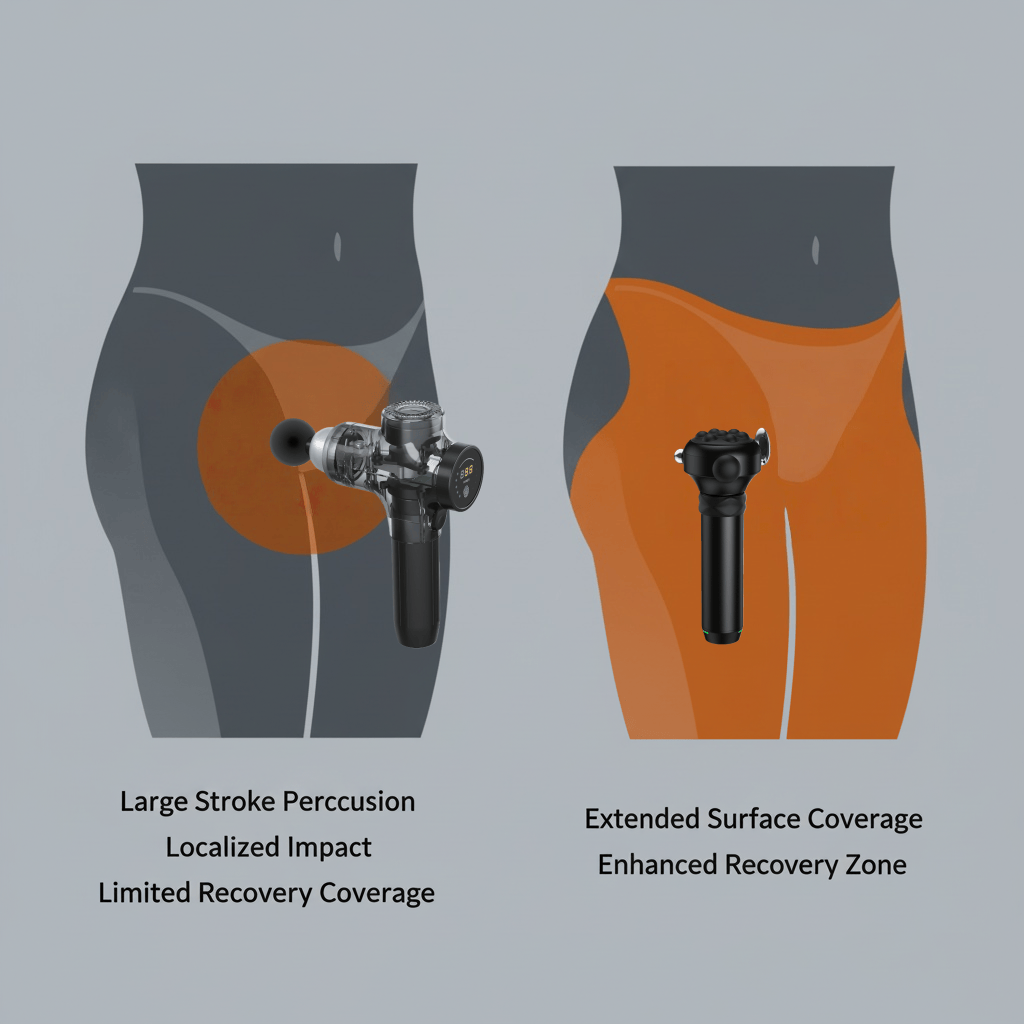
Where the Large-Stroke Model Starts to Break Down
As recovery becomes more frequent, distributed, and integrated into daily routines, several limitations of large-stroke devices emerge.
1. Impact Without Directional Control
Large-stroke devices focus on vertical impact, but muscle and fascia release require multi-directional stimulation.
This often results in:
- High surface impact with limited tissue interaction
- Difficulty controlling force in smaller or sensitive areas
- Overstimulation without proportional recovery benefit
2. Inconsistent Effect Across Different Muscle Groups
What works for large muscle groups does not scale well to:
- Joints
- Tendon-adjacent areas
- Compact muscle zones
As a result, effectiveness varies significantly depending on application area.
3. Poor Suitability for Repeated or Daily Use
Recovery today is no longer an occasional intervention — it is a repeatable daily process.
Large-stroke devices are often:
- Fatiguing to use repeatedly
- Difficult to modulate for low-load recovery
- Less suitable for extended or routine sessions
The High-Frequency Approach: A Different Recovery Logic
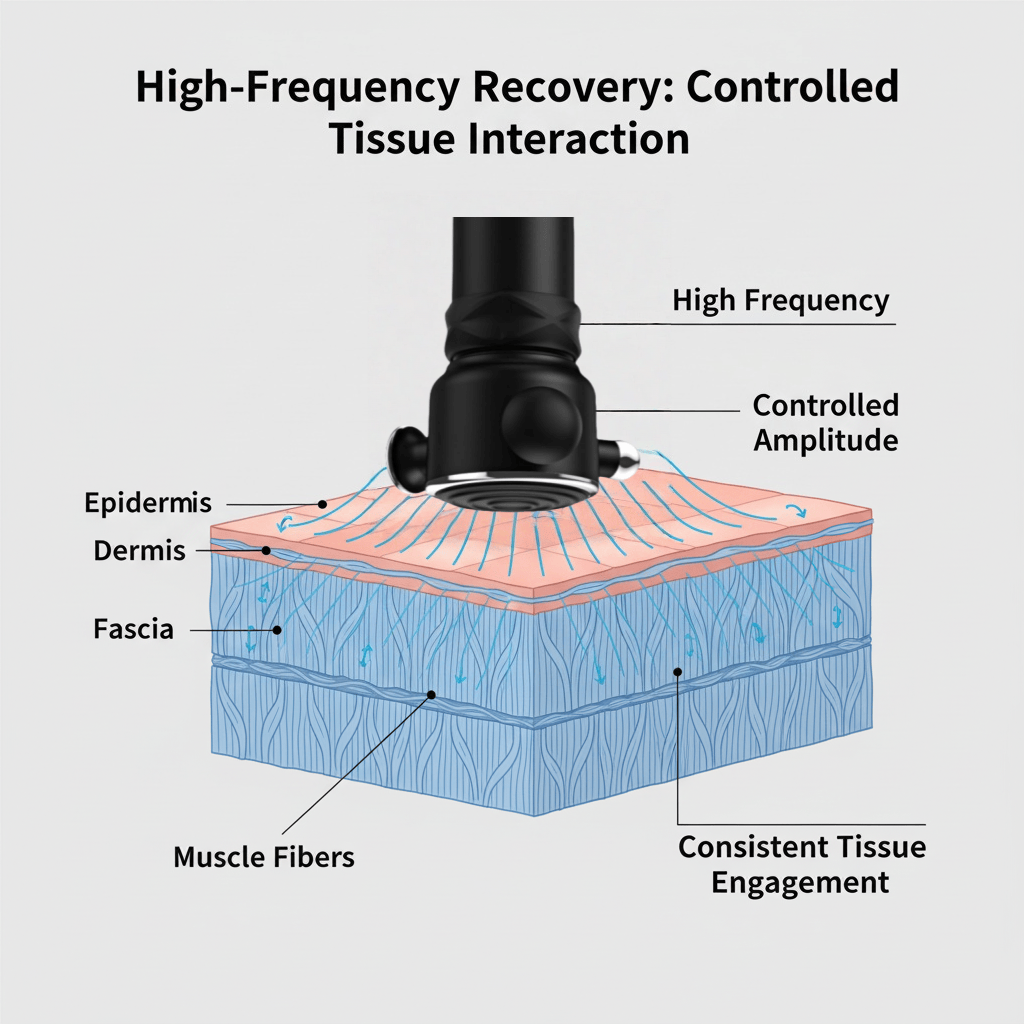
High-frequency recovery tools approach the problem from a fundamentally different angle.
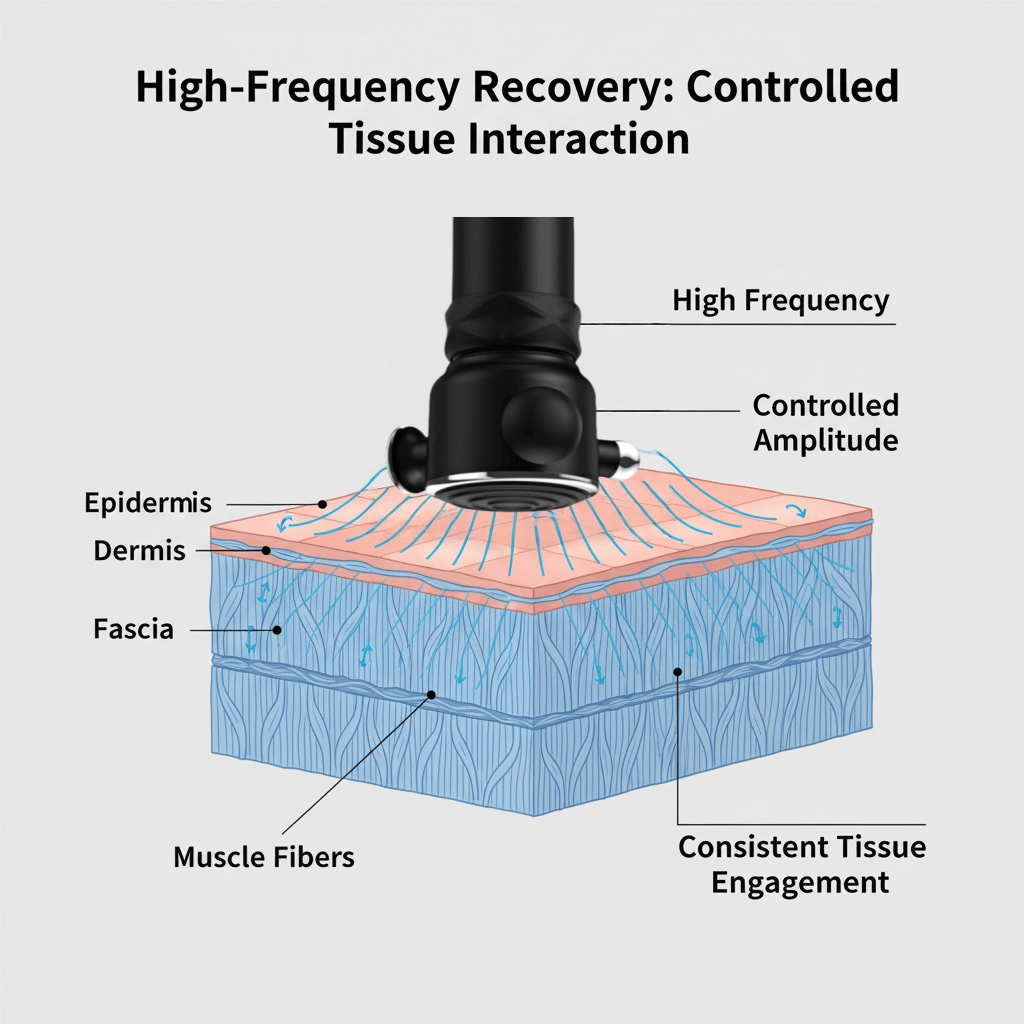
Instead of maximizing stroke length, they focus on:
- Frequency stability
- Controlled amplitude
- Consistent tissue interaction
This allows recovery to shift from impact-based stimulation to controlled neuromuscular and fascial engagement.
Why Frequency Matters More Than Stroke in Modern Recovery
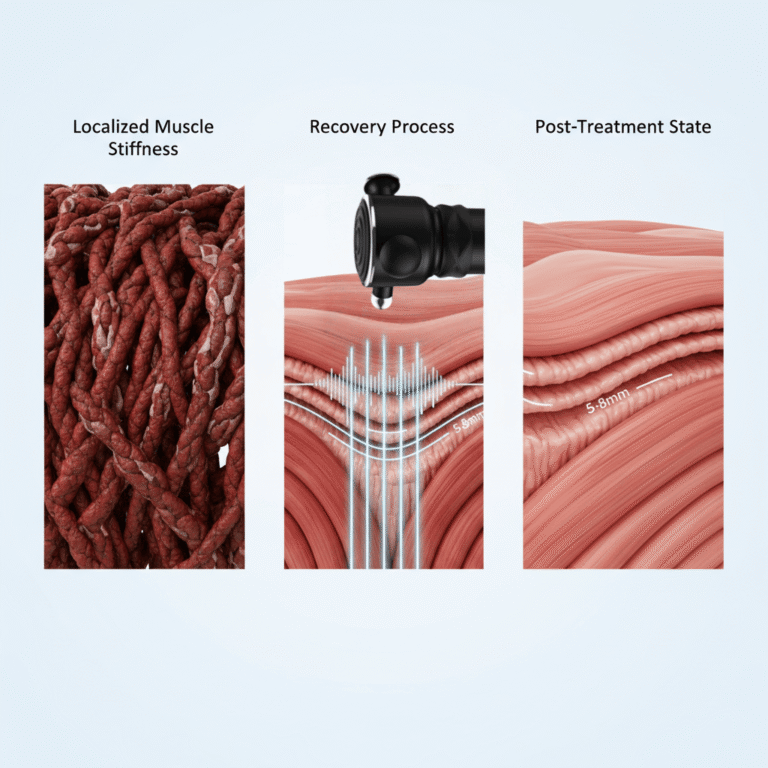
1. Continuous Tissue Engagement
High-frequency vibration creates sustained interaction with muscle and fascia, rather than intermittent impact.
This enables:
- More uniform stimulation
- Better signal transmission through soft tissue
- Reduced stress concentration at impact points
2. Better Adaptability Across Scenarios
High-frequency systems can be adjusted for:
- Large muscle recovery
- Localized tension release
- Daily relaxation and post-activity recovery
This flexibility is critical for environments where one device must serve multiple use cases.
3. Improved Control for Long-Term Use
Because force is distributed through frequency rather than stroke length, high-frequency tools offer:
- Greater control
- Lower fatigue risk
- More consistent outcomes over repeated sessions
Effectiveness Is No Longer About “More Power”
Modern recovery effectiveness is defined by:
- How consistently a device can be used
- How adaptable it is across body areas
- How well it integrates into real-world recovery routines
This is why many recovery systems are gradually moving away from single-mode, large-stroke designs toward multi-mode, frequency-driven solutions.
Rethinking Recovery Device Evaluation
When evaluating recovery devices today, stroke length alone is no longer a sufficient metric.
More relevant questions include:
- How controllable is the stimulation?
- Can the device support repeated daily use?
- Does it adapt to different recovery contexts?
- Is the recovery effect consistent, not just intense?
These considerations are shaping the next generation of recovery tools — tools designed not just to impress during a demo, but to perform reliably in everyday use.
Final Thought
The shift from large-stroke percussion to high-frequency recovery is not a trend — it is a response to how recovery is actually used today.
As recovery continues to evolve from occasional treatment to daily performance maintenance, effectiveness will be defined less by visible power and more by precision, control, and consistency.
Interested in discussing modern recovery system design or application strategies?
Feel free to reach out for a professional discussion.