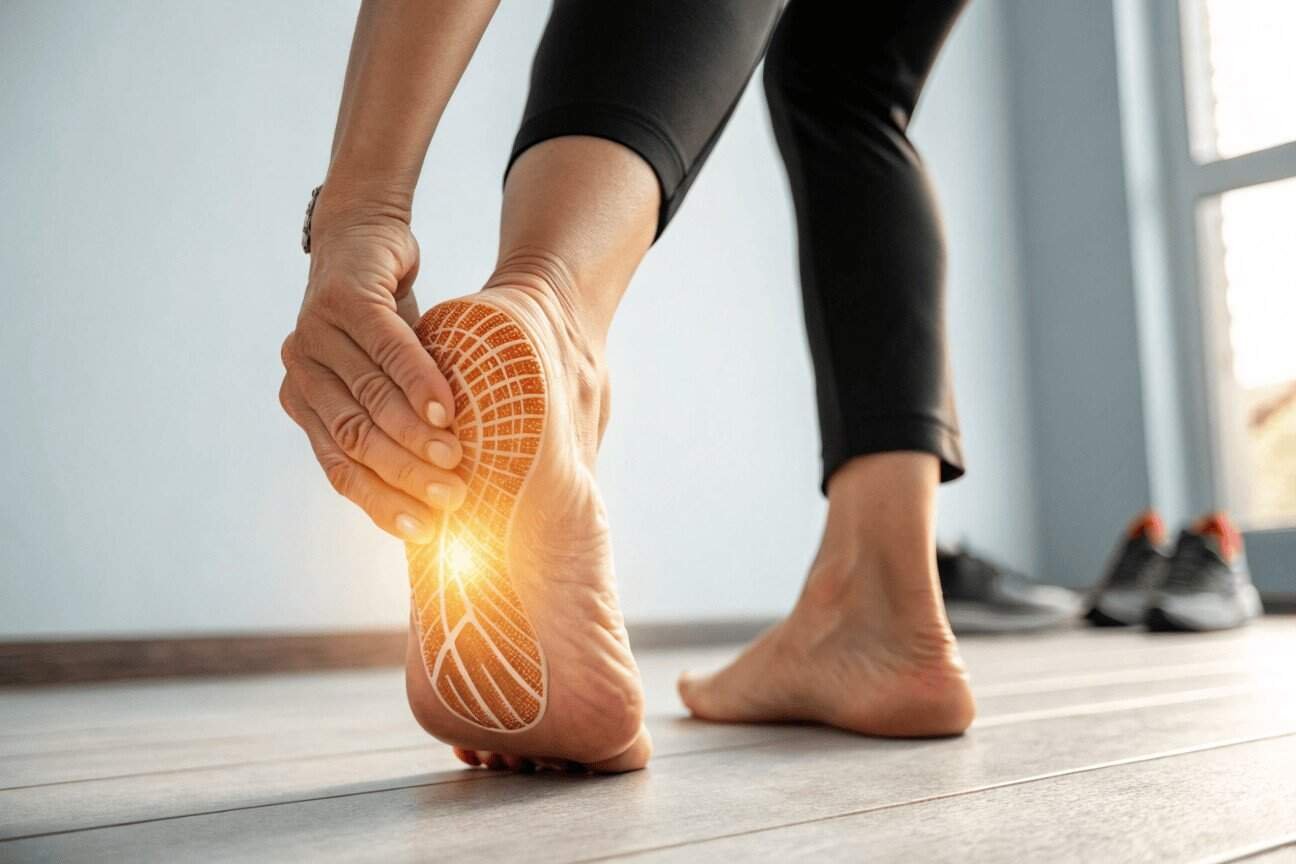
My heels ache when I walk, and it’s making my day miserable. It’s tough to keep moving when every step is painful.
Plantar fasciitis1 is a common cause of heel pain. It involves inflammation of the plantar fascia, a thick band of tissue that runs across the bottom of your foot. Symptoms include sharp pain, especially with your first steps in the morning or after rest.
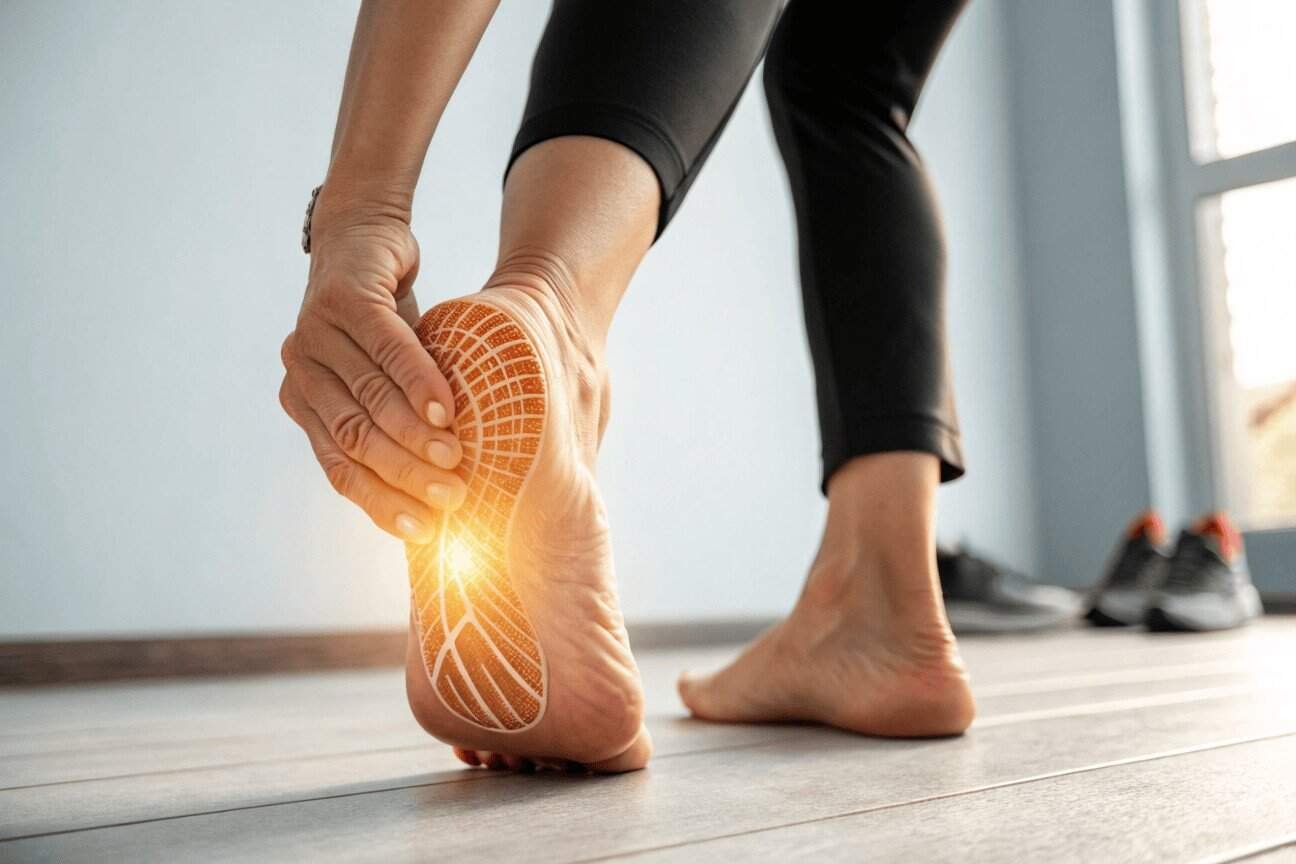
It’s frustrating when pain stops you from enjoying simple activities like walking. Finding effective ways to manage this discomfort is crucial for daily life.
How do your calf muscles affect plantar fasciitis?
Tight calf muscles can significantly impact your foot and worsen plantar fasciitis. When your calf muscles are tight, they pull on the heel bone. This increases tension on the plantar fascia.
This constant pulling can lead to or aggravate inflammation and pain in your plantar fascia. Addressing calf tightness is a key step in managing heel pain, especially if you have plantar fasciitis.

Understanding this connection is vital. It means that if you want to get rid of heel pain2, you can’t just focus on your foot. You also need to look at your calf muscles. When those muscles are tight, they create a chain reaction that puts extra stress on your plantar fascia. It’s like pulling on a string from one end; the tug is felt all the way to the other. This is why exercises and treatments that target calf flexibility can be so beneficial for heel pain sufferers.
What are the symptoms of plantar fasciitis?
Plantar fasciitis typically causes a stabbing pain in the bottom of your foot. This pain is often worse with the first few steps you take in the morning. It can also flare up after standing for a long time or when you stand up after sitting.
The pain might feel worse after exercise, not during. You might experience tenderness in your arch or heel. Sometimes, the pain can radiate towards your toes.
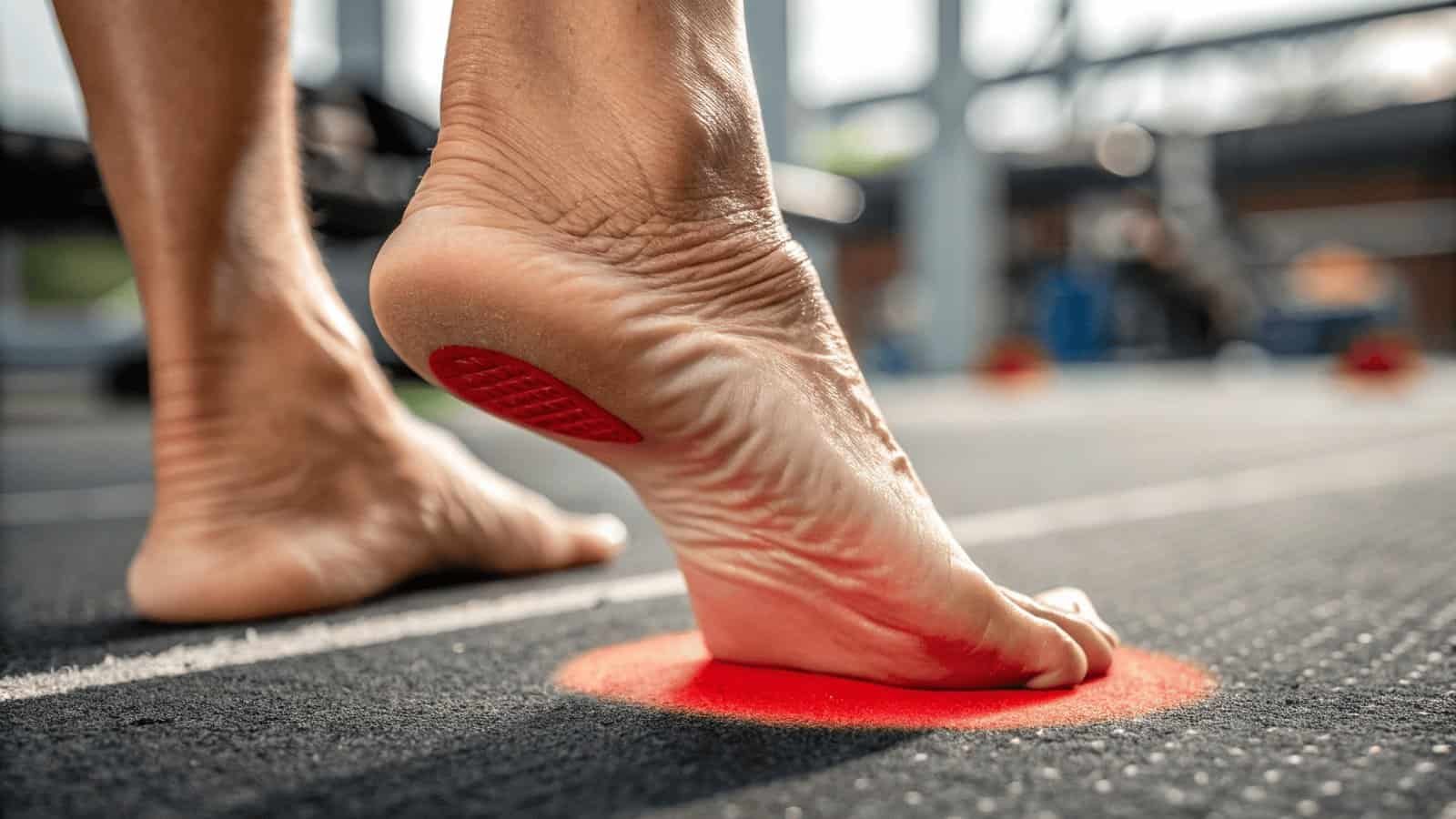
The primary symptom you’ll notice is that sharp pain when you first get out of bed. It’s like stepping on a sharp object, but it usually gets a little better as you move around. However, after periods of rest, like sitting for a while, that pain can return quite strongly when you stand up again. This pattern of pain getting better with initial movement but worse after rest is a hallmark of plantar fasciitis. You might also feel some swelling or tenderness right in the arch area or on the bottom of your heel.
How to keep walking when I have plantar fasciitis?
To keep walking with plantar fasciitis, consistent self-care is key. Gentle stretching of your calf muscles and plantar fascia, especially before and after activity, can help.
Using supportive footwear, like shoes with good arch support, is also important. Sometimes, over-the-counter orthotic inserts can provide extra cushioning and support.
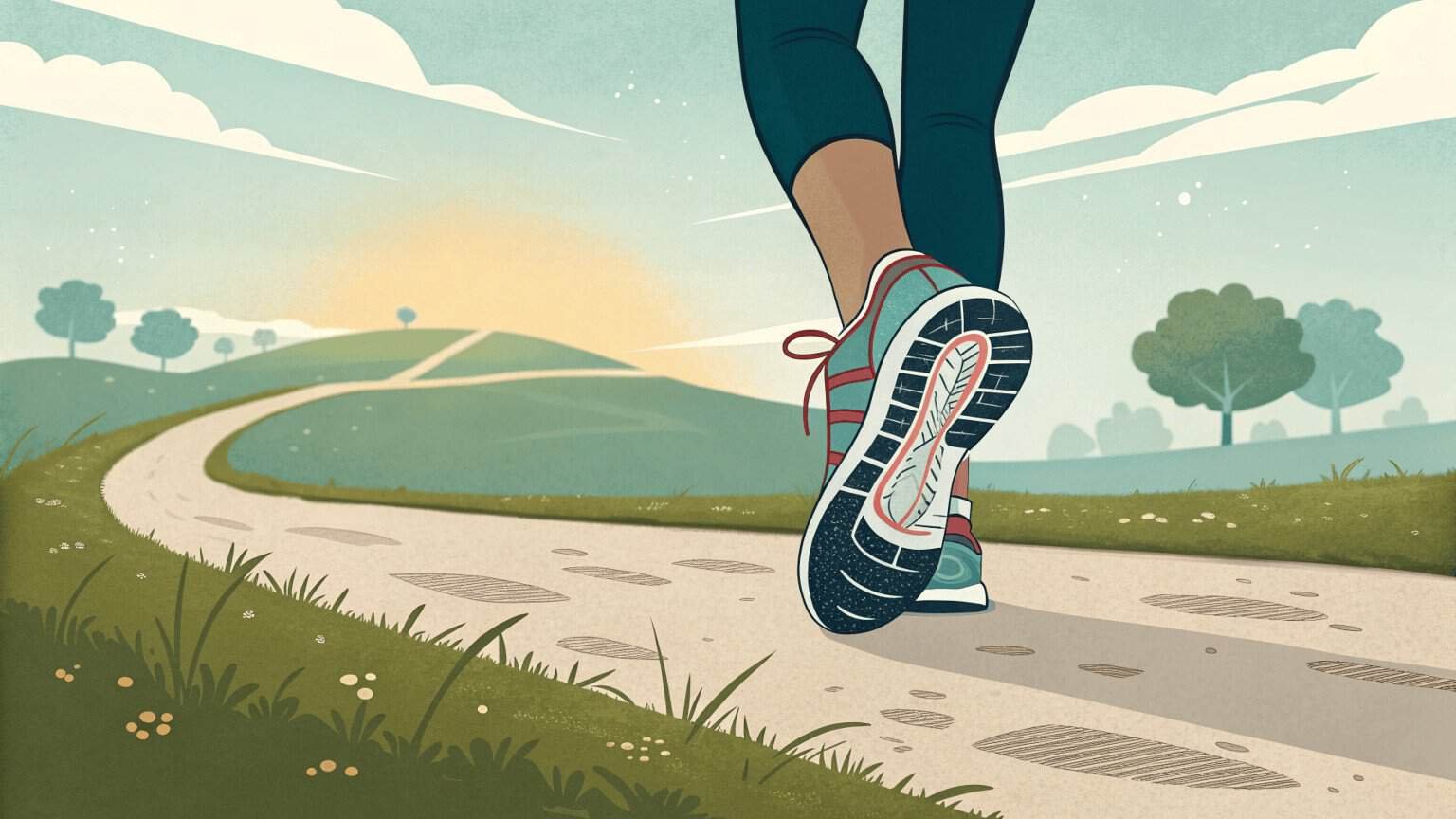
Managing plantar fasciitis involves a multi-pronged approach. Stretching is fundamental; focus on calf stretches where you gently pull your toes towards your shin, and also towel stretches for your plantar fascia. Wearing shoes with firm soles and good arch support throughout the day prevents unnecessary strain. Avoid going barefoot on hard surfaces. Consider using a rolling pin or a frozen water bottle to gently massage your arch for relief. If the pain persists, consulting a professional for targeted treatments like physical therapy3 or shockwave therapy might be necessary.
My experience with heel pain has been quite the journey. I remember struggling to even walk to the kitchen in the morning without wincing. It felt like my feet were betraying me. I tried different shoes, stretching, and even just hoping it would go away on its own, but nothing seemed to make a significant difference long-term.
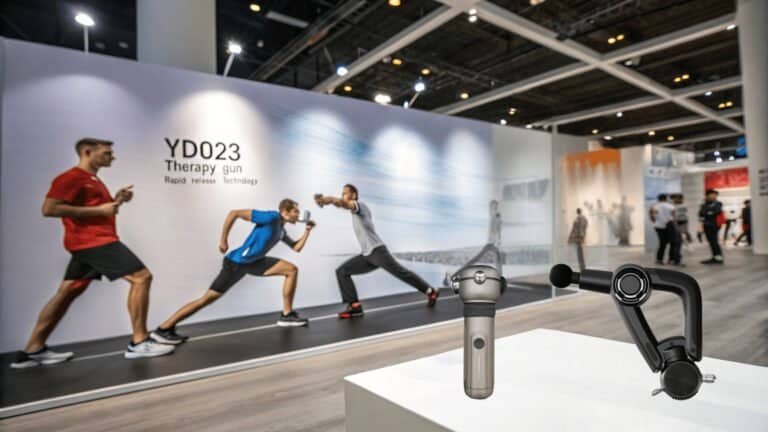
One thing that I found surprisingly effective was using a good massage gun. Now, I know what you might be thinking – a massage gun for heel pain? But hear me out. My Myyuedong Multi-Functional Massage Gun has two sides. One is a release gun, and the other is a powerful massage gun with a 16mm stroke. This is similar to professional-grade tools.
The release gun side is fantastic for targeting specific areas like my calves and around my Achilles tendon without that jarring sensation you can get with a standard massage gun. It’s gentle enough for sensitive areas like my neck but effective at loosening up those tight muscles. The 16mm percussion side is great for deeper muscle groups and really helps break up tightness. I’ve found that using it on my calves, especially after a walk or at the end of the day, significantly reduces the tension that was contributing to my plantar fasciitis. It’s incredibly convenient to have this tool at home, allowing me to manage my pain and recovery on my own schedule. It has definitely helped me get back to walking comfortably, often feeling relief within seconds of use.
Conclusion
Overcoming heel pain requires understanding its causes and adopting a consistent self-care routine. Focus on stretching, supportive footwear, and targeted massage to keep walking comfortably.
-
Explore effective treatments for Plantar fasciitis to alleviate your heel pain and improve mobility. ↩
-
Understanding the causes of heel pain can help you find effective solutions and improve your walking experience. ↩
-
Understand how physical therapy can be a crucial part of your treatment plan for plantar fasciitis. ↩