Many people think high-frequency massage means "stronger and more intense." But the truth is, it’s about delivering more mechanical signals to your muscles in the same amount of time.
High-frequency massage devices1 work by sending rapid, controlled waves into your muscles. These waves are small but frequent, helping your tissues relax without needing excessive force.
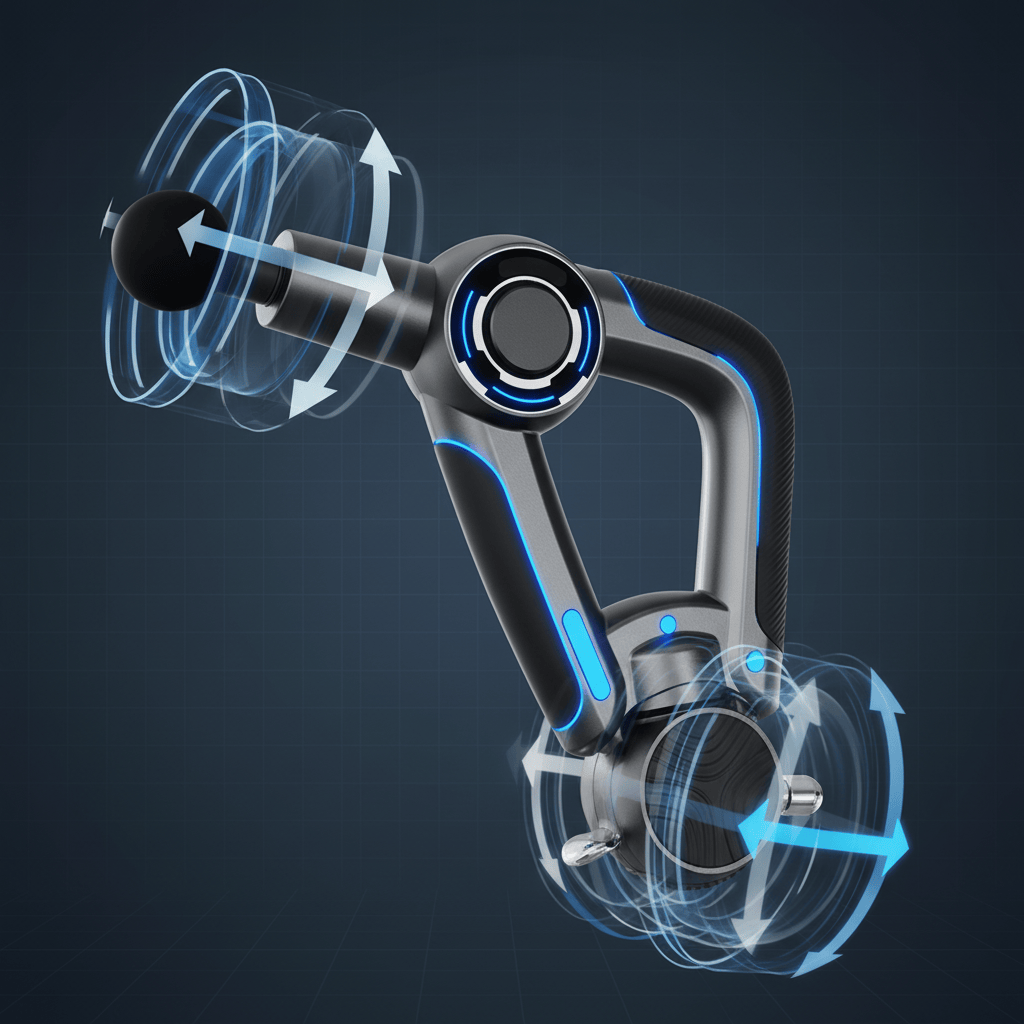
If you’ve ever wondered why high-frequency massage feels different from traditional deep-tissue work, keep reading. The science behind it is fascinating and might change how you think about muscle recovery2.
Inside the Engine: What “High-Frequency” Really Means in a Massage Device?
People often confuse high-frequency with high-intensity. But the real magic lies in the speed and consistency of the waves.
High-frequency refers to the number of waves per minute (RPM)3. Devices like ours operate at 5000–7000 RPM, creating a dense, continuous signal4 that keeps muscles from tensing up again.

To understand why this matters, let’s break it down:
Low-Frequency vs. High-Frequency
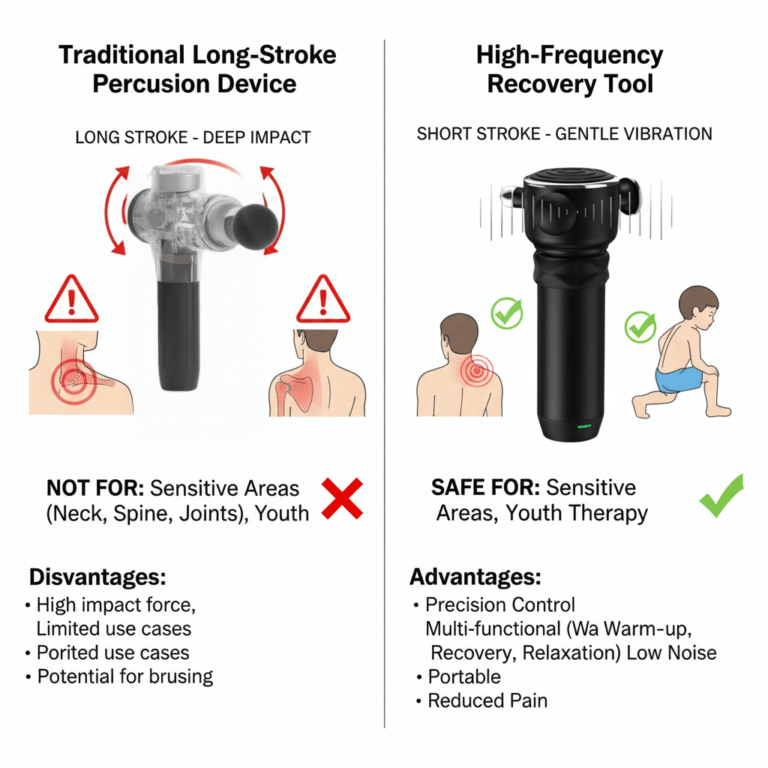
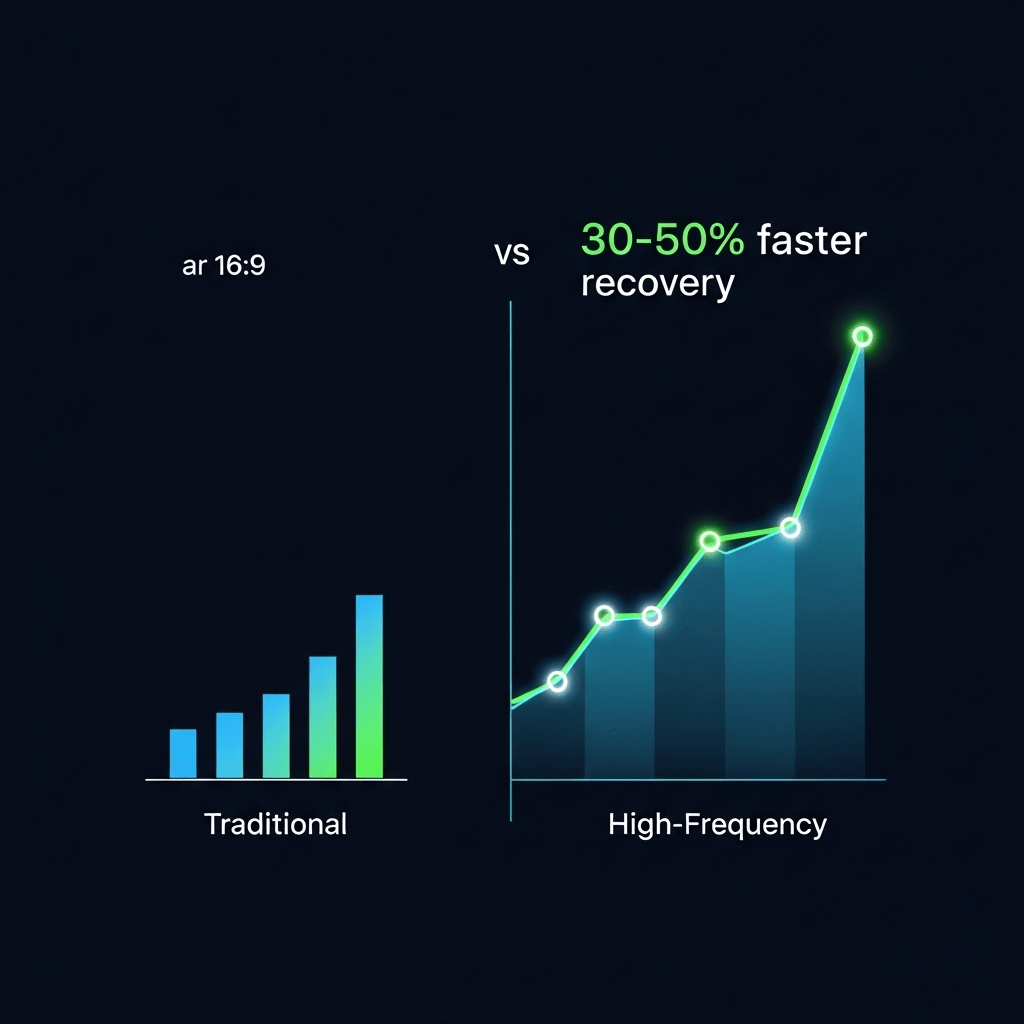
- Low-Frequency: Delivers fewer, larger waves. Each wave pushes deeper but leaves gaps between signals.
- High-Frequency: Delivers many smaller waves. The waves are closer together, keeping muscles in a relaxed state.
The Science Behind It
High-frequency waves create a "reset" effect. Your muscles don’t have time to tense up again because the next wave arrives almost instantly. This is why high-frequency massage feels smoother and less jarring than traditional methods.
From Skin to Deep Fascia: How High-Frequency Waves Travel Through Muscle Tissue?
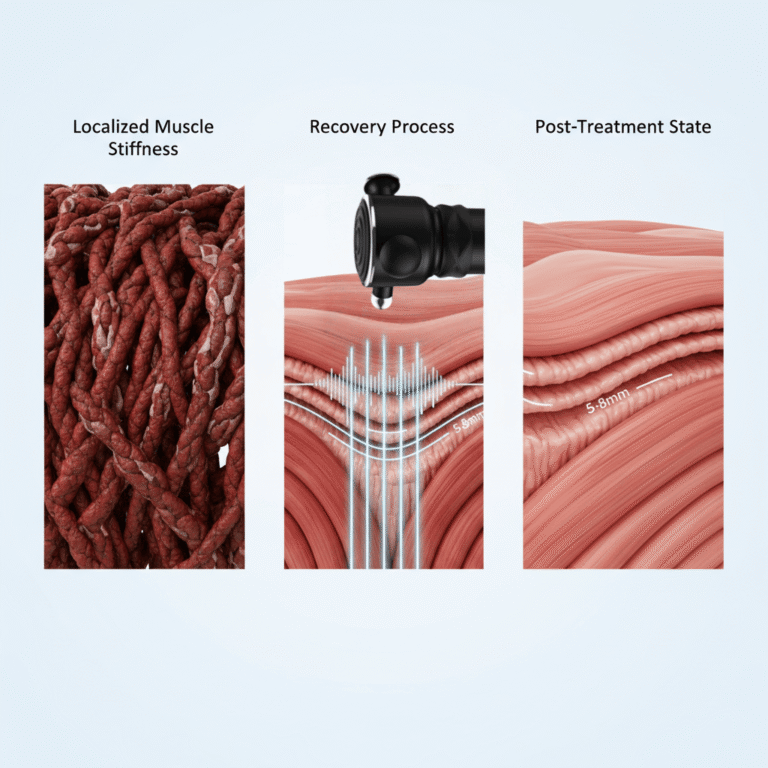
You might think high-frequency waves only affect the surface. But they actually penetrate deep into your muscles and fascia.
High-frequency waves travel in a continuous pattern, reaching deeper layers of tissue without causing discomfort. This is why they’re so effective for recovery.
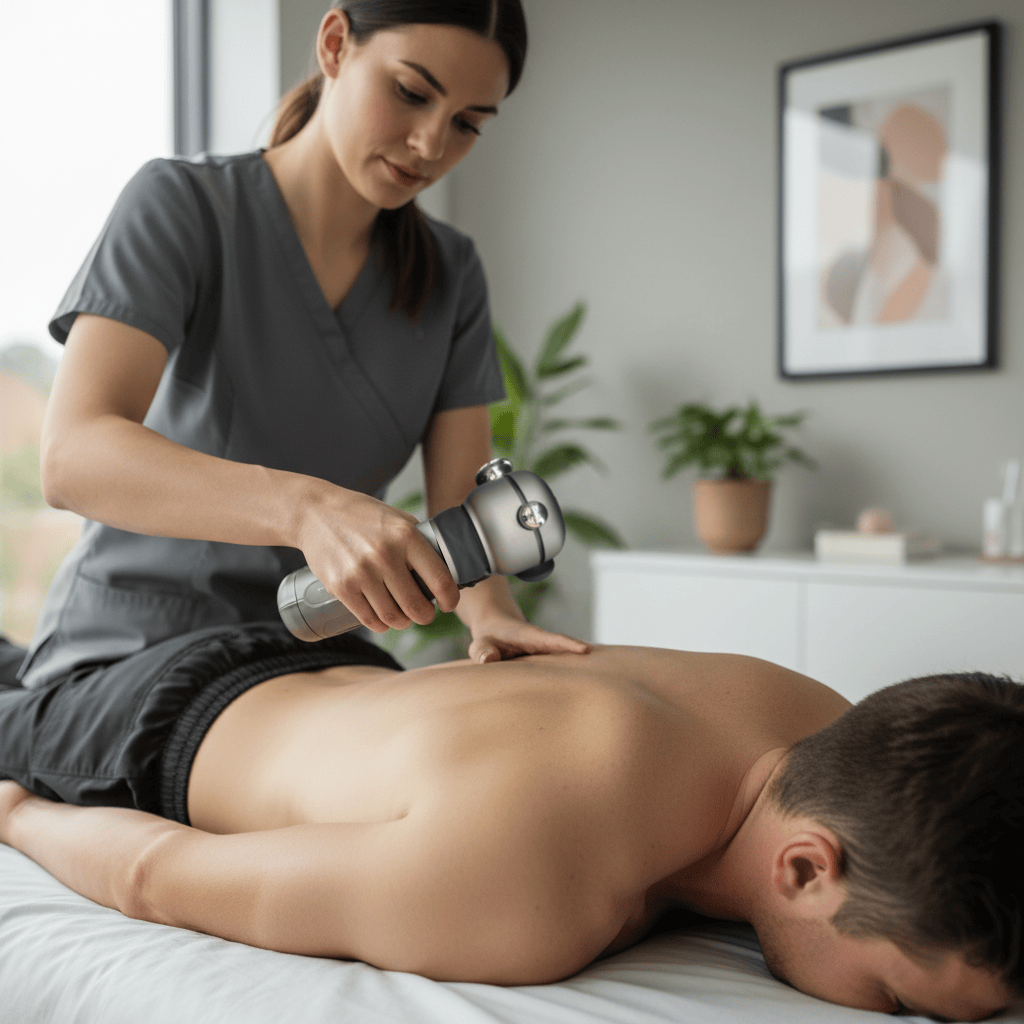
Here’s how it works:
Wave Penetration
- Skin Level: The waves start at the surface, warming up the tissue.
- Muscle Layer: The waves move deeper, loosening tight fibers.
- Fascia: The continuous signal4 helps release tension in the connective tissue.
Benefits of Deep Penetration
- Faster recovery
- Reduced soreness
- Improved flexibility
Key Specs That Matter: Frequency, Amplitude, and Head Design (And How They Change the Massage You Feel)
Not all high-frequency devices are the same. The specs make a big difference in how the massage feels and works.
Frequency, amplitude, and head design5 are the three most important factors. They determine how the waves feel and how effective they are.
Let’s dive into each one:
Frequency
- What It Is: The number of waves per minute (RPM)3.
- Why It Matters: Higher frequencies (like 5000–7000 RPM) create a smoother, more relaxing experience.
Amplitude
- What It Is: The size of each wave.
- Why It Matters: Smaller amplitudes (like 2mm) feel gentler but are more effective at keeping muscles relaxed.
Head Design
- What It Is: The shape and material of the massage head.
- Why It Matters: Different heads target different areas. For example, a flat head is great for large muscles, while a pointed head works better for knots.
Conclusion
High-frequency massage isn’t about brute force. It’s about delivering dense, controlled waves that help your muscles relax and recover faster.
-
Explore the advantages of high-frequency massage devices for muscle recovery and relaxation. ↩
-
Explore various methods for muscle recovery, including high-frequency massage techniques. ↩
-
Learn how RPM influences the effectiveness of massage therapy and muscle relaxation. ↩ ↩
-
Find out why a continuous signal is crucial for effective muscle relaxation and recovery. ↩ ↩
-
Understand how these specs impact the effectiveness and feel of massage devices. ↩