Feeling stuck in your training? Poor performance can stem from more than just fatigue; it could be hidden muscle issues. Discover how to break through your plateaus.
Improving sports performance goes beyond sheer effort; it requires strategic recovery to address underlying issues like muscle adhesions1 and inefficient healing. Understanding these factors is key to unlocking your full potential.
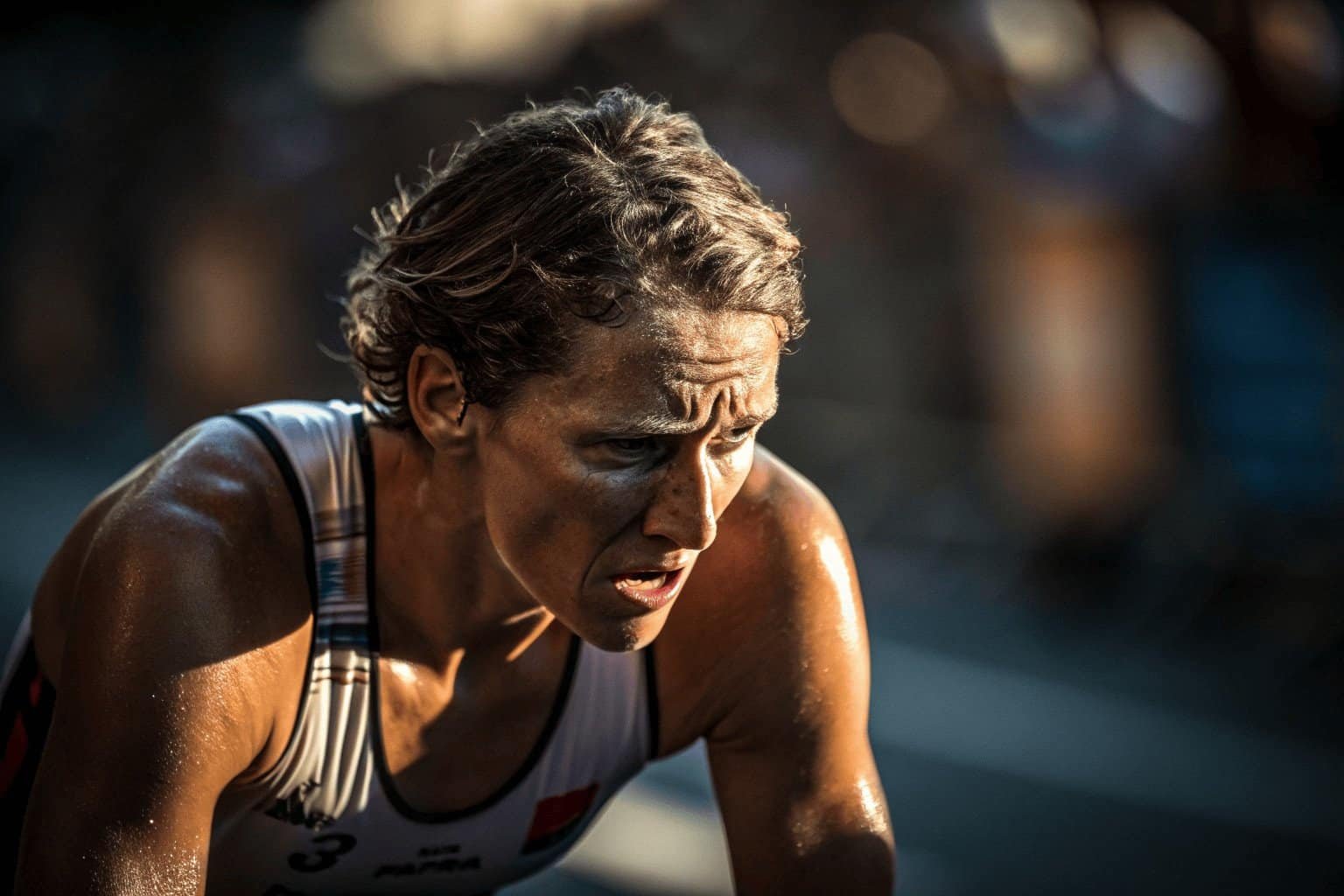
It’s frustrating when your best efforts don’t translate into visible progress. You push hard, you eat right, but something still feels “off.” Often, the culprit isn’t a lack of effort, but rather how your body is recovering. Let’s dive into what might be holding you back.
How to maximize athletic performance?
Maximizing athletic performance means adopting a proactive approach to recovery, addressing muscle issues before they hinder your progress and extending your active career.
To maximize athletic performance, focus on efficient and precise recovery techniques that target muscle adhesions and promote tissue regeneration, allowing for consistent progress and longevity in your sport.
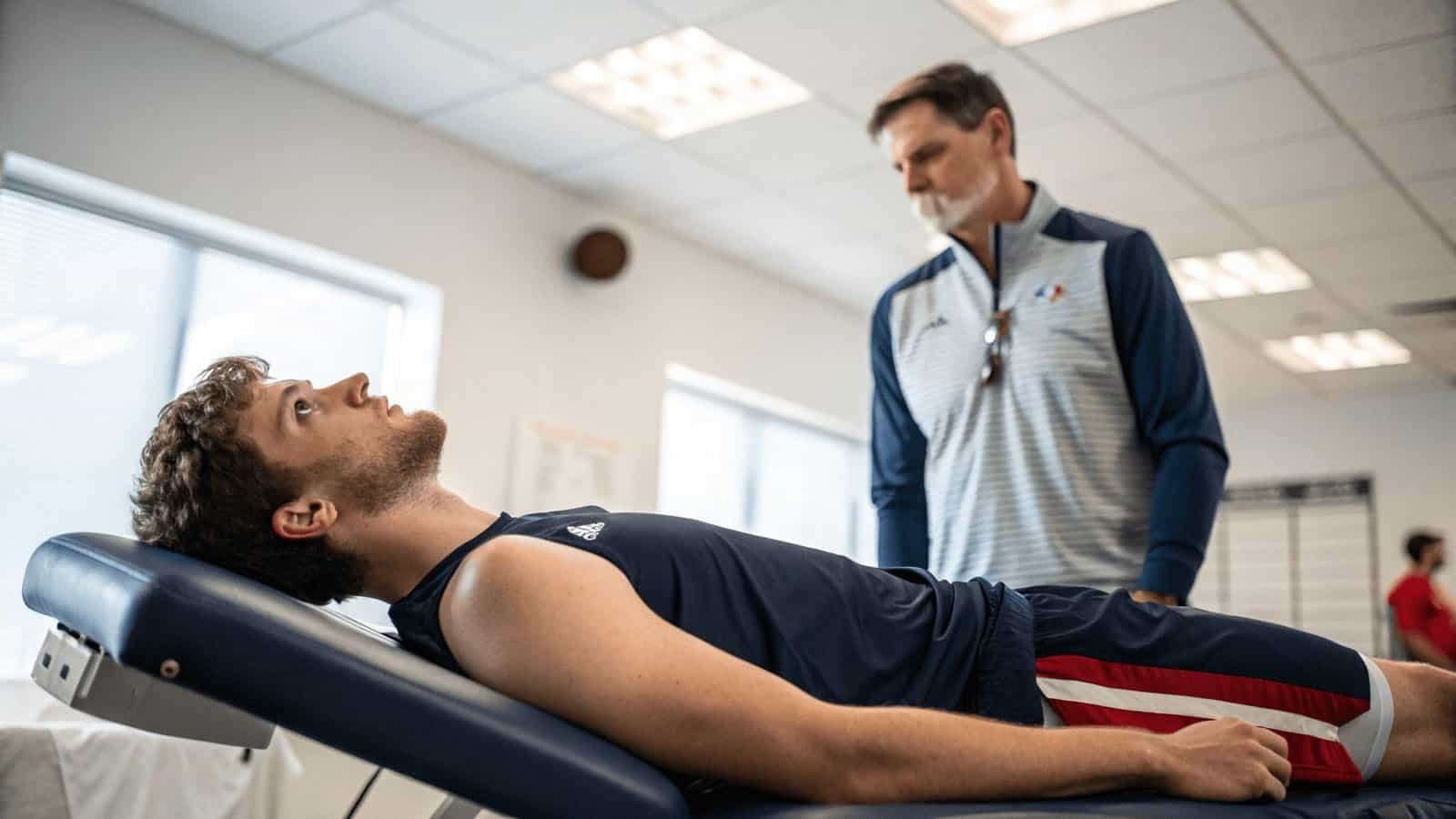
Many athletes hit a wall where, despite consistent training, their performance plateaus or even declines. This isn’t just about getting tired; it’s often about what’s happening at a microscopic level within your muscles. When muscles are overworked or used improperly, they can develop scar tissue2 and adhesions. These are like tiny internal roadblocks that restrict muscle movement and reduce power. Traditional rest alone might not break these down effectively. My own experience with this involved a persistent tightness in my hamstrings that limited my sprinting speed, even though I felt generally rested. It took targeted work to break through that restriction.
What are the causes of poor performance in athletic sports?
Poor athletic performance often stems from insufficient or inefficient recovery, leading to underlying issues like muscle adhesions, restricted movement, and delayed healing.
When your muscles aren’t recovering properly, they can’t perform at their best. Think of it like this: every training session creates micro-tears in your muscle fibers. Your body needs time and the right conditions to repair these tears and make your muscles stronger. If you don’t allow for this recovery, or if the recovery methods aren’t effective, these micro-tears can accumulate, leading to scar tissue and adhesions. These adhesions aren’t just uncomfortable; they actively hinder your muscle’s ability to contract fully and generate force. This directly impacts your speed, power, and overall performance. I’ve seen this firsthand in athletes who feel they aren’t getting faster or stronger, despite putting in the hours. The issue often lies in how they’re aiding their body’s natural repair processes.
It’s not just fatigue, it’s "muscle adhesion" stealing your speed and power.
You might feel tired, but often that “tightness” you experience isn’t just simple fatigue. It’s the development of scar tissue and adhesions within your muscles. These form when muscles are overused or injured. They act like internal "knots" or "bonds" that restrict how your muscle fibers can move and contract. This directly impacts your ability to produce explosive power3, maintain speed, or execute precise movements. My personal journey in sports revealed this when I started experiencing a noticeable decrease in my agility on the court. Simple rest didn’t help, but specific soft tissue work to break down these adhesions made a significant difference.
The "time gap" and "precision gap" in recovery are unseen walls holding you back.
In competitive sports, every second counts. If your recovery process after training or between events isn’t timely and precise, you’re losing ground. Many people rely on general stretching or passive rest, but these often fall short when specific muscle groups are tight or if there are small, localized injuries. You might spend valuable time trying to recover, but without targeting the exact problem, progress can be minimal. This is where a more focused approach becomes critical.
The end of your athletic life often isn’t a major injury, but accumulated "minor discomforts" and slow recovery.
Many athletes fear a big injury, but often, it’s the persistent, smaller issues—like myofascial pain or limited range of motion—that gradually erode performance and dedication. If these small problems aren’t addressed promptly and effectively, they can snowball. It’s like a small leak in a boat that, if ignored, can lead to it sinking. Proactively managing your body’s recovery and addressing these minor discomforts early can prevent them from becoming major roadblocks, ultimately extending your ability to participate in sports and enjoy them for longer.
Can you recommend a book for sports performance training?
While books offer valuable knowledge about sports science and training principles, they provide a theoretical foundation rather than the practical, immediate solutions your body needs.
Books can be excellent resources for understanding the science behind athletic performance, but they don’t offer real-time, personalized interventions that address acute recovery needs during training or competition.
Learning is essential for improvement. Many great books delve into biomechanics, exercise physiology, and effective training strategies. For instance, I found "Periodization Training for Sports" by Tudor Bompa to be incredibly insightful for understanding structured training plans. Books like these build a critical knowledge base. However, the challenge lies in translating that knowledge into action, especially when you need results on the field or in the gym. Knowing what to do is one thing; being able to do it effectively and immediately is another, particularly when dealing with your body’s real-time responses to exertion.
When your muscles signal fatigue after a tough workout, or when you have very little time for recovery between heats in a competition, you need something more than just theoretical advice. You need a tool that can act on that knowledge instantly, providing a targeted solution for your specific physical needs. This is where practical, hands-on recovery methods become indispensable.
How to maximize athletic performance?
To truly maximize your athletic performance, you need a comprehensive recovery strategy4 that goes beyond basic methods, incorporating precise interventions for optimal muscle function and longevity.
Your body needs a "full solution," not a "single tool."
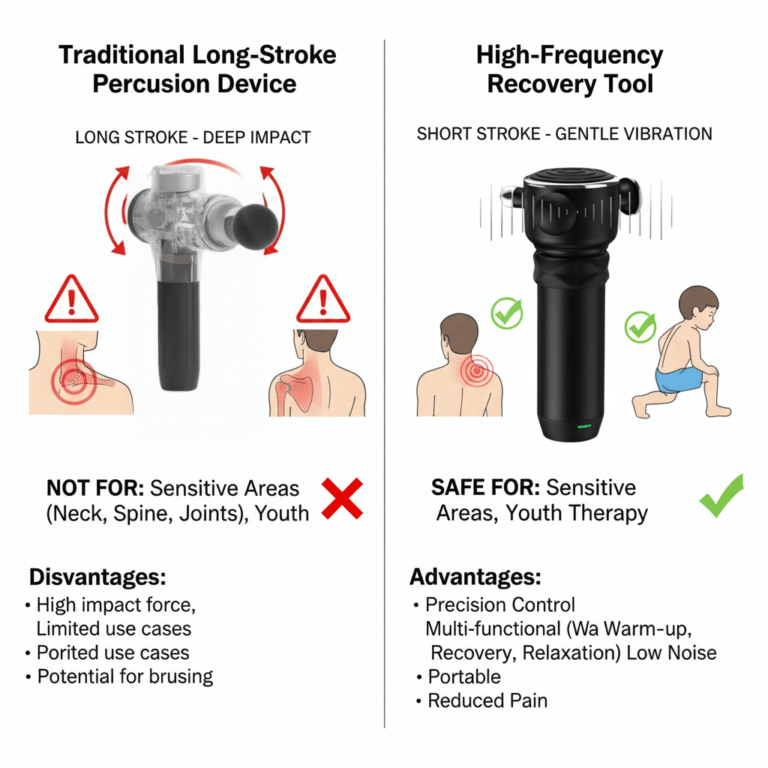
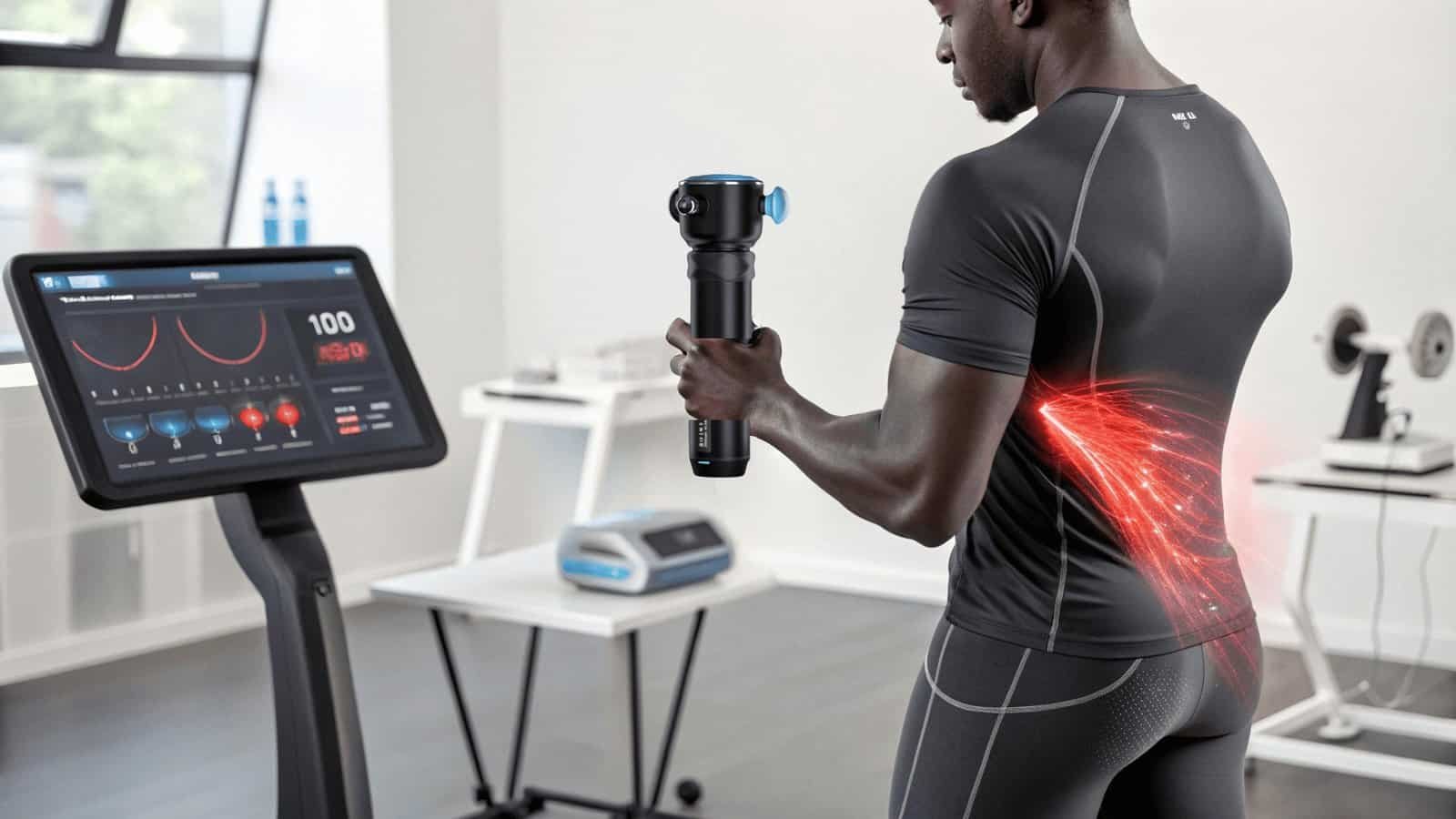
Most standard massage guns focus broadly on muscle relaxation. However, my YD023 therapy gun uniquely combines deep muscle loosening (with a 16mm percussion gun) and precise repair (with a 2mm amplitude, high-frequency 3D vibrating therapy gun). This dual approach is like having two specialized tools: one for widespread muscle fatigue and another for pinpointing and resolving specific issues like scar tissue, adhesions, or tender spots. This "one-two punch" is key for comprehensive sports protection and recovery, allowing athletes to address post-training fatigue, potential adhesions, and performance-limiting pain in one go, significantly boosting recovery efficiency.
Bringing "physiotherapist precision" to the sidelines and home.
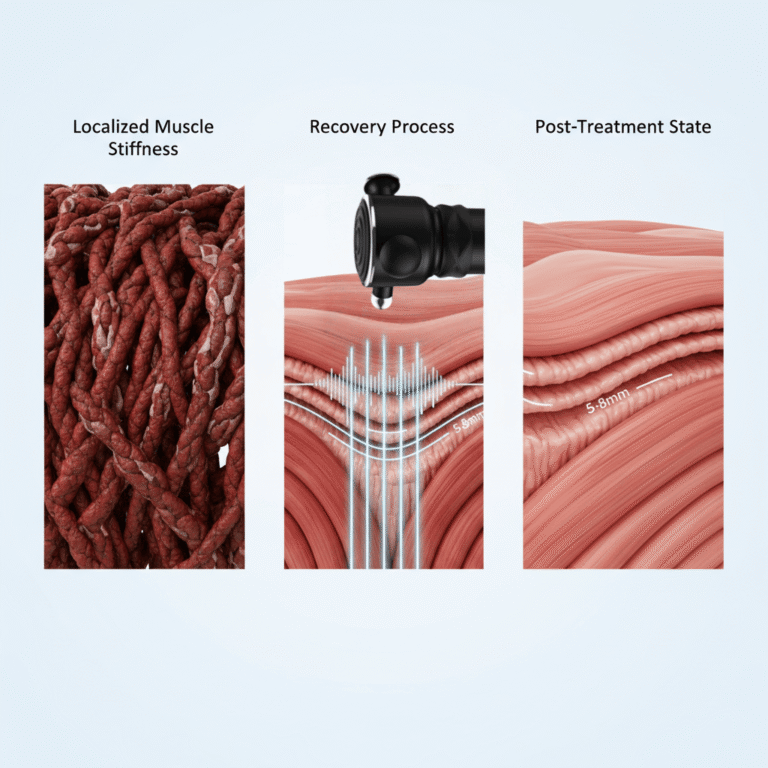
Our therapy gun utilizes "Rapid Release" technology, delivering high frequencies (4000-6500 RPM) with 3D vibrations (vertical and horizontal) and a precise 2mm amplitude. This allows the vibrations to penetrate 6-8mm into the subcutaneous tissue, reaching the fascial layer. This means your body no longer needs to wait for a physiotherapist or rely on uncertain self-massage. The YD023 therapy gun can simulate the precise techniques used by professionals to address deep muscle tissue, scar tissue, and adhesions—but faster and more controllably. This professional-grade precision during on-site recovery helps maximize the quality of your post-workout recovery, getting you back to peak condition quicker.
From "slowing down injuries" to "actively repairing," enhancing your athletic performance lifespan5.
The tool is particularly effective at repairing restrictive scar tissue and adhesions. The 2mm amplitude combined with high-frequency 3D vibration allows for more precise targeting of these stubborn areas, effectively alleviating sports-related injuries. When your muscle fibers can maintain better mobility and elasticity, and when injury risks are managed and repaired proactively, you can train and compete with more confidence and endurance. This isn’t just about improving current performance; it’s an investment in your future athletic career, enabling faster recovery from fatigue, reducing stiffness-related injuries, and ultimately, allowing you to enjoy sports for much longer.
Tailored for athletes:
- Running Enthusiasts: Addresses tightness and adhesions in common running muscles like calves, hamstrings, and glutes, improving running efficiency.
- Basketball Players: Quickly recovers high-load muscles in the shoulders, thighs, and calves after explosive movements, enhancing jumping and agility.
- Gym Beginners: Relieves post-workout muscle soreness and targets localized tension from poor posture or overtraining.
Conclusion
Elevate your athletic performance by understanding and addressing the roots of poor performance—primarily recovery. Prioritize precise, efficient recovery methods to break through plateaus and extend your active sports life.
-
Understanding muscle adhesions is crucial for athletes to enhance recovery and performance. ↩
-
Learn about scar tissue’s effects on movement and how to manage it for better performance. ↩
-
Explore techniques to enhance explosive power for better athletic performance. ↩
-
Explore comprehensive recovery strategies to maximize athletic performance. ↩
-
Explore strategies to extend athletic performance lifespan and prevent injuries. ↩