Many recovery devices focus on vibration speed as the primary performance metric. However, real-world tissue response depends far more on how vibration energy travels through fascia than how fast a device moves.
Understanding vibration energy transfer helps explain why some tools feel effective beyond the surface, while others remain limited to superficial stimulation.
Fascia as a Mechanical Network (Not a Muscle)
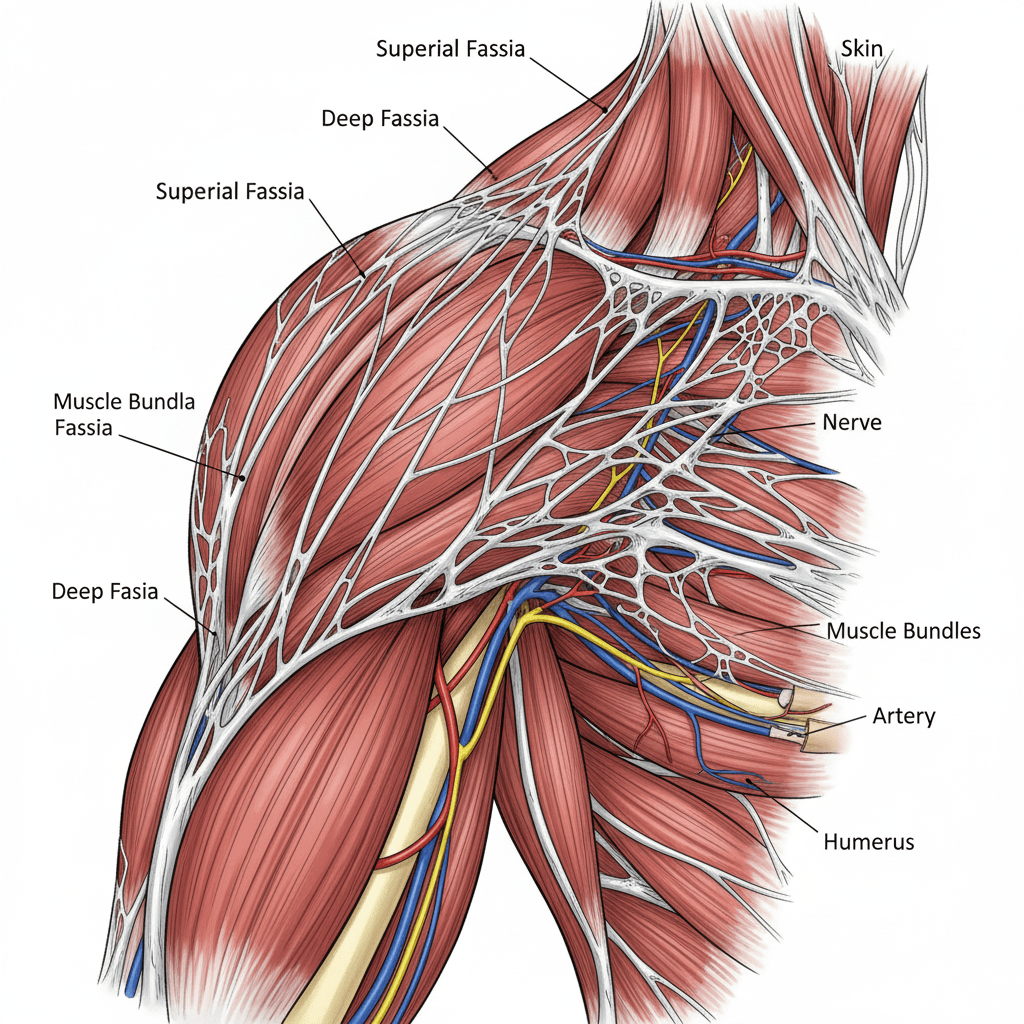
Fascia is not a single muscle or isolated tissue. It functions as a continuous, tension-based connective network that links muscles, joints, and movement chains across the body.
Unlike muscle fibers that contract and relax in one primary direction, fascia distributes mechanical forces laterally and diagonally. This makes it highly responsive to directional energy, not just direct impact.
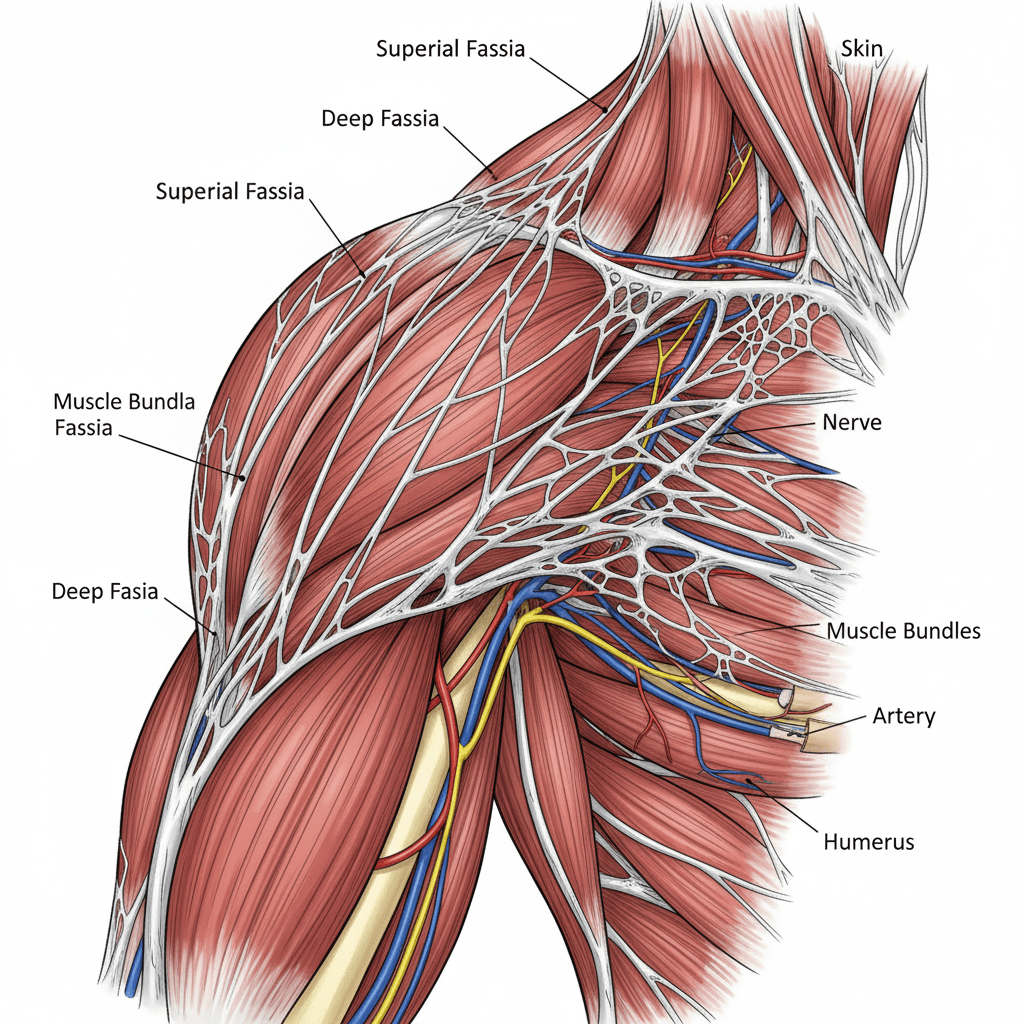
Because of this structure, fascia reacts more effectively to energy that spreads and propagates, rather than energy that repeatedly strikes the same point.
How Vibration Energy Actually Moves in Soft Tissue
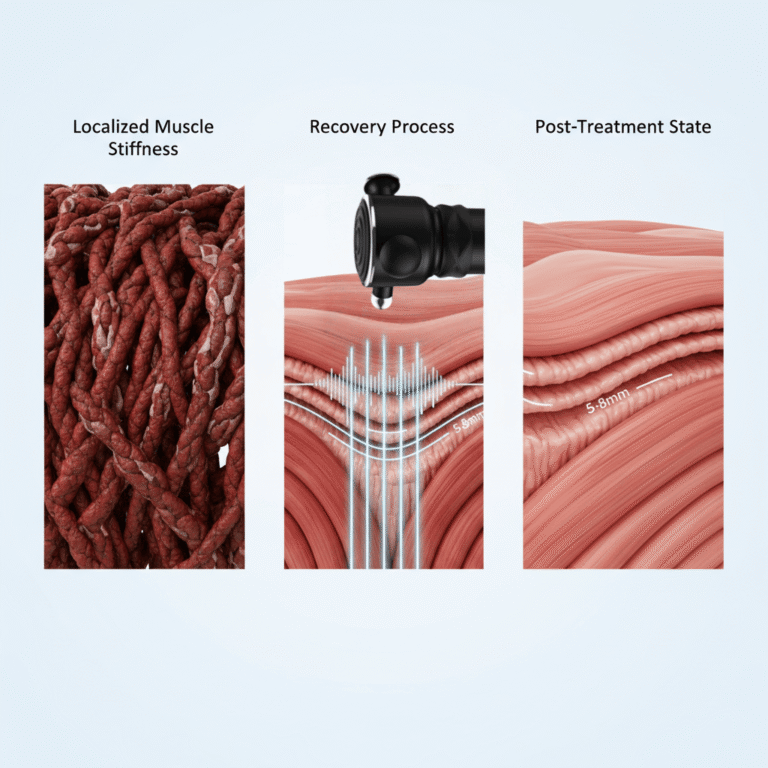
When vibration enters soft tissue, it does not stay localized. Instead, it disperses as mechanical waves that travel across connected layers.
Key characteristics of vibration energy transfer include:
- Wave propagation rather than point compression
- Energy dispersion across multiple tissue layers
- Reduced peak stress through lateral spread
This explains why vibration that moves across tissue planes can feel deeper and more uniform, even at lower amplitudes.
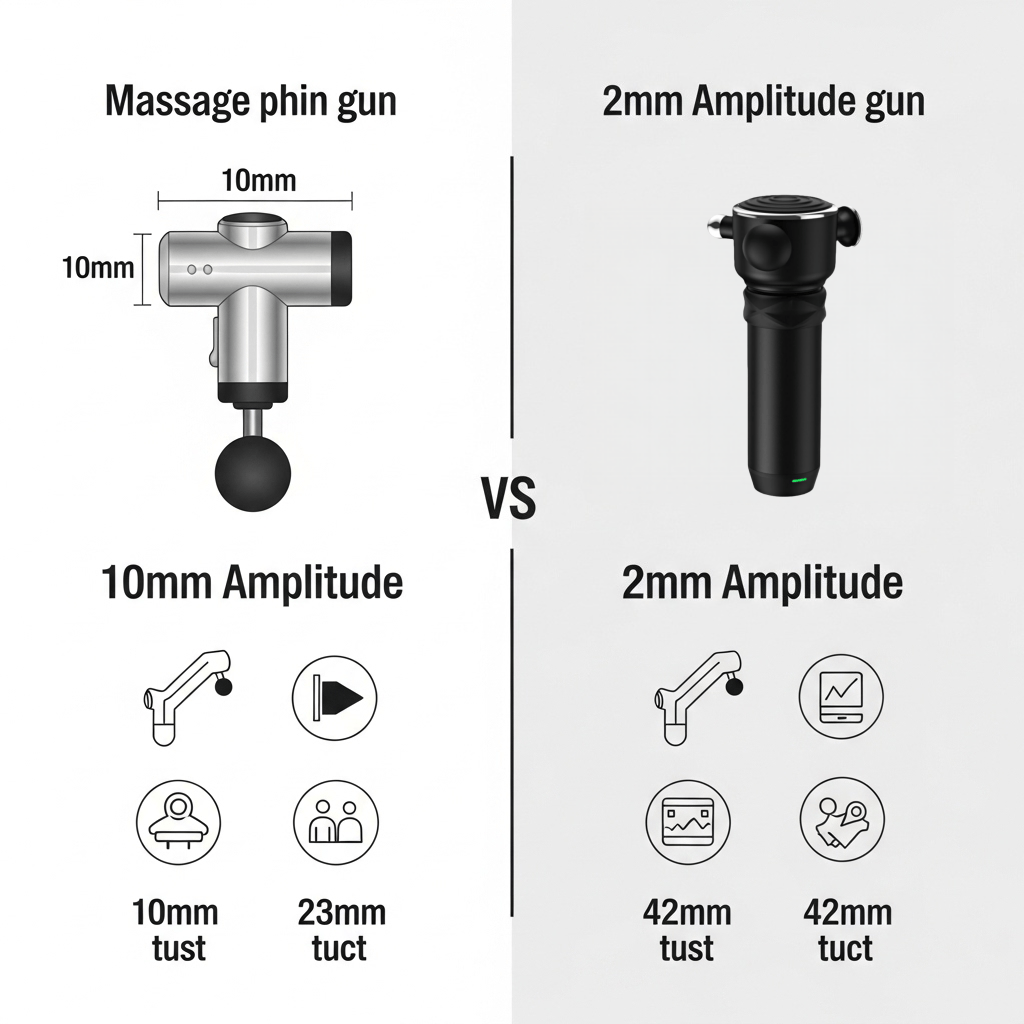
Why Speed Alone Creates Surface Stimulation
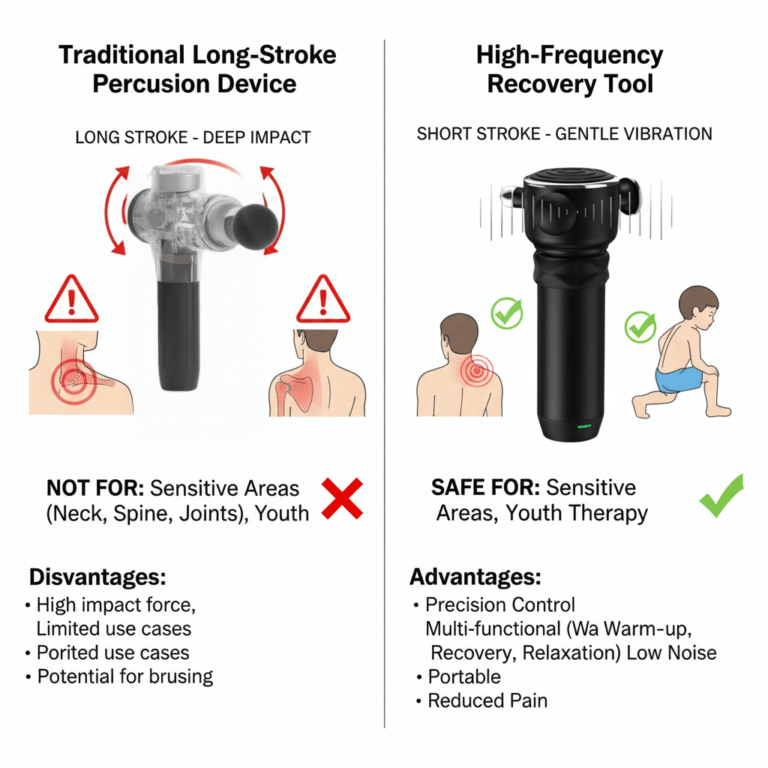
High vibration speed without directional variation often results in repetitive vertical loading. While this can stimulate superficial muscle receptors, it limits energy distribution.
Speed-focused vibration tends to:
- Concentrate force at a single contact point
- Lose energy rapidly at the surface
- Require higher intensity to feel effective
This is why increasing speed alone does not necessarily improve tissue interaction depth.
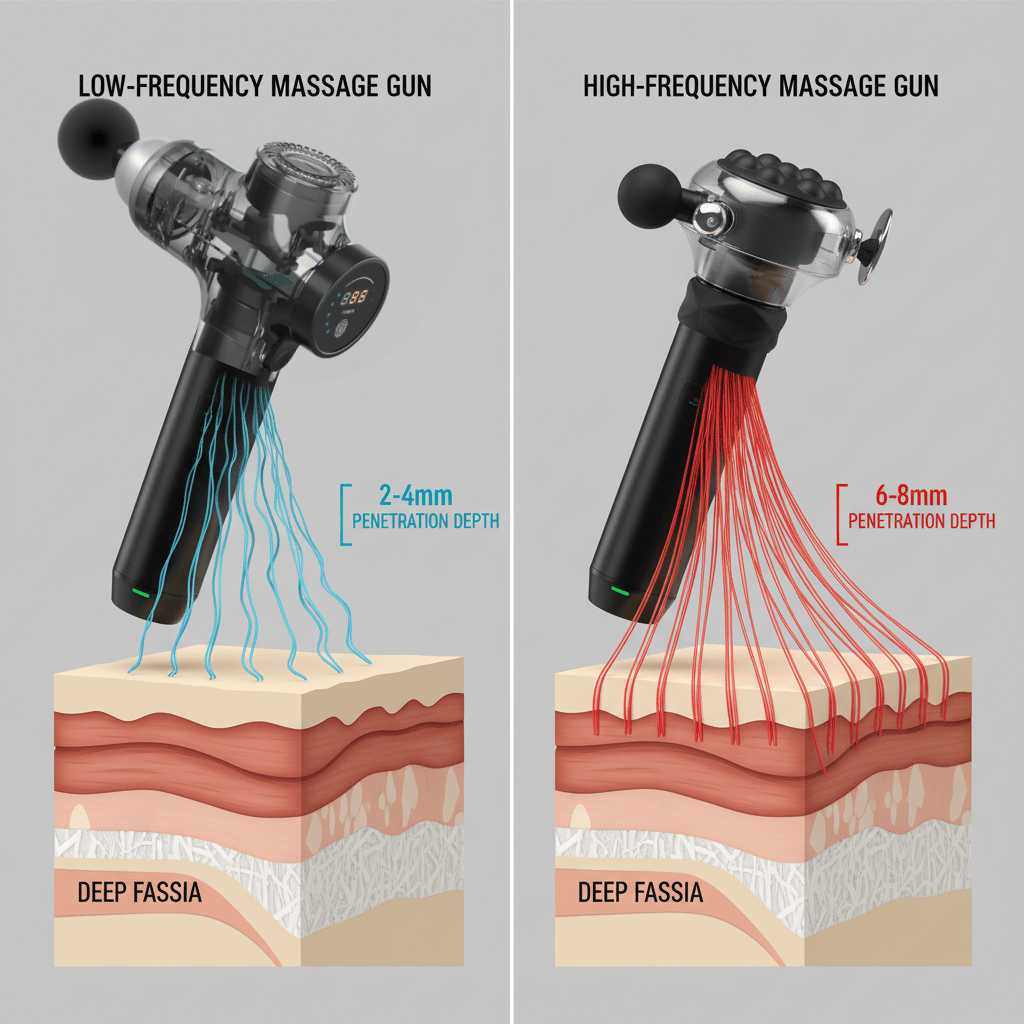
The Role of Directional Movement in Deeper Energy Transfer
Directional movement changes how vibration energy interacts with fascia.
In performance-oriented environments, the goal is not maximum force, but efficient and repeatable tissue stimulation. This is where multi-directional vibration patterns become relevant.
Unlike single-direction impact tools, 3D vibration technology combines horizontal and vertical movement patterns. This allows vibration energy to spread more evenly across muscle and fascia layers, supporting consistent mechanical engagement without excessive localized stress.
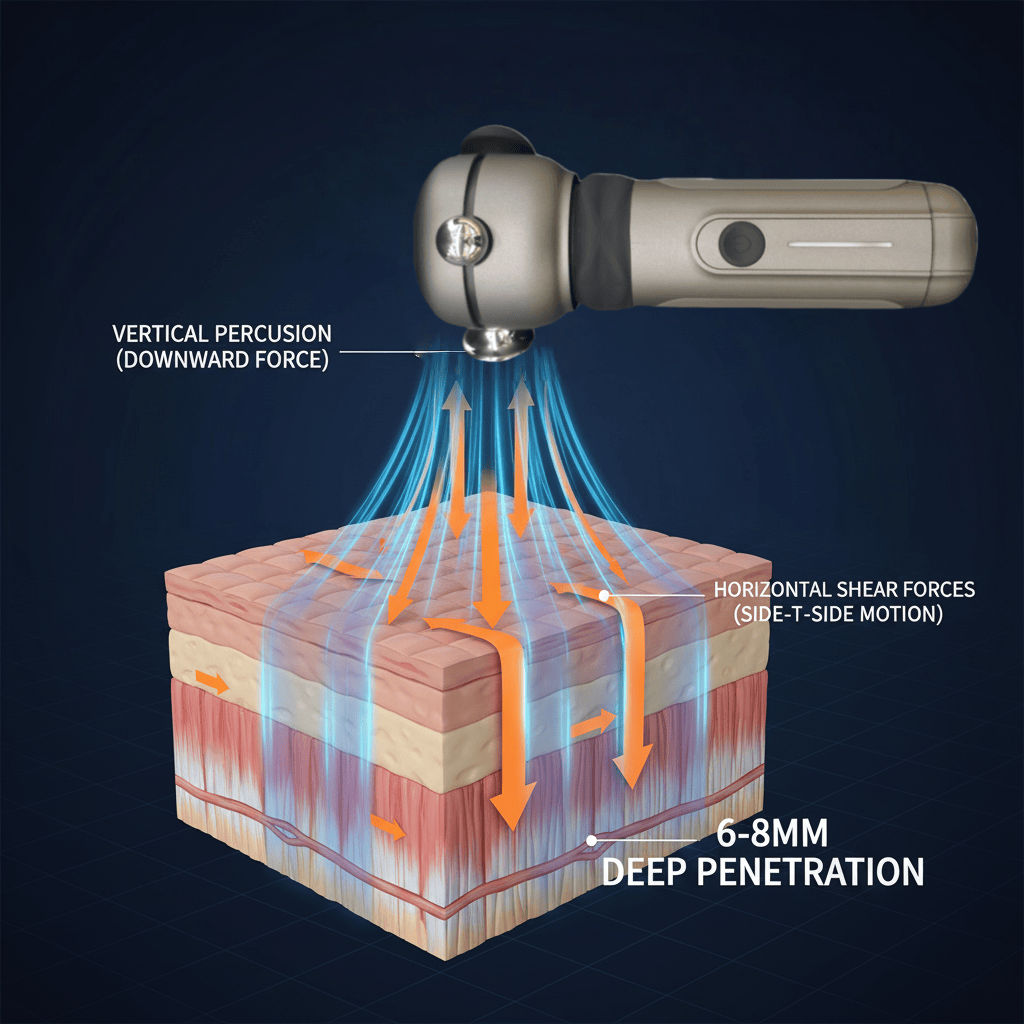
Directional energy transfer supports:
- Broader tissue interaction
- Reduced surface overload
- More stable mechanical response
Practical Implications for Modern Massage Devices
Understanding vibration energy transfer shifts how recovery tools should be evaluated.
Instead of focusing only on:
- Speed (RPM)
- Peak force
- Amplitude size
It becomes more meaningful to consider:
- Direction of movement
- Energy dispersion patterns
- Consistency of mechanical output
Devices designed around energy-transfer principles prioritize control and stability rather than raw intensity.

Conclusion
Vibration effectiveness is not defined by speed alone. The direction and distribution of mechanical energy play a critical role in how fascia responds to stimulation.
By focusing on how vibration travels through tissue rather than how fast it moves, modern recovery technologies can achieve more consistent and efficient mechanical interaction without relying on excessive force.