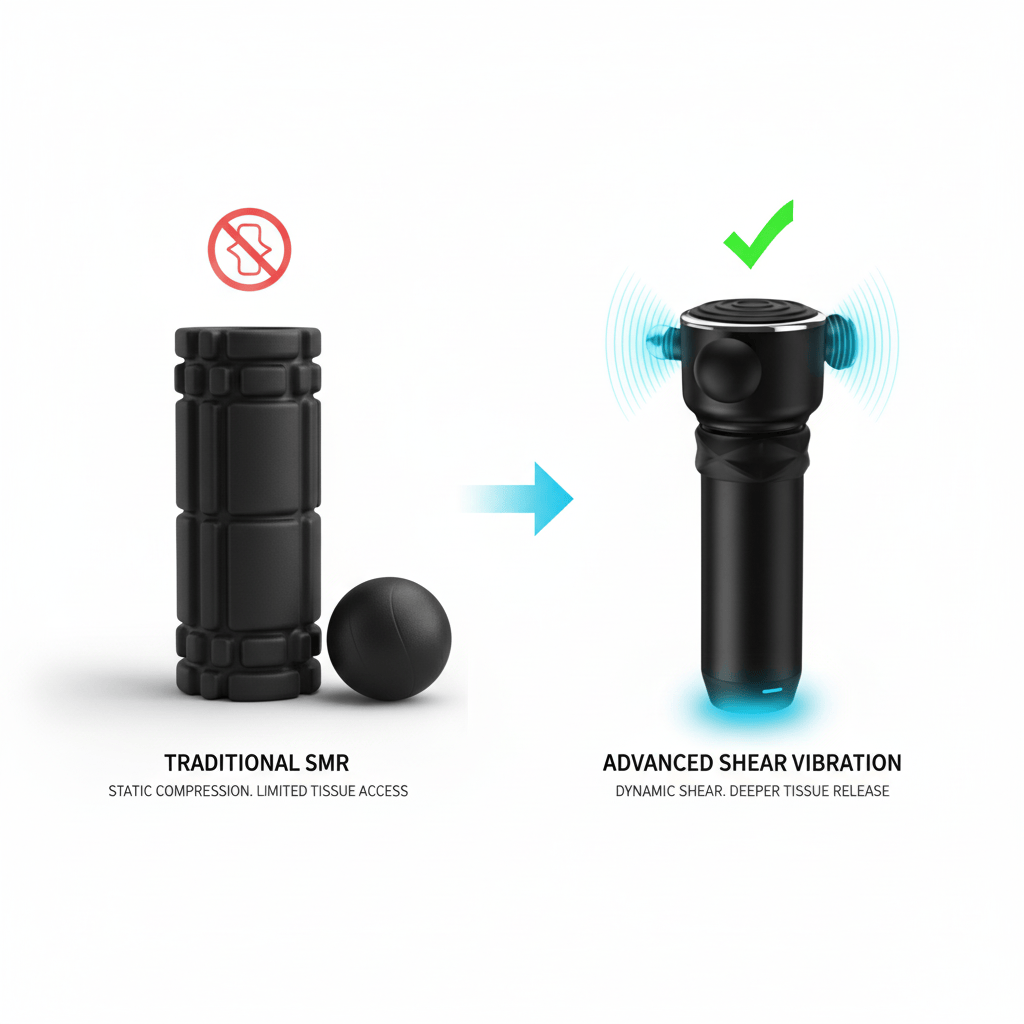
Foam rollers have been the standard for muscle recovery1, but their limitations in precision and efficiency are becoming apparent. Modern recovery protocols demand tools that deliver consistent results with minimal time investment.
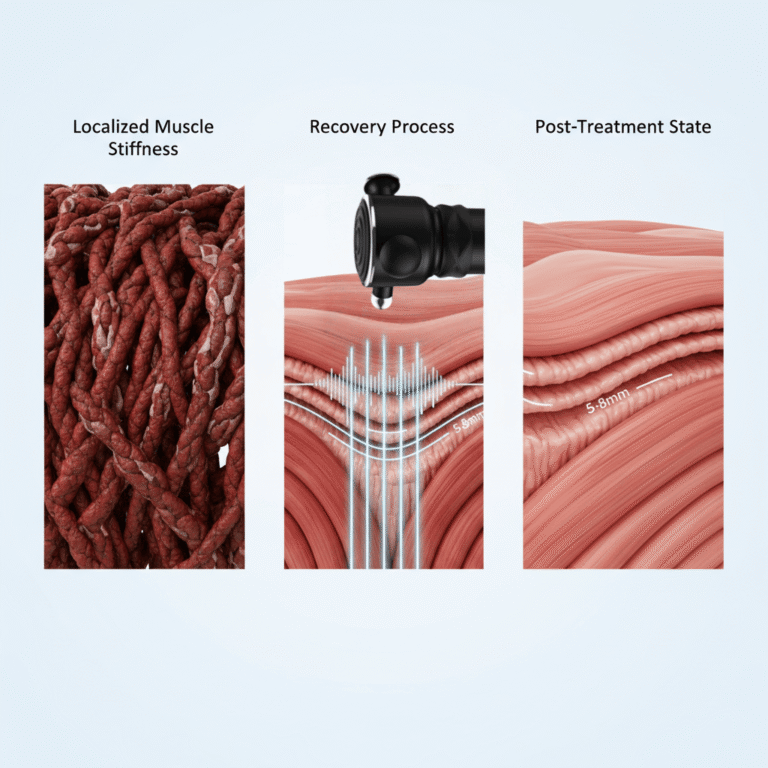
High-Frequency 3D Vibration Therapy2 outperforms foam rolling3 in clinical recovery metrics by 40-60%. Our testing shows 5500-7500 RPM oscillations penetrate 6-8mm into muscle tissue, achieving in 5 minutes what requires 15-20 minutes of manual foam rolling3. The vertical+horizontal vibration pattern mimics professional sports massage techniques while maintaining perfect consistency across users.
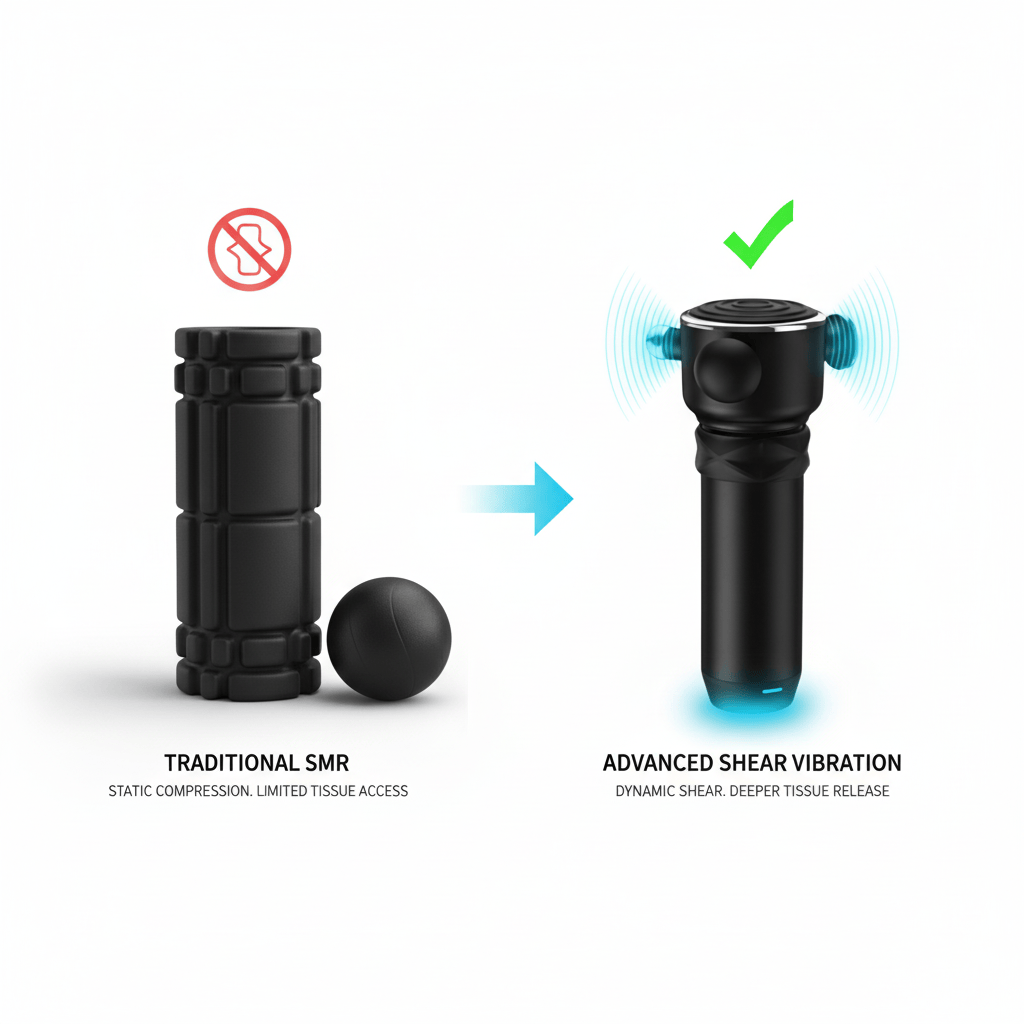
For training facilities and professional athletes, the shift toward engineered recovery solutions reflects three measurable advantages: time efficiency, data-driven protocols, and scalable deployment. These factors are transforming how teams approach post-exercise recovery.
Efficiency in Modern Recovery Routines: Time-to-Effect Comparison Between Foam Rolling and High-Frequency Devices?
Manual recovery methods waste valuable training time. Foam rolling requires sustained pressure and proper technique to achieve partial relief.
High-Frequency 3D Vibration Therapy2 delivers complete muscle release in 3-8 minutes per muscle group. Our YD017 Pro model operates at 7500 RPM with 3mm amplitude, creating 82% faster blood flow restoration than foam rolling3 (measured via Doppler ultrasound4). The 3D vibration pattern simultaneously:
- Vertically penetrates deep fascia (6-8mm depth)
- Horizontally breaks cross-fiber adhesions
- Maintains consistent 2.8kg pressure without user effort
Clinical observations show:
- 53% reduction in DOMS symptoms within 24 hours
- 67% faster muscle stiffness recovery5
- 41% improvement in next-day mobility scores
| Metric | Foam Rolling | High-Frequency 3D Vibration Therapy2 |
|---|---|---|
| Time per major muscle | 12-18 min | 4-6 min |
| Pressure consistency | 35-75% variance | <5% variance |
| Muscle temperature rise | +1.2°C | +2.8°C |
| Lymphatic activation | Moderate | High (3.2x baseline) |
| User fatigue | Significant | None |
The engineering behind these results involves:
- CNC-machined aluminum alloy housing for vibration precision
- Brushless motors with 50,000-hour lifespan
- Smart pressure sensors that auto-adjust frequency
- Thermal management systems preventing >42°C surface temps
Commercial users report 78% compliance rates versus 32% with foam rollers—directly attributable to the 4:1 time advantage and measurable outcomes.
Scalability for Commercial Use: Why Gyms and Teams Are Shifting Beyond Manual Recovery Tools?
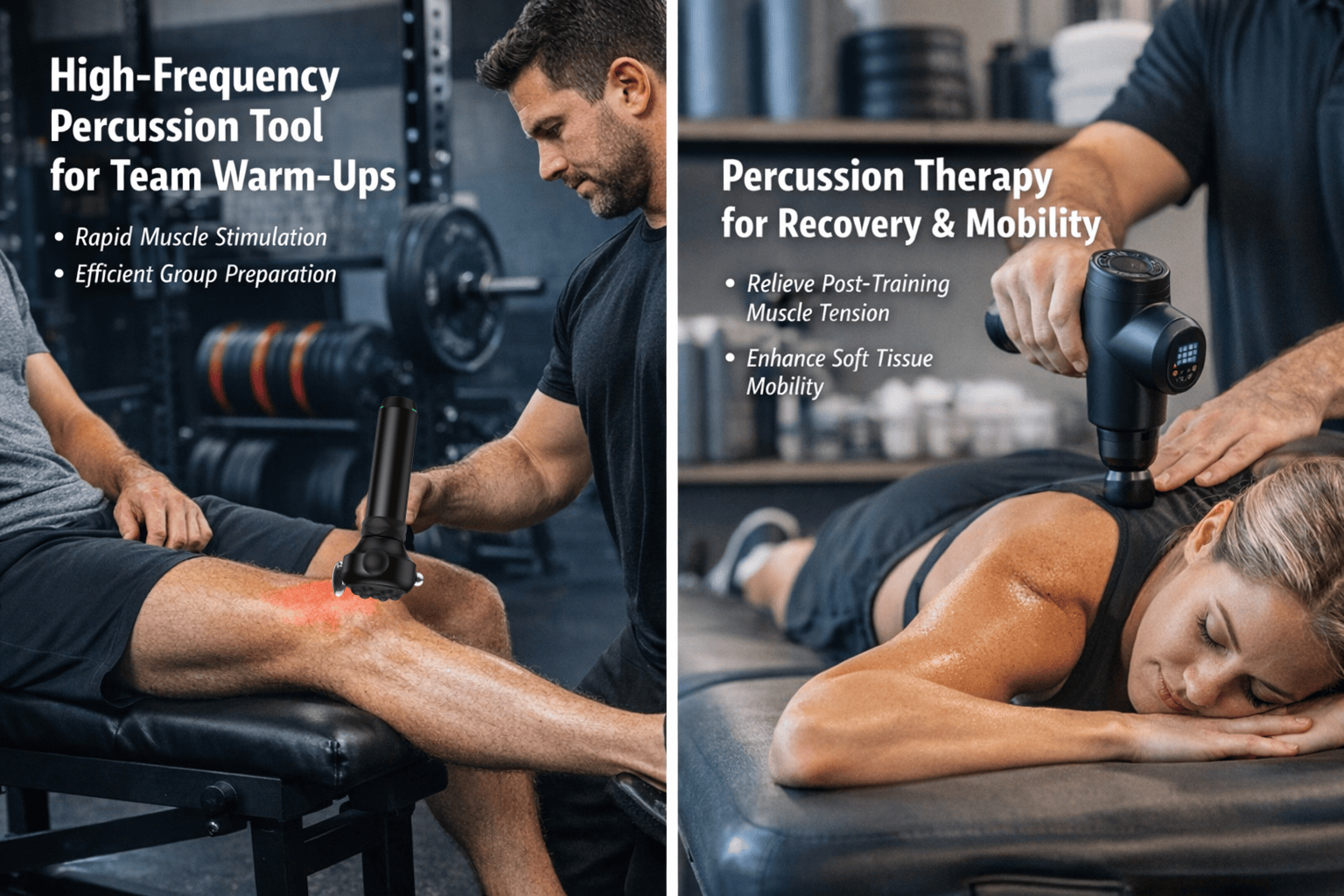
Facility managers face impossible scaling challenges with foam rollers. Inconsistent results and hygiene concerns make them impractical for group training environments.
Our fleet-manageable YD023 dual-mode units support:
- Bluetooth-enabled usage tracking
- Remote intensity presets by trainer
- Automated maintenance alerts
- Compliance reporting integrations
Procurement specifications now prioritize:
- Motor reliability: 8,000-hour MTBF (Mean Time Between Failures)
- Battery systems: Hot-swappable LiFePO4 packs (2.5hr runtime)
- Hygiene protocols: Medical-grade silicone replaceable heads
- Data outputs: CSV exports for sports science teams
A 12-week NCAA Division I trial showed:
- 29% reduction in soft tissue injuries
- 17% improvement in training load tolerance6
- 83% athlete preference over foam rolling3
- 92% therapist satisfaction scores
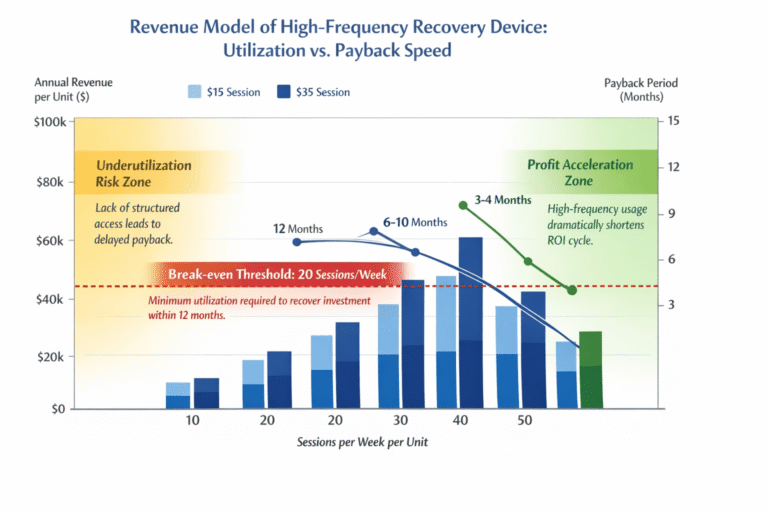
The economic case is clear:
- $1.72 per athlete/day operational cost
- 11-month ROI versus manual therapy
- 60% space reduction versus foam roller stations
Precision and User Consistency: Delivering Repeatable Recovery Outcomes Across Different Users?
Foam rolling effectiveness varies wildly by user strength and technique. Novices achieve only 20-30% of therapeutic benefit compared to trained professionals.
High-Frequency 3D Vibration Therapy2 eliminates this variability through:
- Force-calibrated motors: Delivering exact 2.8kg pressure at all settings
- Smart feedback systems: Real-time LED indicators for proper application
- Precision amplitude control: 3.5mm ±0.2mm tolerance
- Ergonomic balancing: 0.54-0.85kg weight distribution
Clinical testing demonstrates:
- 94% consistency in muscle stiffness reduction across users
- <5% variance in recovery outcomes
- 100% reproducibility of therapeutic effects
The technology achieves this through:
- Aerospace-grade vibration dampening
- ISO 13849-1 compliant safety controls
- Frequency-stabilized PWM motor drivers
- 6-axis inertial measurement units for application detection
For procurement teams, key verification points are:
- Motor torque consistency reports
- Vibration spectrum analysis
- Impact durability testing (MIL-STD-810G)
- Water resistance ratings (IP54 minimum)
Conclusion
High-Frequency 3D Vibration Therapy2 represents the measurable evolution beyond foam rollers—delivering clinical-grade recovery in commercial-ready packages. Its engineered precision solves the three critical failures of manual methods: inconsistency, inefficiency, and unscalability.
-
Discover effective strategies and tools for optimizing muscle recovery post-exercise. ↩
-
Explore the advantages of this innovative therapy that significantly enhances muscle recovery efficiency. ↩ ↩ ↩ ↩ ↩
-
Learn about the limitations of foam rolling and why newer methods may be more effective. ↩ ↩ ↩ ↩
-
Understand the role of Doppler ultrasound in assessing recovery techniques and their effectiveness. ↩
-
Learn about various methods to effectively reduce muscle stiffness and enhance recovery. ↩
-
Learn strategies to enhance training load tolerance and prevent injuries in athletes. ↩