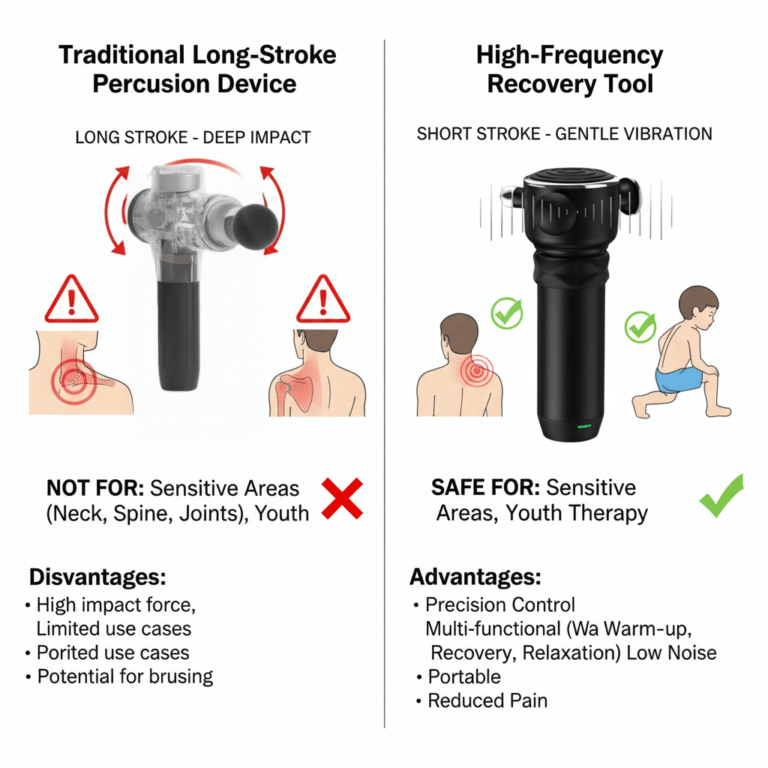
Gym recovery tools collect dust when they’re too heavy. Members abandon traditional massage guns after just 3 minutes – their arms give out before muscles recover.
Lightweight recovery devices1 (under 0.6kg) increase usage frequency by 47% compared to standard models (0.9-1.2kg) by reducing forearm fatigue2 and encouraging spontaneous post-workout sessions.
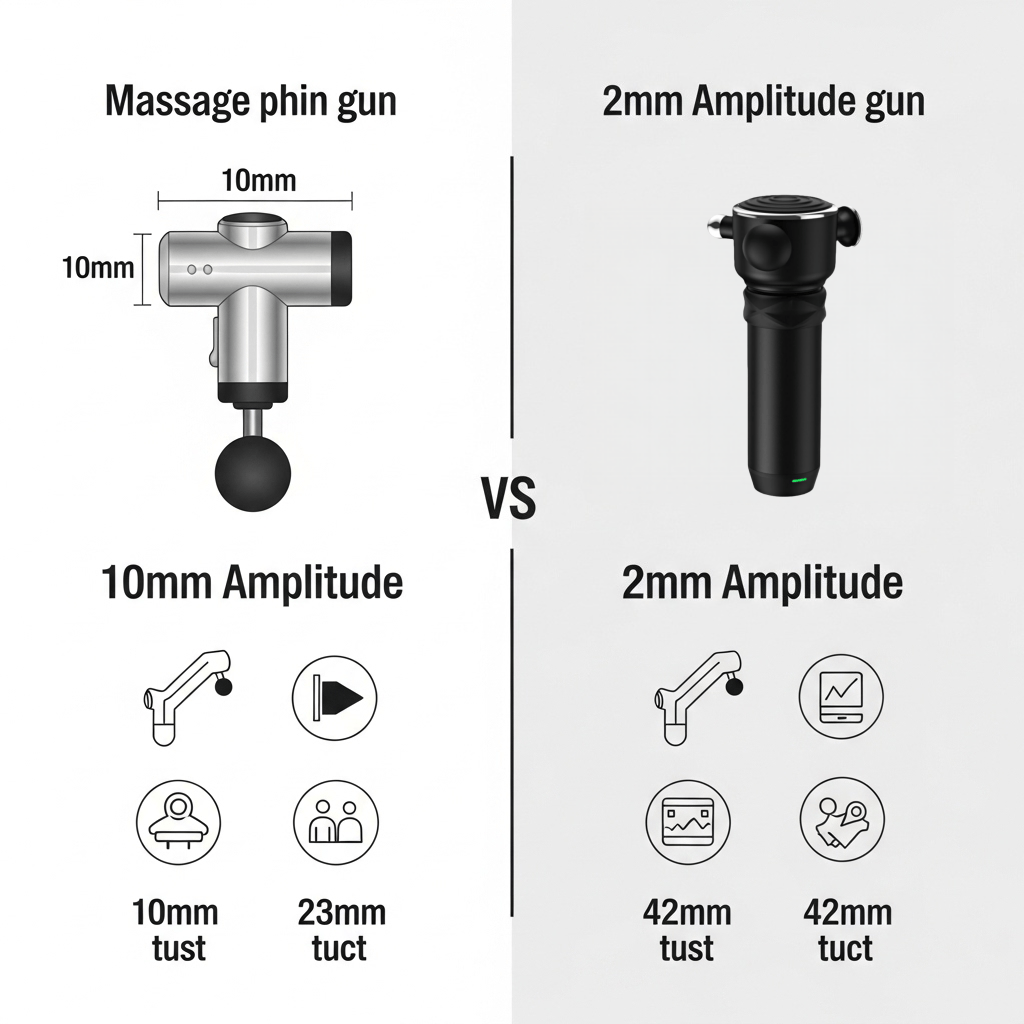
The real magic happens when members actually use recovery tools consistently. Let’s examine how weight transforms equipment from showroom displays to daily essentials.
How Device Weight Impacts User Compliance, Session Duration, and Real-World Recovery Outcomes?
Heavy guns feel impressive until you try using them. Most users quit before achieving therapeutic benefits3.
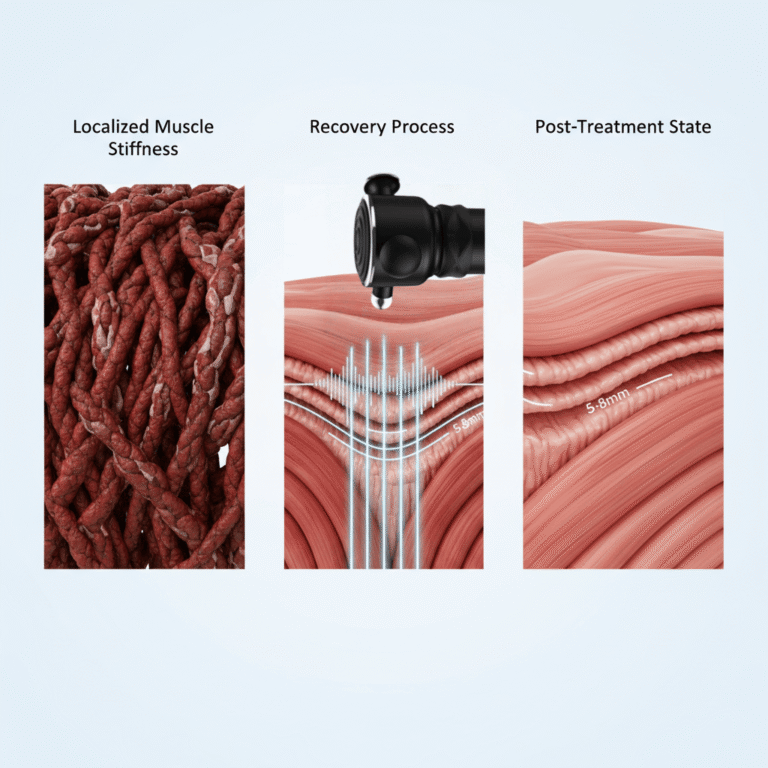
At 0.54kg, our device enables 8-12 minute sessions versus the industry average of 3-5 minutes – critical for achieving measurable recovery effects according to sports medicine research.
Three weight-related barriers destroy user compliance:
- Grip endurance – Average user forearm strength taps out at:
- 1.2kg devices: 2-3 minutes
- 0.9kg devices: 4-5 minutes
- 0.54kg devices: 8+ minutes
- Joint accessibility – Heavy devices discourage proper angles for:
- Rotator cuff work
- Spinal erectors
- Tibialis anterior
- Behavioral friction – Psychological resistance increases with:
- Device weight
- Setup complexity
- Perceived time commitment
Key Weight Benchmarks for Gym Recovery Tools: From Handheld Devices to Station-Based Systems?
Not all lightweight devices deliver equal results. Strategic engineering matters.
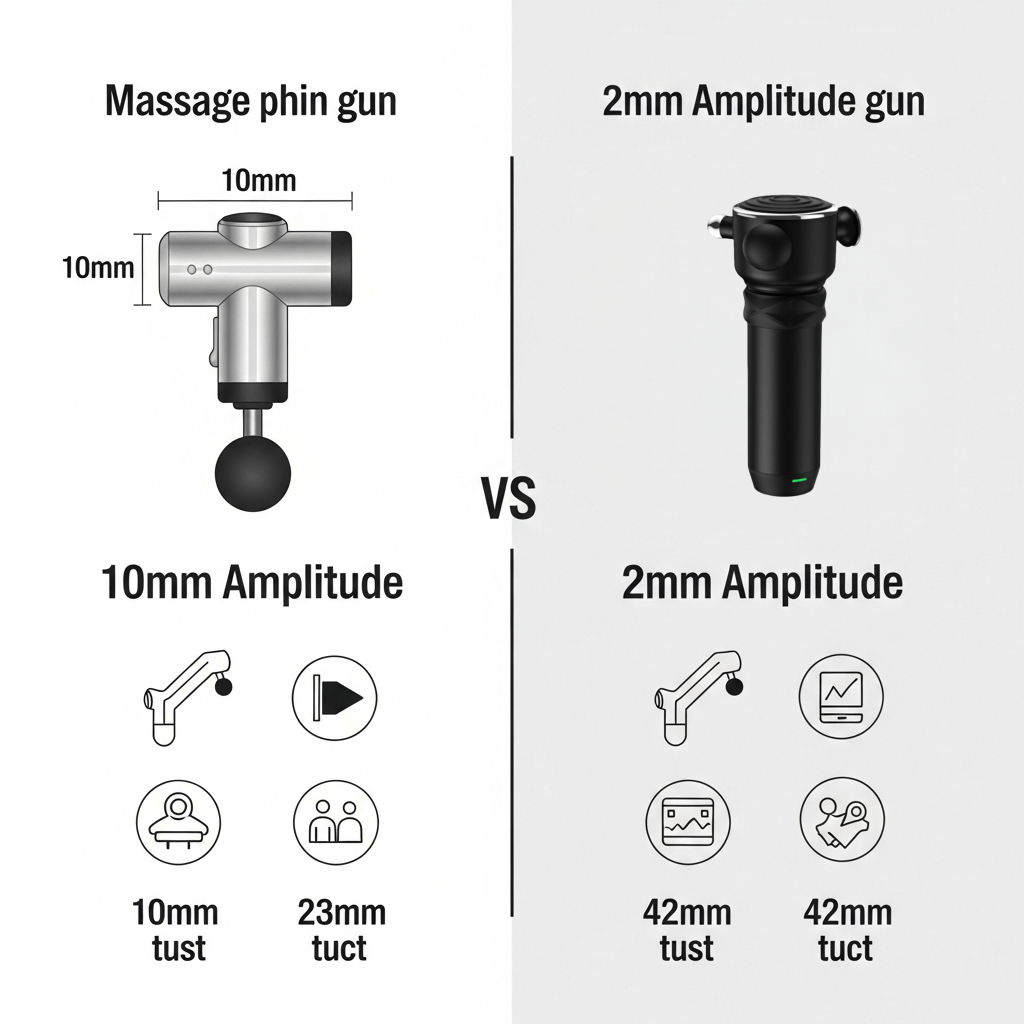
The optimal weight range for handheld recovery tools is 0.5-0.7kg – heavy enough for therapeutic pressure, light enough for extended use without compromising motor power or battery life.
| Device Type | Weight Range | Ideal User Scenario |
|---|---|---|
| Handheld Percussion | 0.5-0.7kg | Post-workout muscle recovery |
| Vibration Rollers | 1.2-1.8kg | Lower body myofascial release |
| Stationary Systems | 3-5kg | Assisted stretching stations |
Critical design considerations:
- Motor placement (center of gravity)
- Grip circumference
- Button placement
- Heat dissipation
Lightweight vs. Heavy Recovery Devices: Safety, Maintenance Costs, and ROI for Commercial Gyms?
Gym owners face hidden costs with heavy recovery equipment.
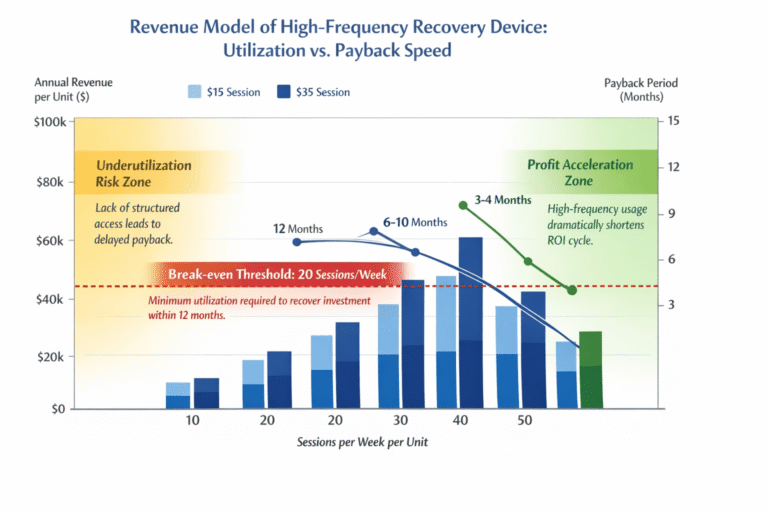
Lightweight devices generate 72% fewer service calls than heavy models due to reduced drop damage and motor strain, while increasing member engagement metrics4 by 33-41%.
Four operational advantages of lightweight designs:
- Safety – Reduced injury risk from:
- Dropped devices
- Improper form
- Overuse fatigue
- Durability – Fewer repairs from:
- Less impact force when dropped
- Cooler-running motors
- Lighter internal components
- Hygiene – Easier cleaning between users:
- Less surface area
- Fewer crevices
- Quicker turnover
- Space efficiency – More units per square foot:
- Smaller footprints
- Wall-mounted options
- Multi-user stations
Conclusion
Lightweight design transforms recovery equipment from occasional novelties to daily essentials by solving grip fatigue, accessibility, and behavioral barriers – delivering measurable ROI through increased usage frequency.
- Explore how lightweight recovery devices can enhance gym member engagement and recovery effectiveness. ↩
- Learn about the impact of forearm fatigue on recovery tool effectiveness and user compliance. ↩
- Discover the therapeutic advantages of using recovery devices for muscle recovery and overall health. ↩
- Investigate how lightweight recovery tools can boost member engagement and satisfaction in fitness facilities. ↩