High-Frequency 3D Vibration Therapy1 is redefining soft tissue stimulation. The shift from traditional 30Hz to modern 100Hz systems represents a fundamental change in biomechanical efficiency.
100Hz operation2 provides superior tissue penetration3 while maintaining comfort, making it the emerging standard for professional recovery tools. This frequency band balances depth and safety better than conventional percussion or lower-frequency alternatives.
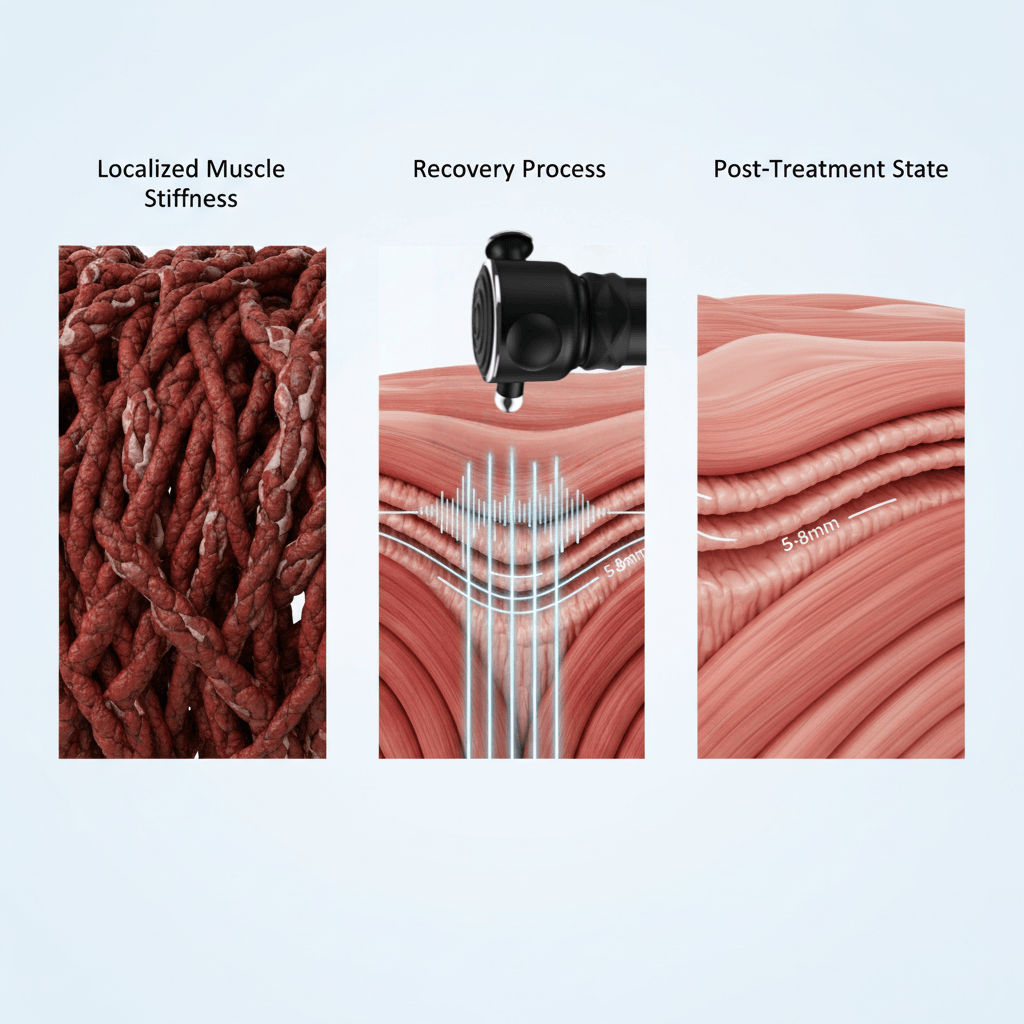
The transition to higher frequencies isn’t just about numbers – it reflects years of clinical observation and engineering refinement. Let’s examine what this means for equipment selection.
From 30Hz to 100Hz: What Higher Frequency Really Changes in Soft Tissue Stimulation Efficiency?
Frequency determines how energy interacts with tissue. The jump to 100Hz isn’t arbitrary – it’s the sweet spot for modern recovery needs.
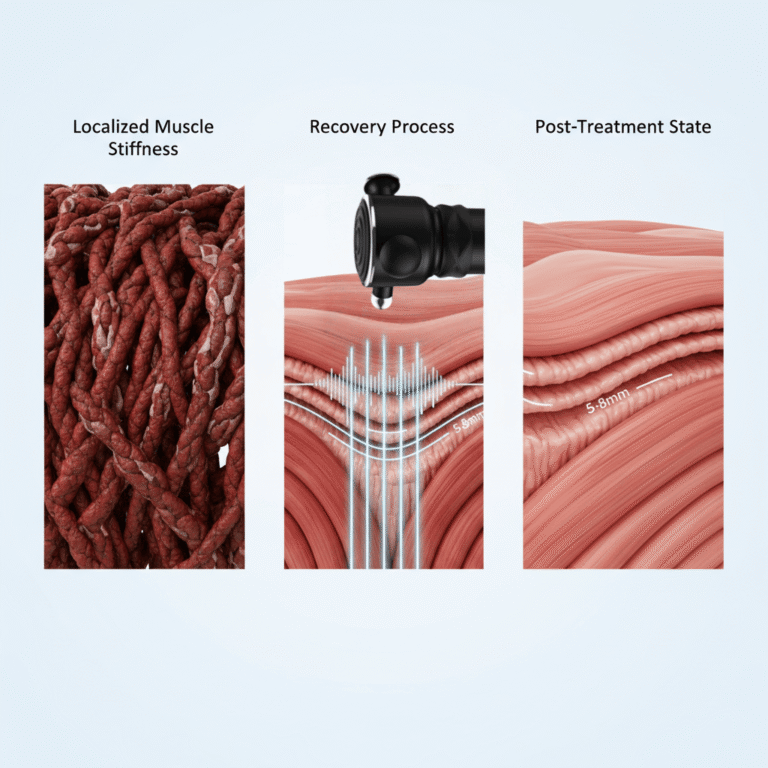
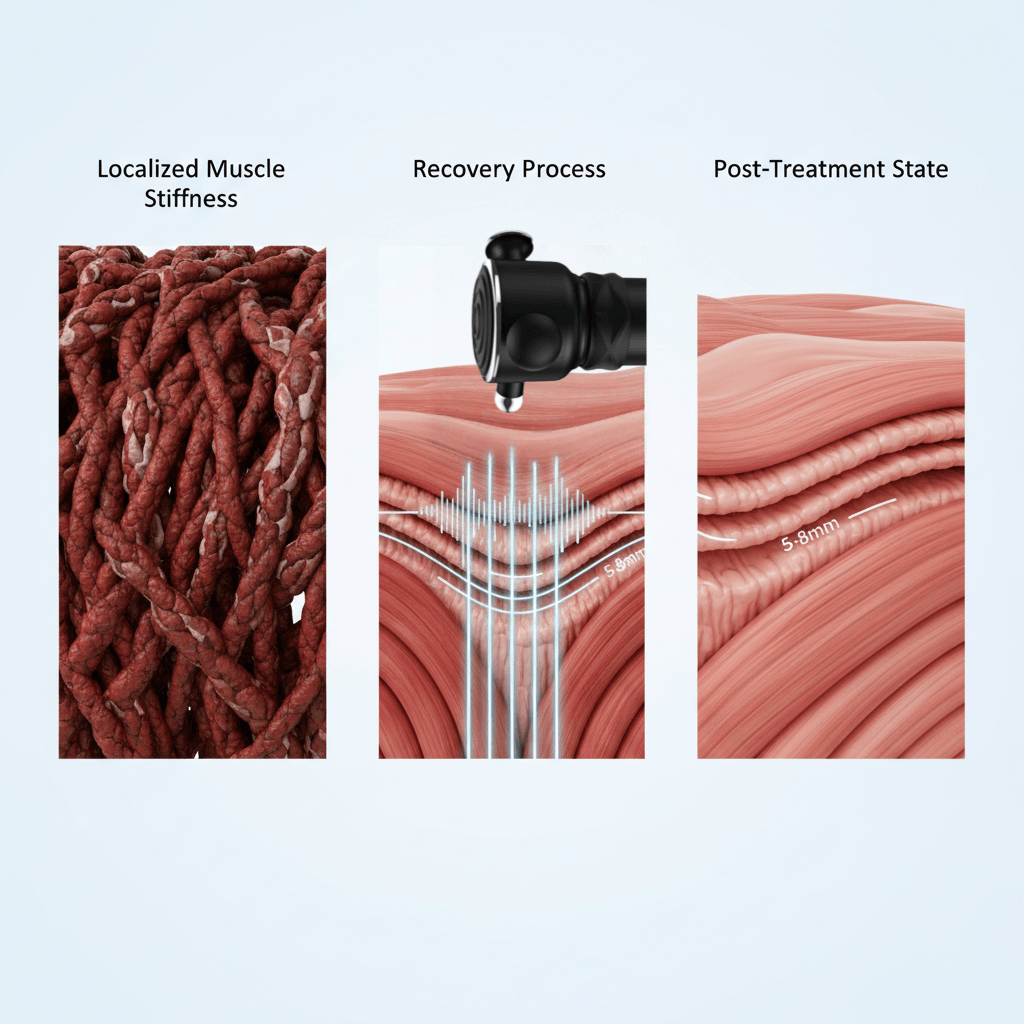
At 100Hz, vibrations penetrate 6-8mm deep while maintaining smooth tissue interaction, unlike the superficial impact of lower frequencies. This depth reaches fascial layers without excessive force that could cause discomfort.
| Frequency | Penetration Depth | Tissue Interaction | Ideal Use Case |
|---|---|---|---|
| 30Hz | 2-3mm | Primarily surface muscle | Basic relaxation |
| 60Hz | 4-5mm | Muscle and shallow fascia | General recovery |
| 100Hz | 6-8mm | Deep fascia network | Professional therapy |
The engineering behind 100Hz systems requires precise motor control. We use brushless DC motors with CNC-machined components4 to maintain frequency stability5 within ±1% variance. This consistency matters because fluctuating frequencies create uneven tissue response. Higher frequencies also demand advanced heat dissipation – our aluminum alloy housings maintain safe surface temperatures even during extended use.
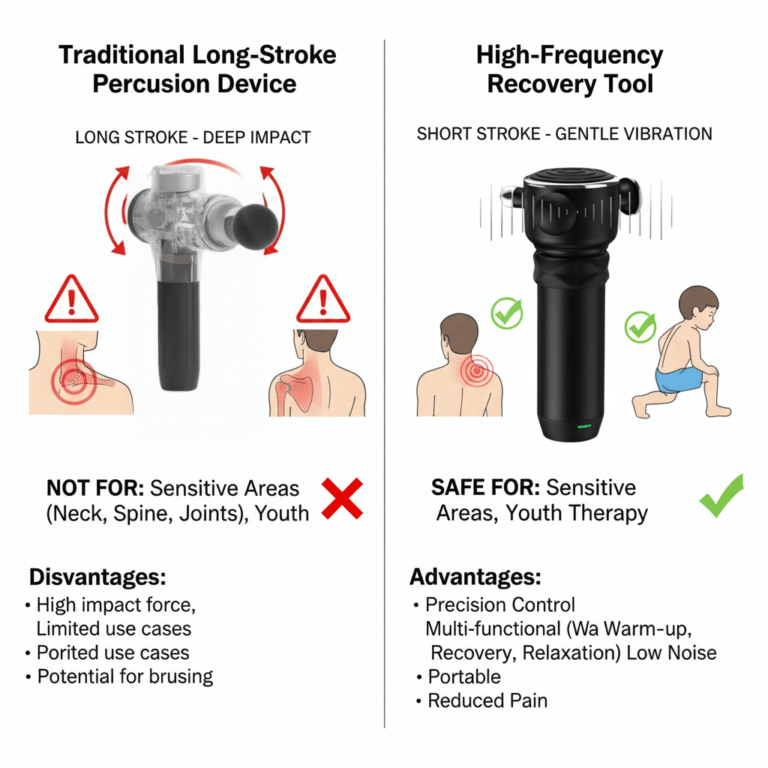
Beyond Amplitude: Why High-Frequency Micro-Vibration Delivers More Consistent Results Than Percussion
Amplitude isn’t the only factor in effective tissue stimulation. The combination of high frequency with controlled 2-3.5mm amplitude creates unique therapeutic effects.
Micro-vibration at 100Hz distributes energy more evenly than percussion, preventing localized stress points while maintaining therapeutic intensity. This mimics professional manual therapy techniques rather than blunt mechanical impact.
Three key mechanisms make this approach superior:
- Oscillation density: 100Hz delivers 6000 micro-movements per minute versus 1800 at 30Hz
- Force distribution: Smaller amplitude spreads energy across wider tissue area
- Neural adaptation: The body responds better to rapid, gentle stimulation versus slow, intense impacts
Our pressure-sensing technology automatically adjusts output to maintain optimal force levels. Green LED indicators confirm proper application pressure, while red signals excessive force – a critical feature absent in most percussion devices.
What Buyers Should Evaluate in an RRT-Style Device: Frequency Stability, Output Consistency, and Commercial Usability
Professional environments demand different specifications than consumer devices. Three technical factors separate viable commercial tools from basic massagers.
Commercial-grade High-Frequency 3D Vibration Therapy1 devices must maintain ±1% frequency stability5 under load, deliver consistent output for 3+ hours daily, and withstand 200+ charge cycles without degradation. These benchmarks exceed typical consumer specifications.
Key evaluation criteria:
| Parameter | Consumer Grade | Professional Grade |
|---|---|---|
| Frequency Stability | ±5% | ±1% |
| Daily Duty Cycle | 30 minutes | 3+ hours |
| Motor Life | 100 hours | 500+ hours |
| Temperature Rise | Up to 15°C | Under 8°C |
| Charging Cycles | 50-100 | 200+ |
For commercial buyers, we recommend focusing on:
- CNC-machined gearboxes (not plastic)
- Industrial-grade bearings
- Thermal protection circuits
- IPX4 or higher splash resistance
- Field-replaceable batteries
Conclusion
The transition to 100Hz High-Frequency 3D Vibration Therapy1 reflects both technical progress and deeper understanding of tissue biomechanics. When evaluating equipment, prioritize frequency stability5 over maximum amplitude claims.
-
Explore the advantages of this innovative therapy for enhanced recovery and performance. ↩ ↩ ↩
-
Learn how 100Hz operation improves tissue penetration and comfort in recovery tools. ↩
-
Understand the significance of tissue penetration depth for effective recovery treatments. ↩
-
Learn how CNC-machined components contribute to the precision and durability of therapy tools. ↩
-
Find out why maintaining frequency stability is essential for effective treatment outcomes. ↩ ↩ ↩