Muscle pain after workouts slows you down. A massage gun can help. But using it wrong may cause harm. Let me show you how to use it safely and effectively.
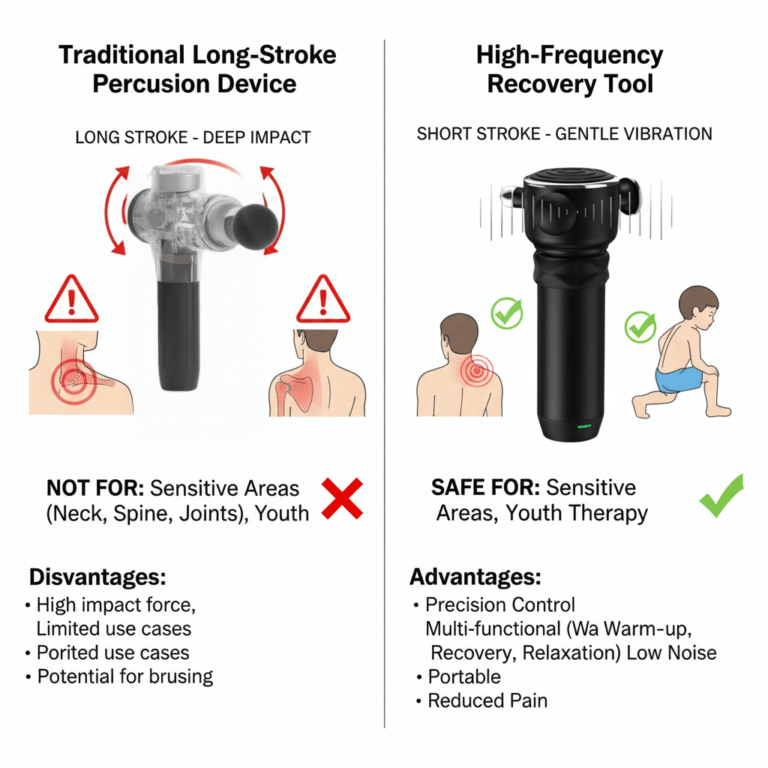
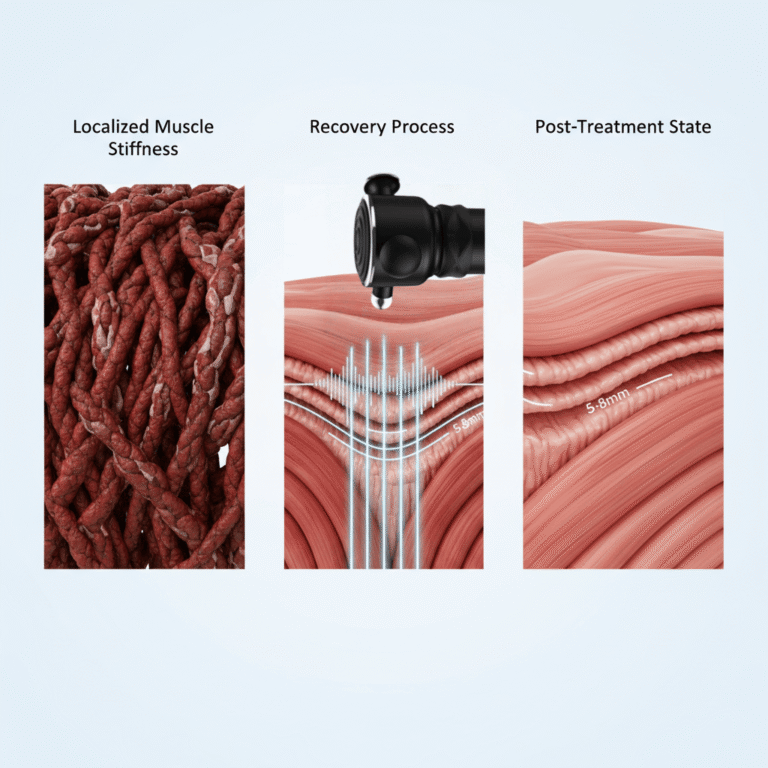
Massage guns speed up recovery by increasing blood flow1 and breaking down lactic acid2. Large-stroke guns work best for deep muscles like legs, while high-frequency 3D vibration guns target precise areas like ankles and shoulders. Combining both types gives complete relaxation.
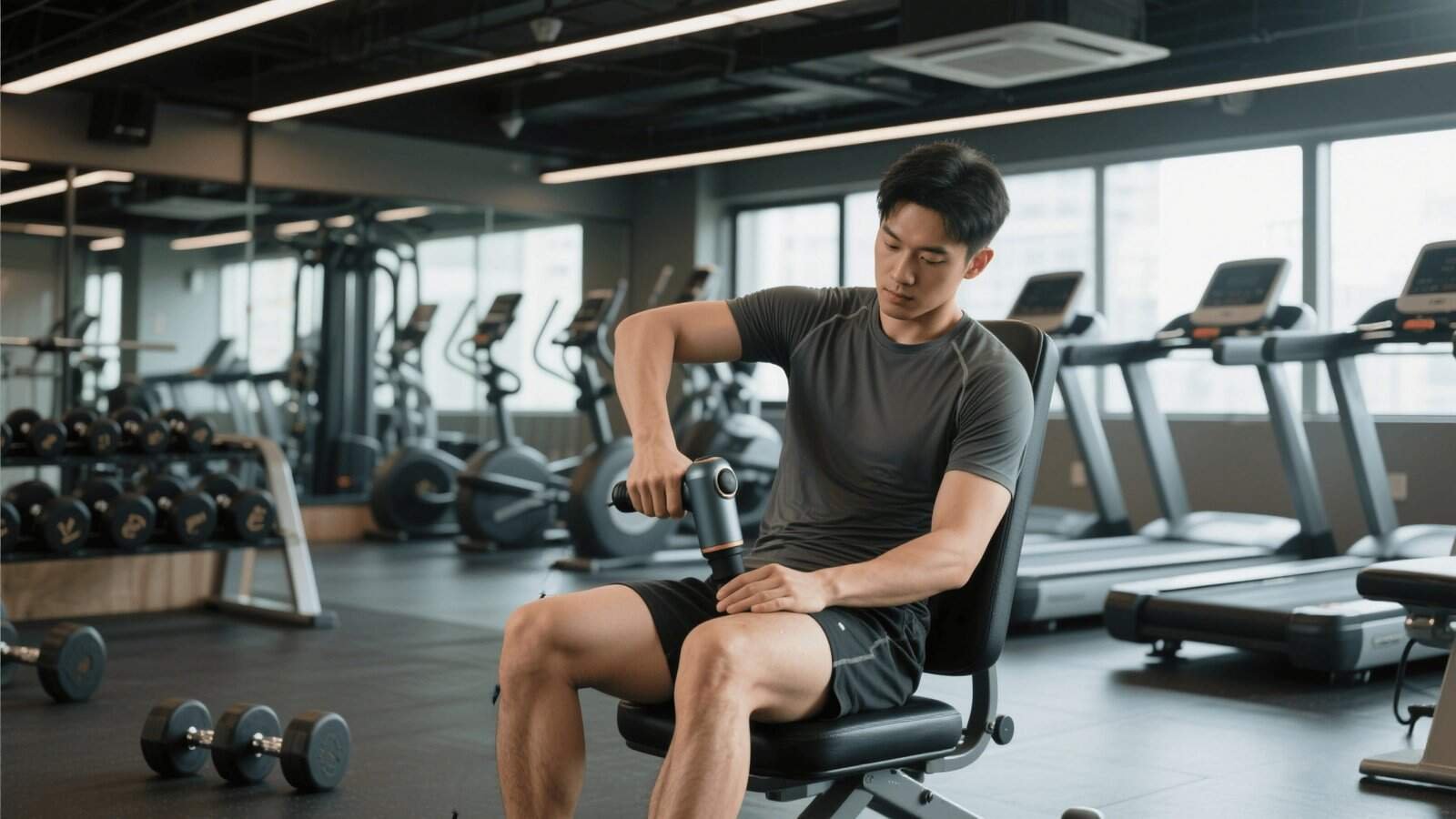
Many people think massage guns are simple to use – just point and press. The truth is more complex. Proper technique makes all the difference. Here’s what most users get wrong, and how to fix it.
The Correct Usage Posture of a Massage Gun and the Correction of Common Mistakes?
Poor posture reduces effectiveness and risks injury. I’ve seen many clients develop bruises from incorrect use. Let’s fix these mistakes before they hurt you.
Hold the gun at 45 degrees to your skin, apply light pressure, and move slowly (1 inch per second). Never press directly on bones or joints. Common mistakes include using excessive force and staying too long on one spot.
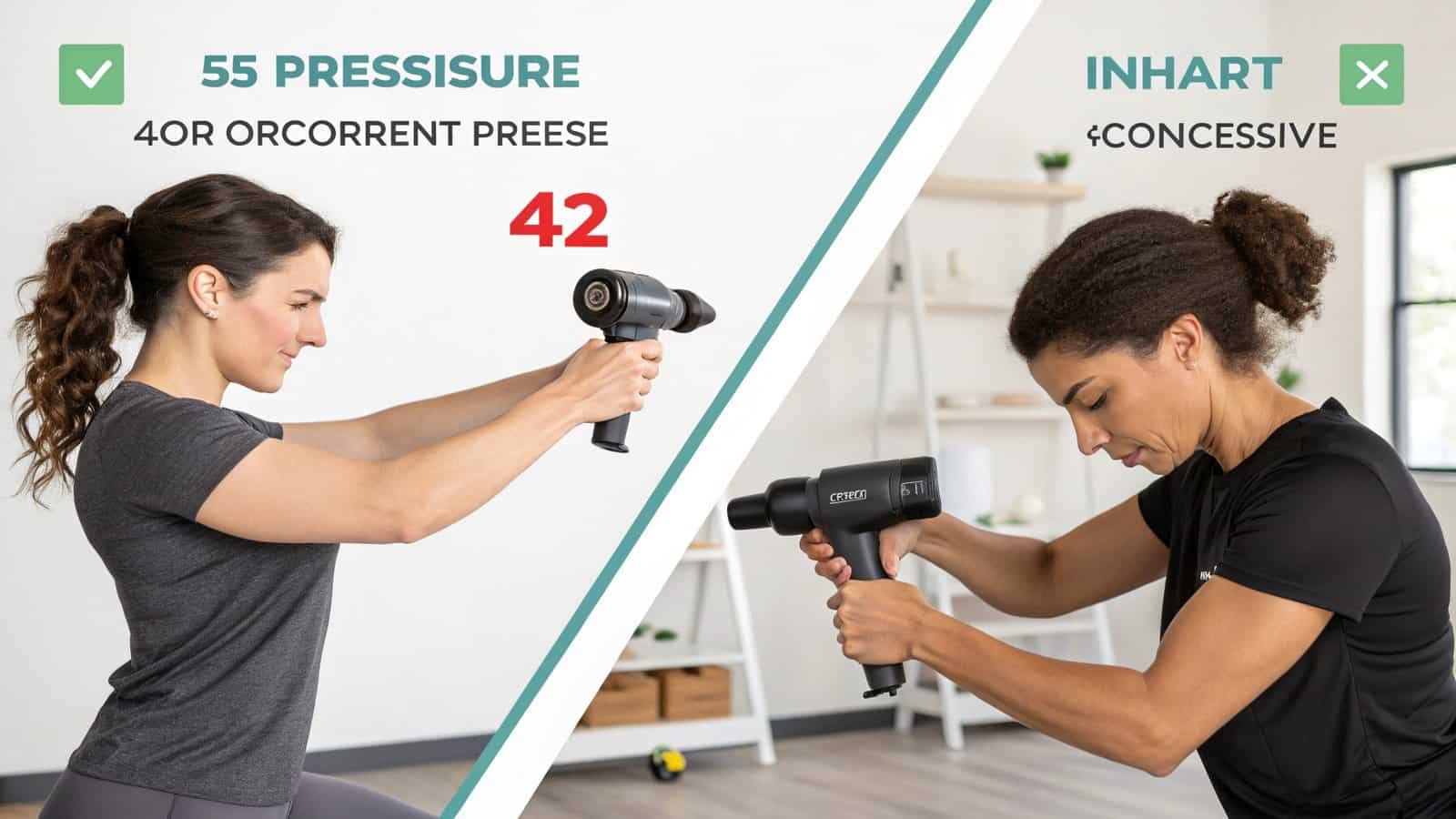
Three Critical Posture Adjustments
-
- Hold like a tennis racket, not a hammer
- Thumb should rest comfortably, not grip tightly
- Keep wrist straight to avoid strain
-
- Sit or stand with back supported
- Keep treated muscle relaxed
- Use mirrors to check your form
-
Movement Patterns5 Movement Type Correct Way Wrong Way Speed Slow, controlled Fast, random Pressure Gentle to moderate Excessive force Duration 30-60 sec per area Over 2 minutes
Most injuries occur when users ignore pain signals. Your body knows best – if it hurts, stop immediately.
Precise Positioning: Detailed Operation Guide for Massage Guns Targeting Different Muscle Groups?
Not all muscles respond to the same treatment. Your calves need different care than your shoulders. Let me map out the best approach for each area.
For large muscles (thighs, back), use large attachments with slow, sweeping motions. For small areas (neck, hands), switch to bullet attachments with gentle circular movements. Always move toward the heart to improve circulation.
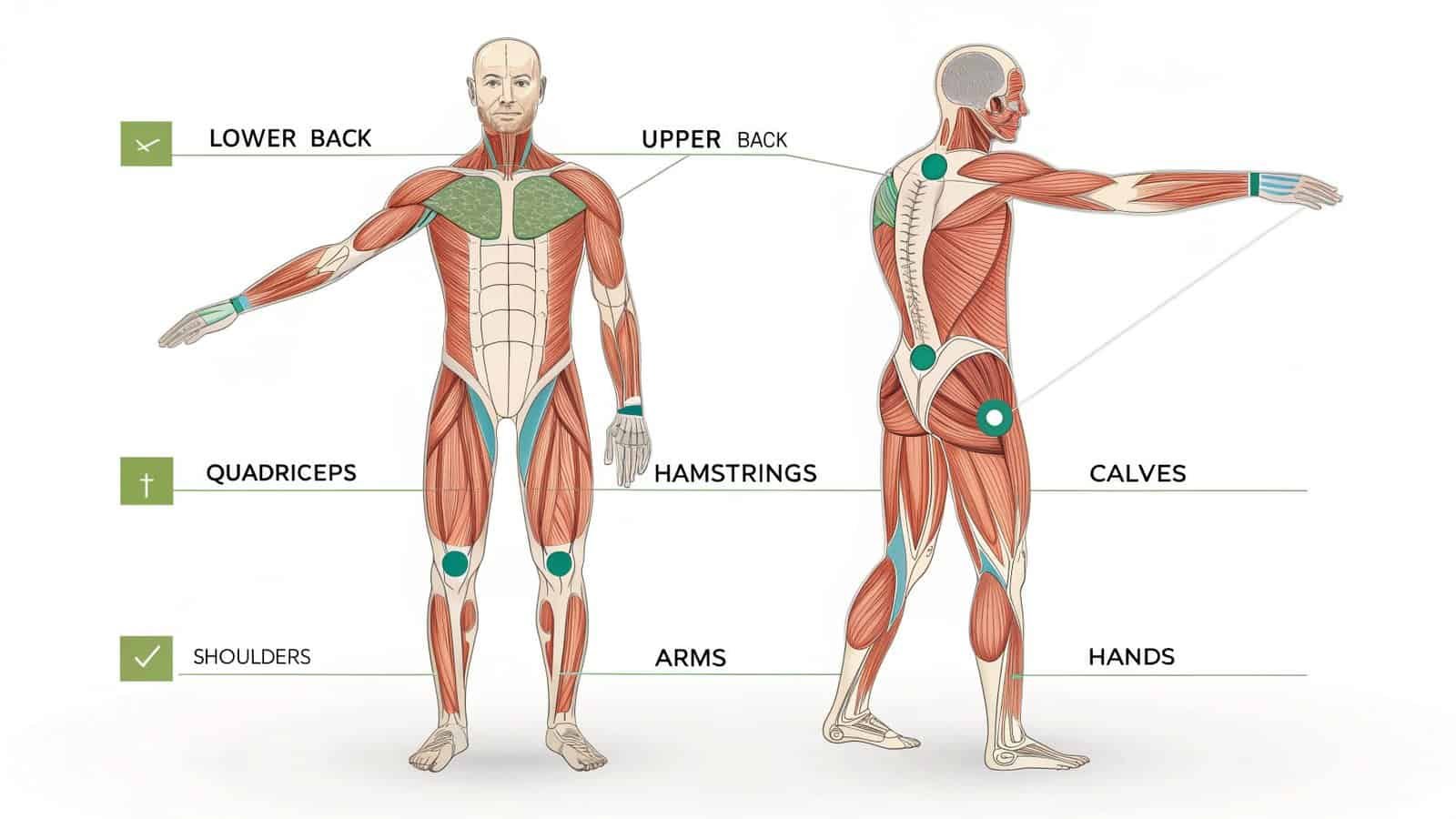
Area-Specific Techniques
Leg Muscles
- Quadriceps: Up and down strokes along muscle fibers
- Hamstrings: Start near glutes, move downward
- Calves: Extra care near Achilles tendon
Upper Body
- Shoulders: Circular motions around rotator cuff
- Arms: Follow bicep/tricep muscle lines
- Hands: Use smallest attachment, lightest setting
Back Areas
- Lower back: Avoid spine, focus on muscles beside it
- Upper back: Have someone assist for hard-to-reach spots
Remember: Tighter muscles need gentler treatment initially. Build pressure gradually as muscles relax.
Massage Gun Force Selection6: Adjust According to Different Needs and Physical Conditions to Avoid Injury?
More power isn’t always better. I’ve treated athletes who injured themselves by using maximum settings unnecessarily7. Let’s match intensity to your actual needs.
Begin with lowest setting, increasing only as tolerated. Use medium power for general recovery, high only for deep tissue work. Skip vibration completely if you have certain medical conditions like blood clots.
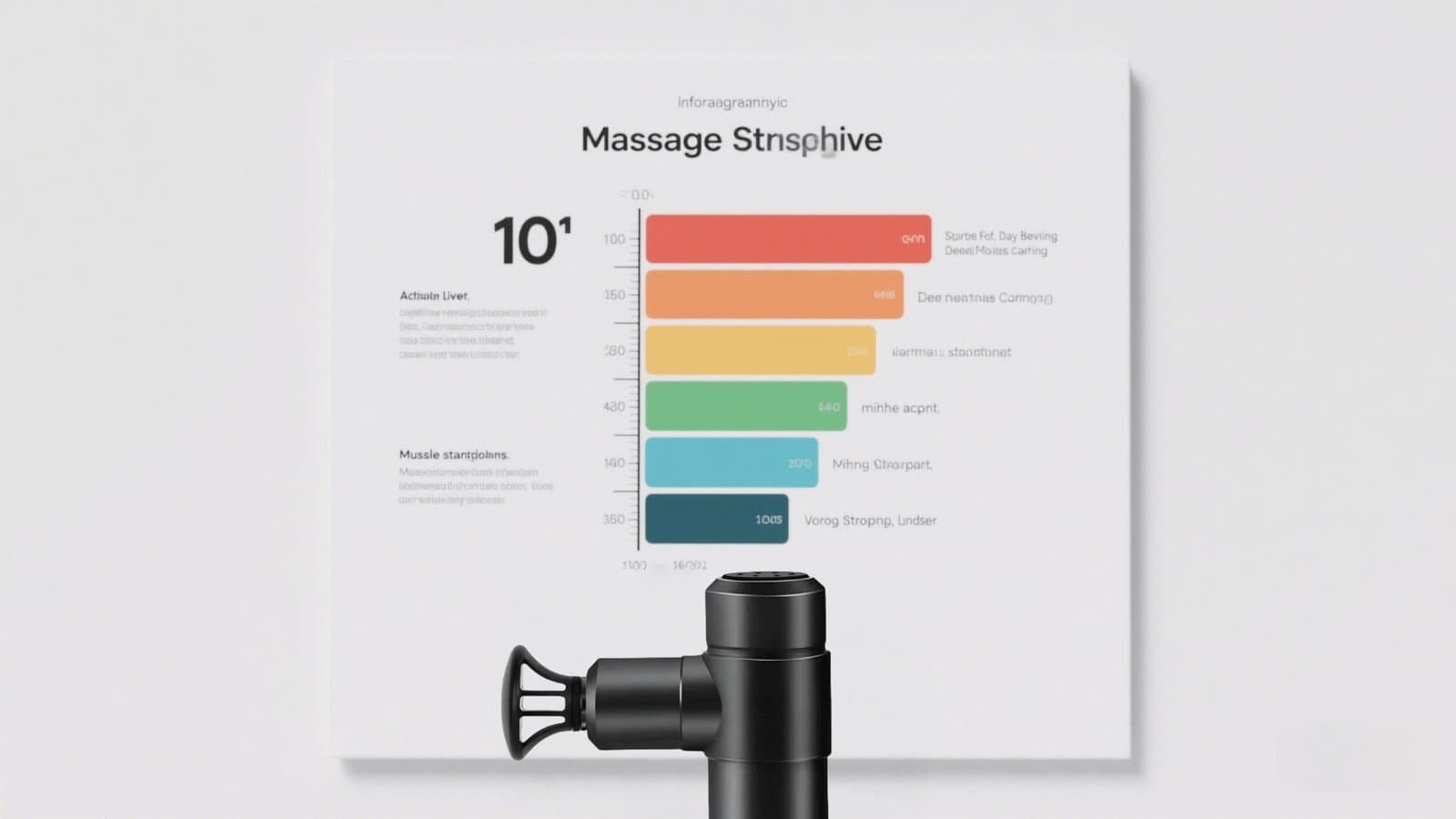
Force Selection Guidelines
By Activity Level
- Post-workout: Medium intensity (3-5 on 10-point scale)
- Daily maintenance: Low intensity (1-3)
- Deep tissue: Brief bursts at high intensity (6-8)
| By Muscle Condition | Muscle State | Recommended Force |
|---|---|---|
| Normal | 3-5 | |
| Slightly sore | 2-4 | |
| Very tight | 1-3 first, then 4-6 | |
| Injured | Avoid or doctor’s advice |
Special Cases
- Older adults: Reduce intensity by 1-2 levels
- Thin individuals: Use lower settings near bones
- Recent injuries: Avoid direct pressure
The best setting is the lowest one that gives results. Your muscles should feel relaxed, not battered.
Conclusion
Massage guns boost recovery when used properly. Match techniques to muscle groups, control intensity, and maintain correct posture for safe, effective treatment.
-
Understanding the role of blood flow in muscle recovery can help optimize your recovery strategies. ↩
-
Learn about lactic acid’s impact on muscle recovery and how to manage it effectively for better performance. ↩
-
Understanding the right grip technique can enhance your massage experience and prevent strain. Explore this link for expert tips. ↩
-
Proper body positioning is crucial for maximizing the benefits of massage guns. Discover insights on achieving the best posture. ↩
-
Learning the right movement patterns can prevent injuries and improve results. Check out this resource for detailed guidance. ↩
-
Understanding the right force settings can prevent injuries and enhance recovery. Explore expert advice on safe usage. ↩
-
Discover the potential dangers of using high settings on massage guns and how to use them safely. ↩