Engineering Principles, Motion Design & Professional Applications
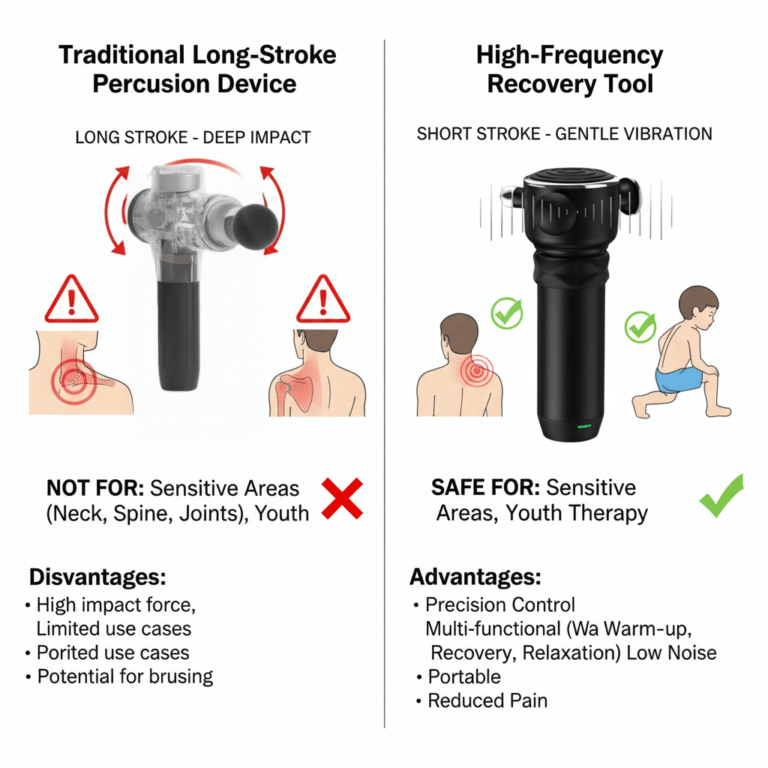
Traditional massage devices typically rely on single-direction percussive motion. While this approach creates localized stimulation, it often concentrates mechanical energy at a single point and limits how evenly vibration is distributed across a working area.
3D vibration recovery devices represent a different category of professional recovery equipment. Rather than focusing on speed or impact force alone, these systems are engineered to generate multi-directional mechanical vibration through controlled motion design.
This article explains how 3D vibration technology works from an engineering and device-structure perspective, with a focus on equipment design, motion output, and professional application scenarios.
This content discusses recovery device technology and mechanical principles only. It does not provide medical advice, diagnosis, or treatment guidance.
What Is 3D Vibration Technology?
3D vibration technology refers to a mechanical vibration system that operates across multiple motion axes simultaneously.
Unlike conventional percussive devices that move primarily along a single vertical axis, 3D vibration devices are designed to combine:
- Horizontal shear motion – controlled lateral micro-movements across the contact surface
- Vertical vibration output – consistent vertical oscillation generated by precision motors
By synchronizing these two movement patterns, the device produces a ripple-style mechanical output, allowing vibration energy to spread more evenly rather than concentrating at a single impact point.
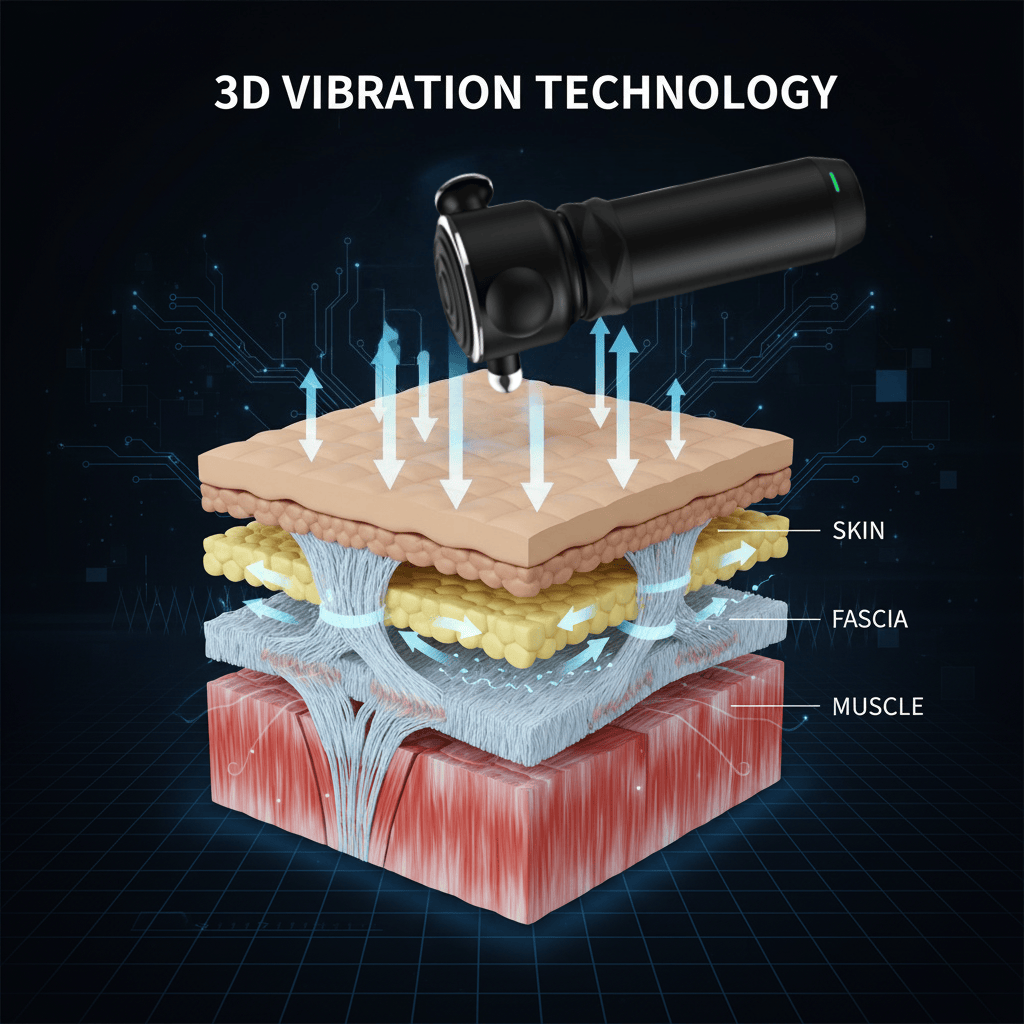
From an equipment-design standpoint, this approach prioritizes motion consistency, stability, and energy distribution, rather than peak force.
How Horizontal Shear and Vertical Vibration Work Together
Dual-Axis Motion Architecture
At the core of a 3D vibration recovery device is a multi-axis motor system combined with a coordinated control circuit.
This architecture allows horizontal and vertical movements to operate simultaneously instead of sequentially.
- Horizontal shear motion introduces lateral displacement, helping vibration energy spread across a broader surface area
- Vertical vibration delivers steady oscillation perpendicular to the contact plane
The result is a layered mechanical interaction that differs fundamentally from single-axis percussion.
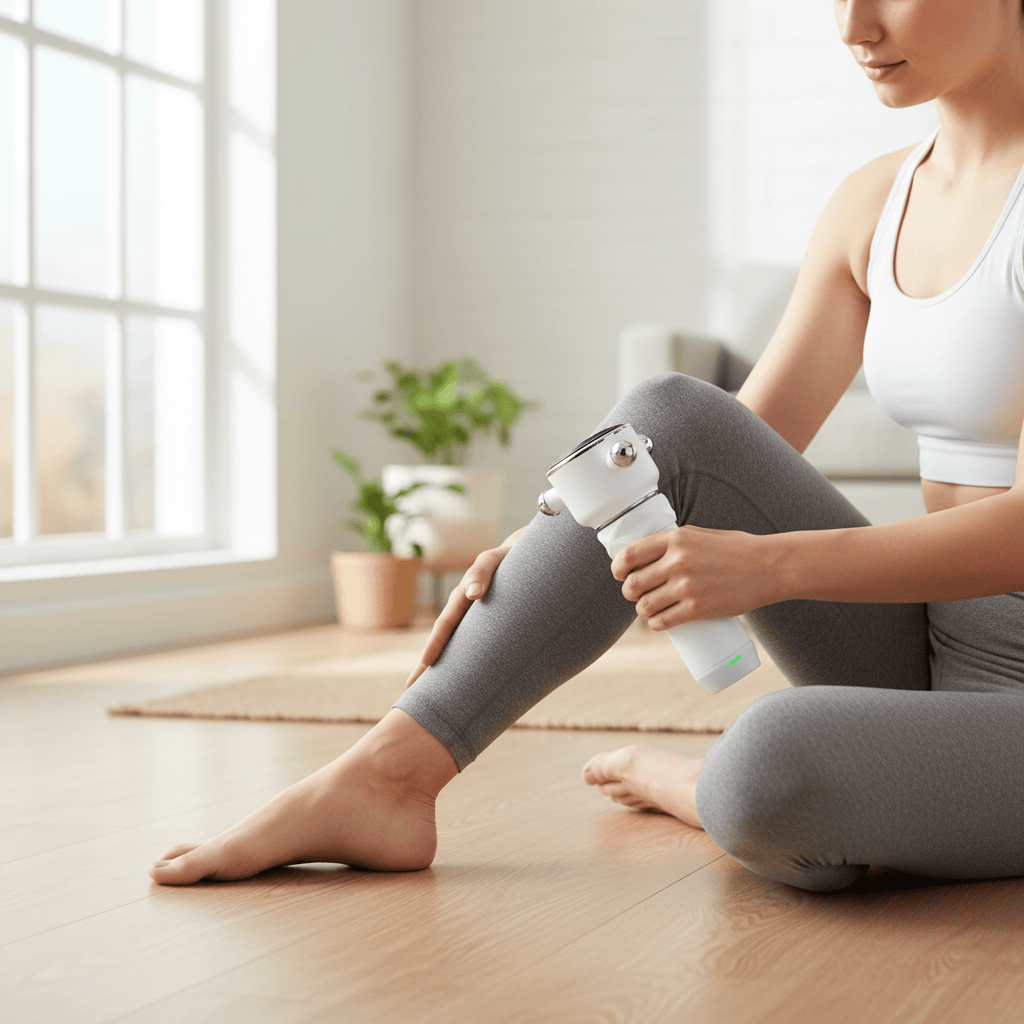
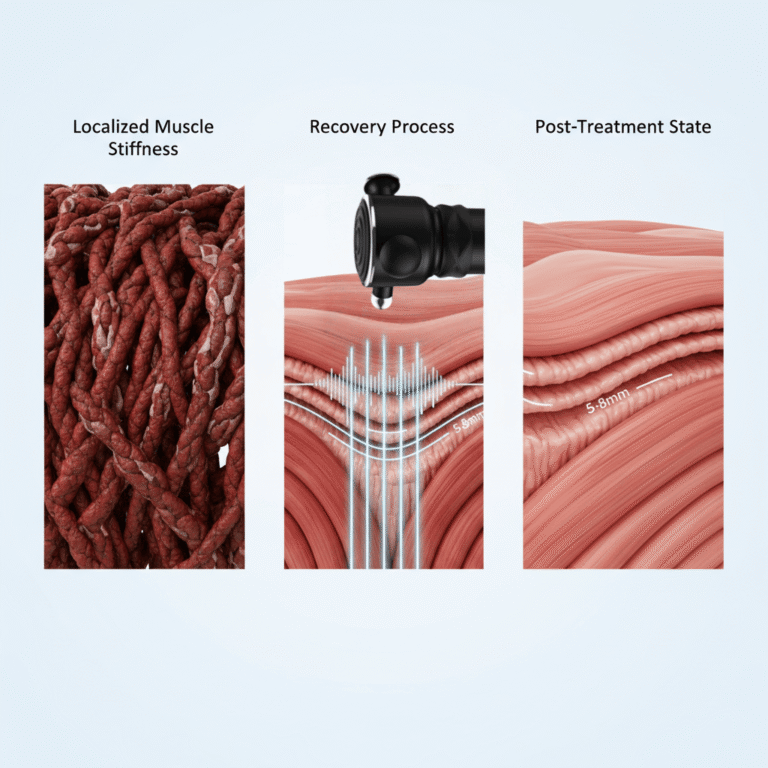
Rather than creating isolated impact points, the combined motion produces overlapping vibration waves that travel outward across the contact zone.
Frequency and Amplitude Design Considerations
Most professional-grade 3D vibration recovery devices operate within a high-frequency, low-amplitude range, typically:
- Frequency: 4,500–7,500 oscillations per minute
- Amplitude: approximately 2–3.5 mm
This configuration enables continuous vibration output while maintaining mechanical stability and user control.
Low amplitude reduces abrupt displacement, while higher frequency allows vibration energy to remain consistent over time.
From an engineering perspective, this balance helps avoid sharp force spikes and supports smoother mechanical interaction.
Mechanical Output Comparison
| Feature | Traditional Percussive Devices | 3D Vibration Recovery Devices |
|---|---|---|
| Motion pattern | Single-axis impact | Multi-axis vibration |
| Energy distribution | Localized | Evenly distributed |
| Output control | Basic speed adjustment | Precision frequency & amplitude |
| Contact experience | Point-focused | Broad-area interaction |
| Equipment category | General consumer tools | Professional recovery equipment |
Because of these differences, 3D vibration systems are often positioned as a separate equipment class rather than a variation of standard massage devices.
Professional Application Scenarios
Due to their controlled mechanical output, 3D vibration recovery devices are commonly integrated into structured recovery and performance environments, such as:
- Sports performance and conditioning centers
- Athletic recovery facilities
- Professional training studios
- Wellness-focused fitness centers
- Mobility and preparation routines for active populations
In these contexts, the devices are used as mechanical stimulation tools within broader workflows, often under guidance from trained staff or coaches.
General Usage Principles (Non-Medical)
From a device-operation perspective, common usage principles include:
- Applying light to moderate contact pressure
- Moving the device slowly and consistently across target areas
- Using short, controlled sessions rather than prolonged exposure
- Avoiding direct contact with joints or bony structures
These principles focus on equipment handling and mechanical consistency, not therapeutic outcomes.
Summary
3D vibration technology represents an evolution in recovery device engineering. By combining horizontal shear motion with vertical vibration, these systems deliver multi-directional mechanical output designed for stability, repeatability, and controlled energy distribution.
Rather than relying on impact force alone, 3D vibration recovery devices emphasize precision motion design and consistent mechanical performance.
This makes them well suited for professional recovery workflows where predictable equipment behavior and structured application are essential.