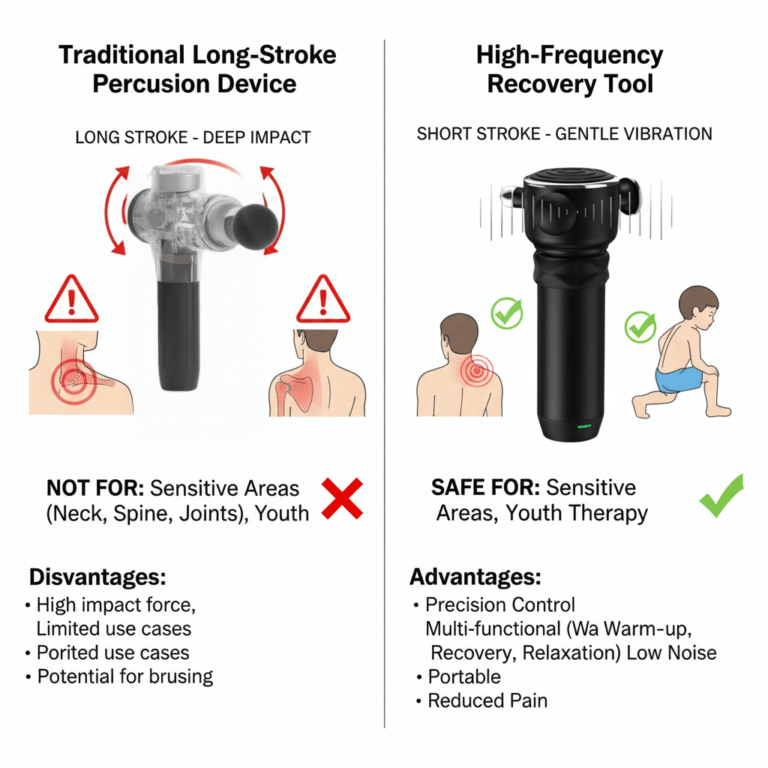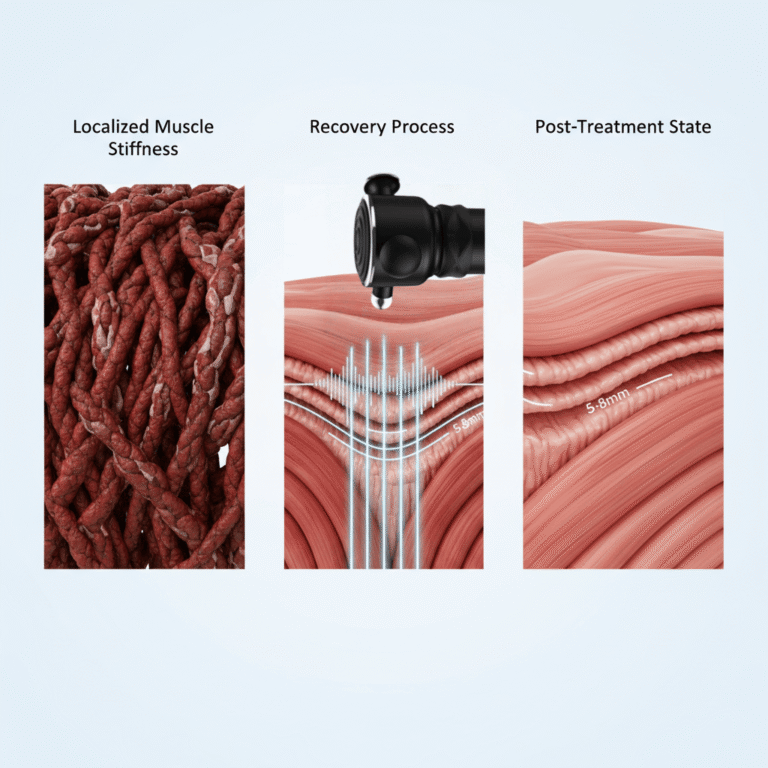
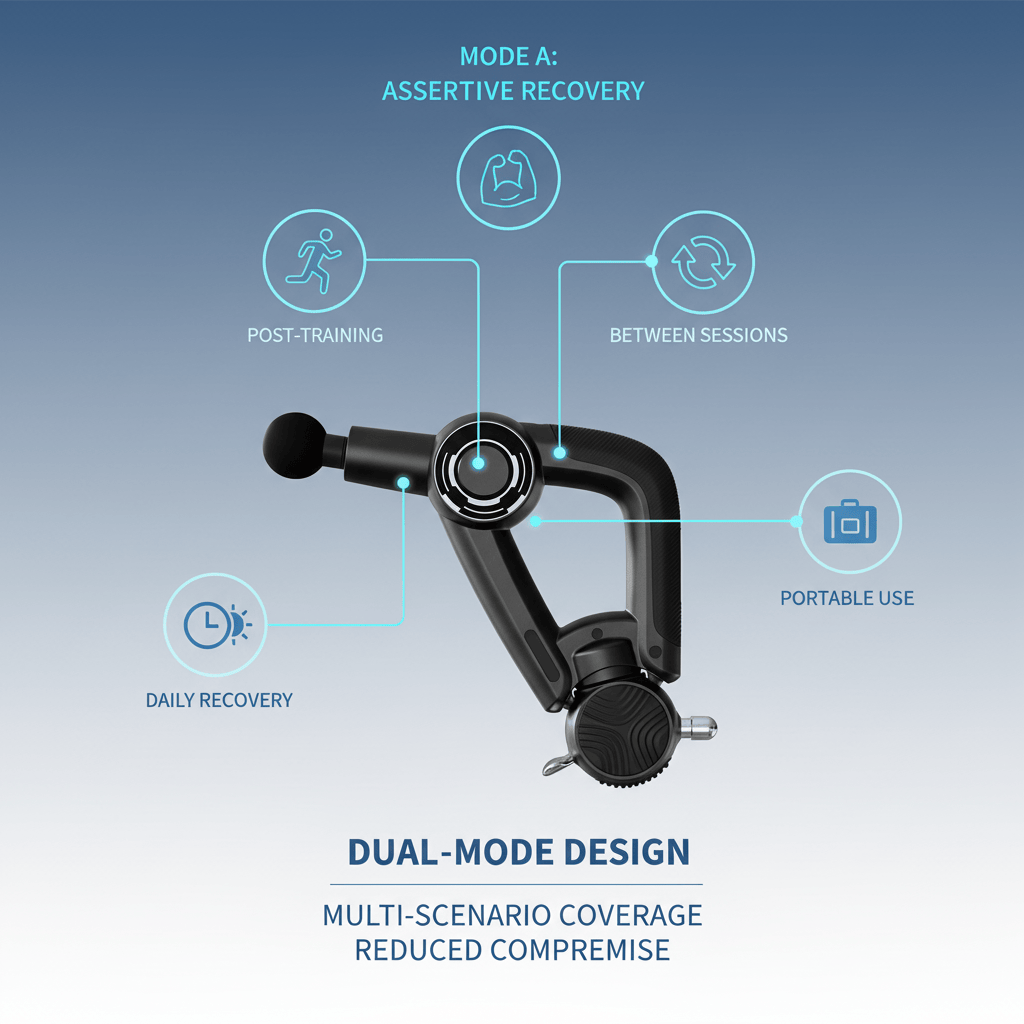
When evaluating recovery tools, professionals prioritize sustained performance over temporary relief. The difference lies in engineering tolerances, not just advertised specifications.
Professional-grade tools1 maintain consistent torque and amplitude through extended use cycles, while consumer devices prioritize portability over durability.
Understanding these differences requires examining three critical dimensions that separate commercial solutions from consumer gadgets.
1️⃣ Defining Professional Grade: Key Performance Indicators Beyond Consumer-Level Specifications
What separates professional recovery tools from consumer massage guns?
Professional tools measure performance in duty cycles and amplitude consistency, while consumer products focus on maximum RPM claims and battery life.
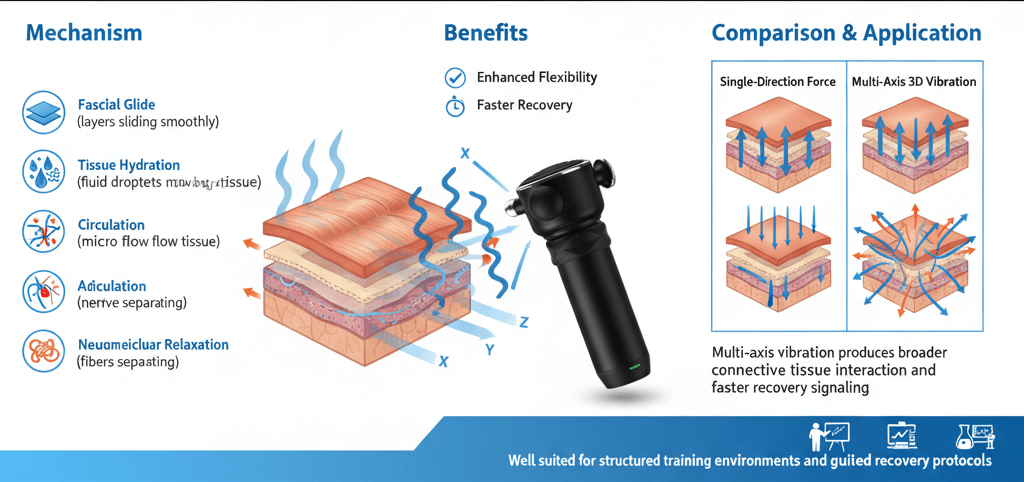
The engineering differences manifest in three measurable aspects:
-
Torque Stability2
Professional tools maintain ±5% torque variance during continuous operation, whereas consumer devices show ±25% variance after 15 minutes of use. This matters for:- Consistent tissue penetration depth
- Predictable metabolic response
- Repeatable treatment protocols
-
Heat Dissipation3
Commercial units incorporate copper heat sinks and thermal cutoffs, enabling 60+ minute continuous use versus consumer models limited to 15-minute cycles. -
Frequency Precision4
High-Frequency 3D Vibration Therapy devices deliver exact frequencies (e.g., 50Hz ±0.5Hz) compared to consumer-grade variability (50Hz ±5Hz).
| Specification | Professional Grade | Consumer Grade |
|---|---|---|
| Continuous Use Time | 60+ minutes | 15 minutes |
| Torque Variance | ±5% | ±25% |
| Frequency Accuracy | ±0.5Hz | ±5Hz |
| Expected Duty Cycles | 50,000+ | 5,000 |
2️⃣ Built for Continuous Use: Durability and Performance Stability in Commercial Environments
Why do professional settings demand different durability standards?
Commercial environments require tools that withstand 8-10 hours of daily use without performance degradation, while consumer models are designed for intermittent personal use.
Three structural differences enable this reliability:
-
Motor Construction5
Professional tools use brushless motors with industrial-grade bearings, reducing wear from:- High inertial loads during direction changes
- Constant speed modulation
- Vibration-induced component fatigue
-
Impact Mechanism6
Commercial-grade hammer mechanisms employ tungsten alloy components instead of aluminum, providing:- 5x longer lifespan
- Consistent strike force regardless of battery level
- Minimal heat generation
-
Circuit Protection7
Professional units integrate:- Redundant overcurrent protection
- Vibration-dampened PCB mounts
- Moisture-resistant conformal coating
A professional High-Frequency 3D Vibration Therapy device undergoes 200+ validation tests including:
- 10,000 consecutive trigger activations
- 500-hour accelerated life testing
- Thermal shock cycling (-20°C to 60°C)
3️⃣ Procurement Perspective: Evaluating Long-Term Value Over Initial Unit Cost
How should facilities calculate total cost of ownership?
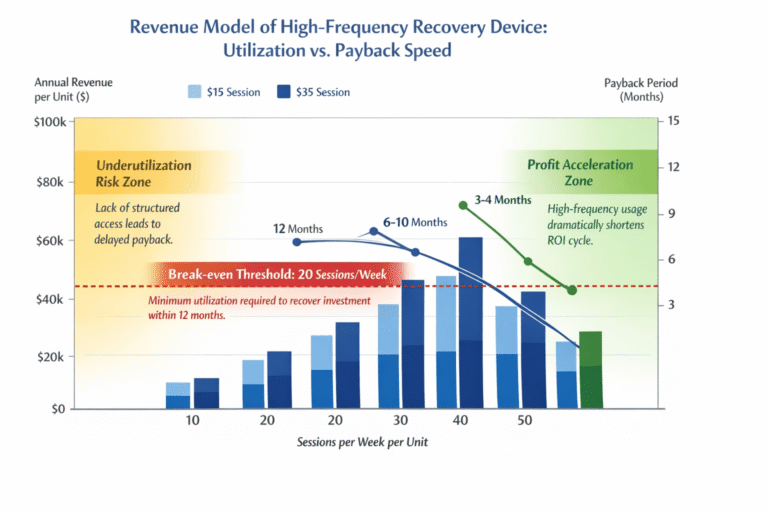
Professional tools demonstrate lower cost-per-use over 3 years despite higher upfront costs, due to reduced replacement needs and maintenance expenses.
Key procurement considerations:
-
- Consumer model: $200 ÷ 500 sessions = $0.40/session
- Professional model: $800 ÷ 10,000 sessions = $0.08/session
-
Downtime Costs
Consumer device failures create:- Staff productivity loss during replacements
- Client appointment cancellations
- Emergency procurement premiums
-
Performance Consistency9
Professional tools maintain therapeutic efficacy throughout lifespan, whereas consumer devices show measurable performance drop after 300-500 uses.
| Cost Factor | Professional Grade | Consumer Grade |
|---|---|---|
| 3-Year Device Cost | $800 | $600 (3 units) |
| Maintenance Costs | $50 | $120 |
| Downtime Costs | $0 | $400 |
| Total 3-Year Cost | $850 | $1,120 |
Conclusion
Professional recovery tools justify their investment through engineering precision and durability that consumer devices cannot match. For facilities performing 15+ sessions daily, the long-term economics become undeniable.
-
Explore how professional-grade tools enhance recovery with superior performance and durability. ↩
-
Learn why torque stability is crucial for effective recovery and how it impacts treatment outcomes. ↩
-
Discover how effective heat dissipation can prolong the life and performance of recovery devices. ↩
-
Understand the significance of frequency precision in achieving optimal therapeutic results. ↩
-
Find out how advanced motor construction contributes to the durability and efficiency of recovery tools. ↩
-
Explore the differences in impact mechanisms and their effects on performance and longevity. ↩
-
Learn about the importance of circuit protection in ensuring safety and reliability during use. ↩
-
Discover how understanding usage-based costing can lead to better investment decisions for recovery tools. ↩
-
Explore how performance consistency impacts the effectiveness and reliability of recovery sessions. ↩