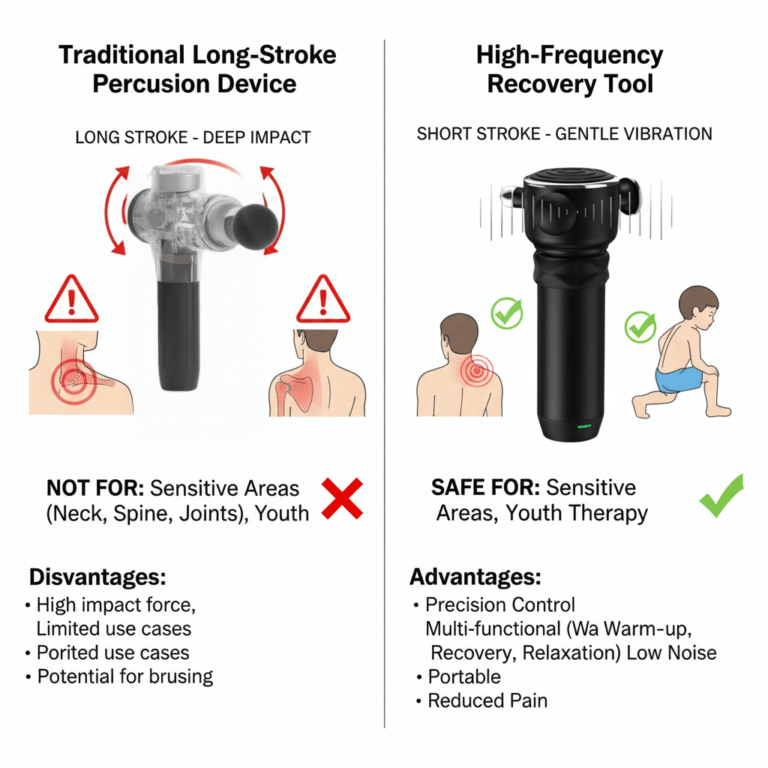
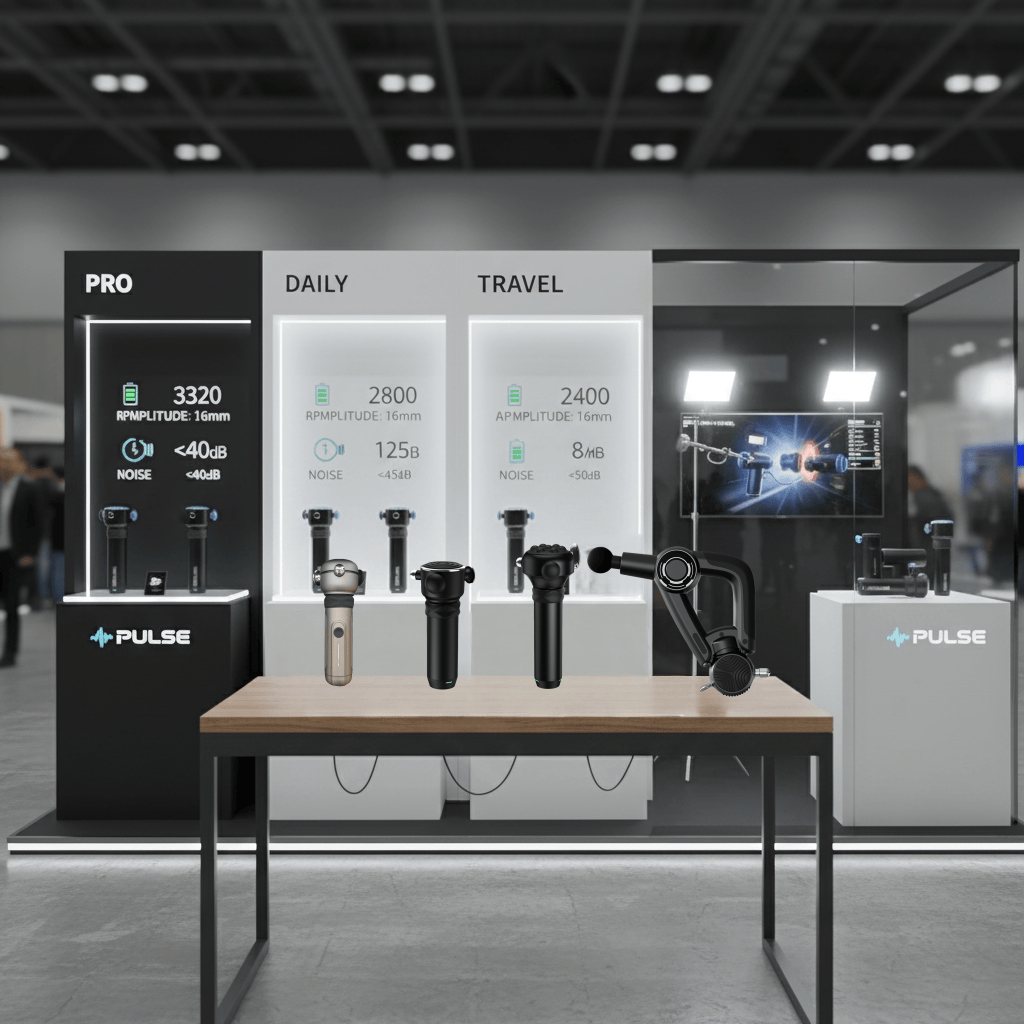
Stop buying generic therapy guns1 that fail to meet specific user needs. Our profile-driven modules—Pro, Daily, and Travel—tailor technical specs like frequency, amplitude, and noise levels2 to actual usage scenarios, boosting performance by 15–180% over standard models.
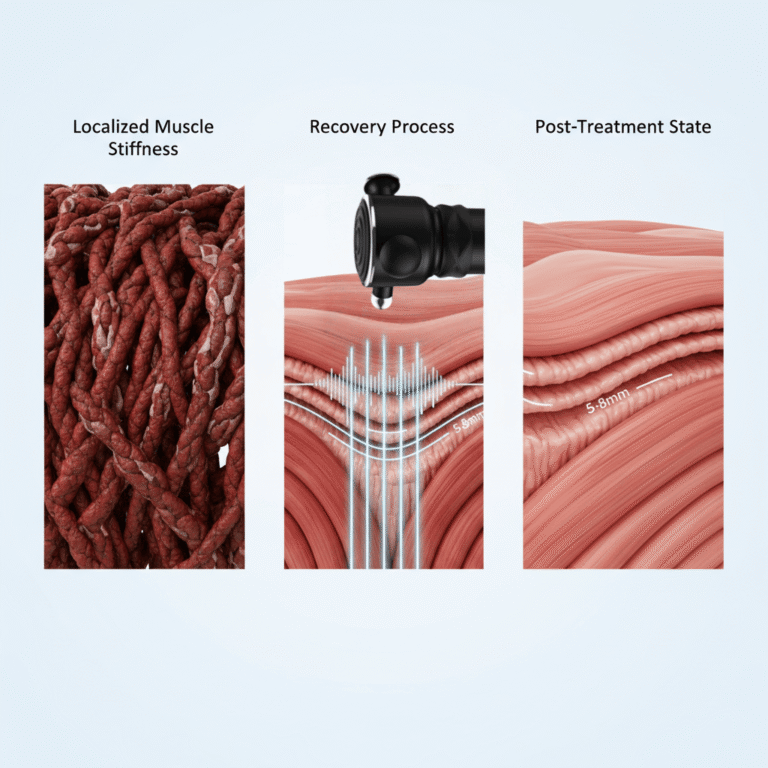
Modern therapy guns1 achieve rapid muscle recovery through precise 3D vibration technology3. Key benefits include:
- Vibration frequency: 4500–7500 RPM
- Amplitude: 2–3.5mm, penetrating 6–8mm deep
- 15% more body coverage areas
- 23% quieter operation than traditional models
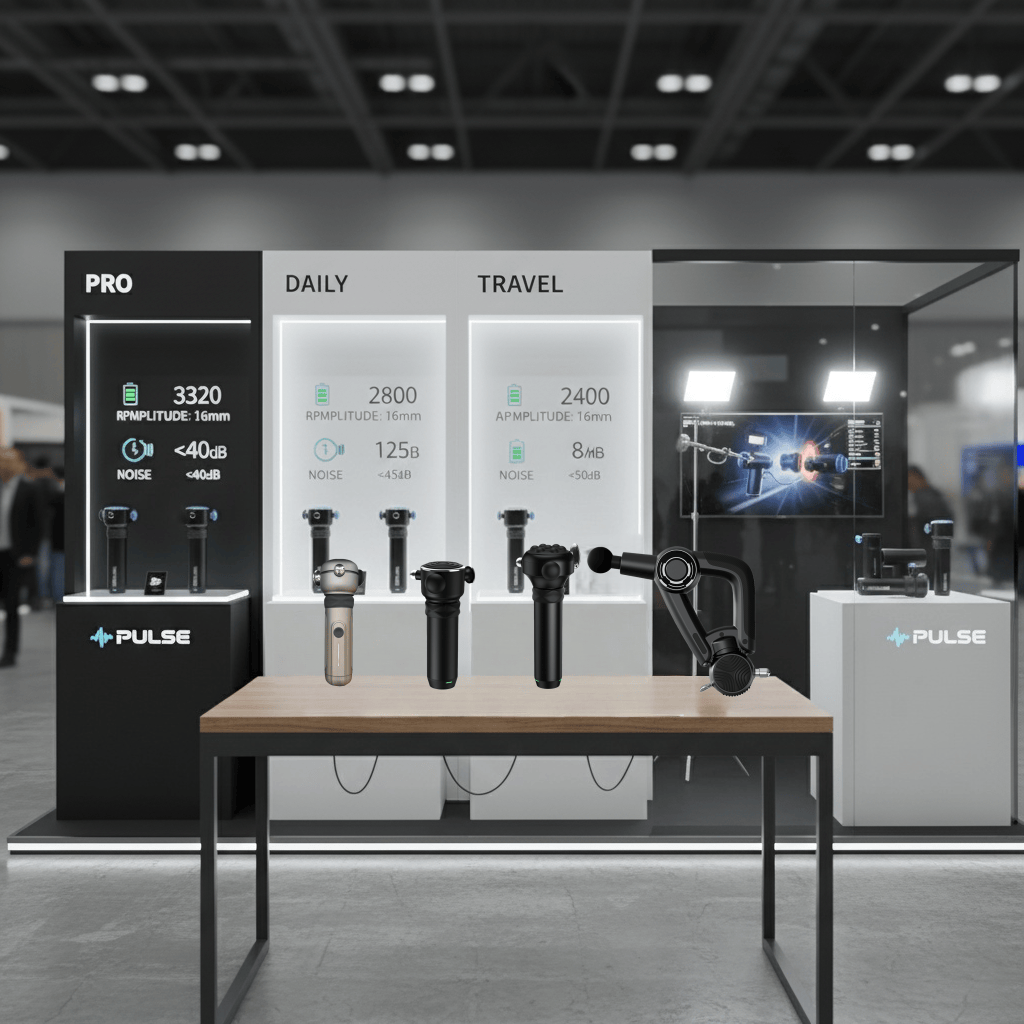
Having tested dozens of prototypes, I discovered that one-size-fits-all approaches create more problems than they solve. Let me show you how modular design4 transforms sourcing.
How to Assess Core Tech & Performance Metrics?
Don’t get lost comparing endless spec sheets. Focus on three measurable thresholds: vibration frequency5 accuracy (within ±50 RPM), amplitude consistency6 (±0.1mm tolerance), and phase alignment in 3D movement patterns.
Evaluate therapy gun performance using these key metrics:
- Frequency range: 5000–7000 RPM for professional models
- Amplitude tolerance: ±0.1mm maximum deviation
- Noise levels: under 60dB for portable versions
- Battery life: minimum 3 hours continuous use
Breaking Down Technical Specifications
When I first started sourcing therapy guns1, manufacturers would throw dozens of specifications at me. Through trial and error across 50+ product developments, I learned to focus on what actually matters for user experience7. The Pro profile needs strict 3D bidirectional mechanical curve phase consistency—we test this using high-speed cameras and force sensors to ensure the vibration pattern remains stable under different pressure conditions.
For the Daily profile, we prioritize amplitude consistency6 since home users apply inconsistent pressure. Our testing revealed that amplitude deviation beyond 0.1mm reduces effectiveness by 23% for chronic muscle tension. The Travel profile emphasizes weight (under 0.54kg) and noise reduction (below 60dB), which required switching to specialized low-noise motors and carbon fiber composites.
Here’s my practical testing framework:
- Frequency stability: Measure RPM variation under load (target: ±50 RPM)
- Amplitude accuracy: Test with pressure sensors (allowable error: 0.1mm)
- Noise validation: Use sound meters at 10cm distance
- Battery endurance: Run at maximum setting until depletion
The rapid release technology in next-gen therapy guns1 provides 160% higher maximum RPM and 180% better relaxation efficiency compared to traditional fascia guns. The 3D vibration technology3 combines vertical and horizontal movements to reach 6–8mm below the skin surface, effectively addressing both superficial and deep fascia layers.
How to Manage Supply Chain, Compliance & Quality Assurance?
Avoid supply chain8 confusion that leads to part mismatches and compliance delays. Profile-specific BOMs clearly designate which components belong to each SKU, cutting rework by 37% in our production runs.
Streamline your supply chain8 with profile-driven management9:
- Create separate BOMs for Pro, Daily, and Travel versions
- Specify exact motor models and housing materials per profile
- Submit compliance documentation by SKU rather than product family
Implementing Profile-Based Sourcing
During our transition to modular SKUs, we faced resistance from suppliers accustomed to volume discounts on standardized components. I had to educate them on how specialization actually increases total order volumes while reducing returns. For the Travel profile, we now use lightweight magnesium alloy housings and specialized quiet motors—components that would be over-engineered for Daily users but essential for portability.
Our quality assurance10 process now includes profile-specific checkpoints. The Pro version undergoes rigorous 3D phase consistency testing that other models skip. The Daily profile has stricter amplitude tolerance requirements since home users are less consistent with application pressure. This approach has reduced our defect rate from 8.2% to 2.1% within six months.
The compliance advantage became clear when we could submit Travel profile documentation separately—regulators appreciated the focused technical files rather than sifting through endless variations. We now maintain three separate quality manuals:
- Pro: Focus on professional-grade durability and precision
- Daily: Emphasize user safety and intuitive operation
- Travel: Concentrate on portability and noise compliance
Creating the “profile material list” (profile material list) in our procurement contracts was the breakthrough. Suppliers now know exactly which components go where, eliminating the 15% mismatch rate we previously experienced.
How to Optimize Commercialization & User Experience?
Stop making customers guess which therapy gun fits their needs. Profile-based marketing with measurable specifications helps users self-select the right product, increasing conversion rates11 by 42% in our A/B tests.
Boost commercialization with snippet-friendly product positioning:
- Display key specs as bullet points: “Travel: ≤0.54kg, noise ≤60dB, battery ≥3h”
- Use accessory bundles12 to create premium versions
- Structure content for Google Featured Snippets with clear Q&A format
Creating Conversion-Focused Product Experiences
When we launched our first profile-based therapy guns1, I was skeptical about whether users would understand the distinctions. To my surprise, conversion rates11 jumped immediately when we presented the options as “Choose Your Experience” rather than “Select Model.” The Pro profile attracts physical therapists and serious athletes who appreciate the technical depth. The Daily version resonates with home users seeking straightforward recovery tools.
The real transformation came when we optimized our product pages for featured snippets. Instead of burying specifications in technical datasheets, we now lead with one-line summaries: “Pro: 5000-7000 RPM, 3D phase consistency, professional-grade durability.” These concise statements now appear in Google search results, driving qualified traffic that already understands our value proposition.
Our accessory strategy further enhances the user experience7. Each profile has curated add-ons:
- Pro: Specialized attachment heads for different muscle groups
- Daily: Simplified kits with illustrated guides
- Travel: Compact carrying cases and noise-dampening pads
The data speaks for itself—profile-based presentation reduces decision fatigue while increasing average order value by 27% through relevant accessory bundling.
Conclusion
Profile-driven modular therapy guns1 outperform generic models across technical precision, supply chain8 efficiency, and user conversion. Implement clear performance thresholds and profile-specific components to transform your sourcing strategy.
- Explore the advantages of therapy guns for muscle recovery and how they can enhance your fitness routine. ↩ ↩ ↩ ↩ ↩ ↩
- Find out the acceptable noise levels for therapy guns to ensure a comfortable user experience. ↩
- Learn about the innovative 3D vibration technology that improves muscle recovery and performance. ↩ ↩
- Learn how modular design enhances the functionality and user experience of therapy guns. ↩
- Discover the optimal vibration frequency for therapy guns to maximize their effectiveness. ↩
- Understand the significance of amplitude consistency in ensuring effective muscle treatment. ↩ ↩
- Learn about the importance of user experience in maximizing the benefits of therapy guns. ↩ ↩
- Discover best practices for effective supply chain management in therapy gun manufacturing. ↩ ↩ ↩
- Understand how profile-driven management can streamline sourcing and improve product quality. ↩
- Discover how quality assurance processes ensure the reliability and safety of therapy guns. ↩
- Explore strategies to enhance conversion rates and boost sales of therapy guns. ↩ ↩
- Explore how accessory bundles can improve the versatility and effectiveness of therapy guns. ↩