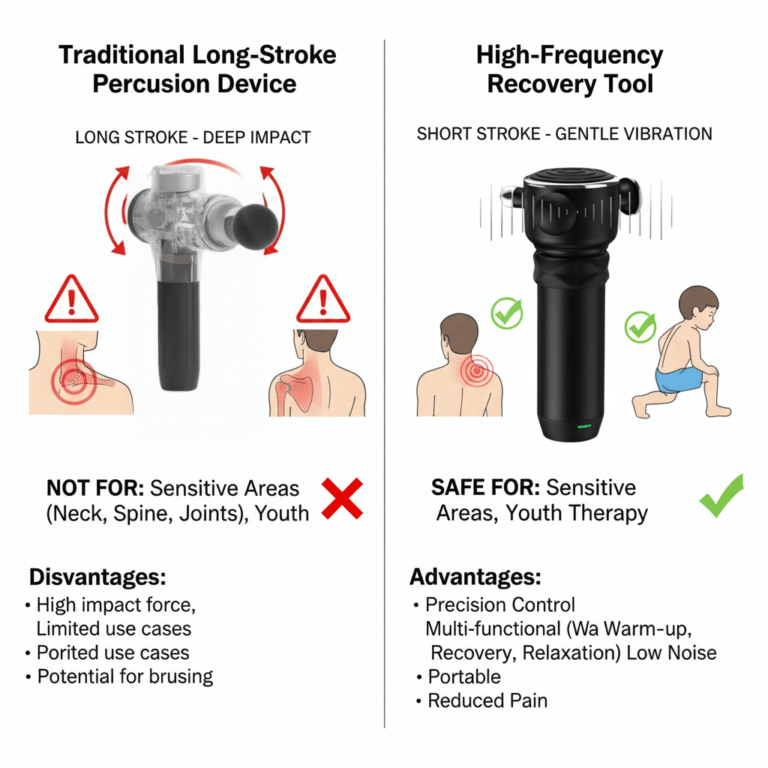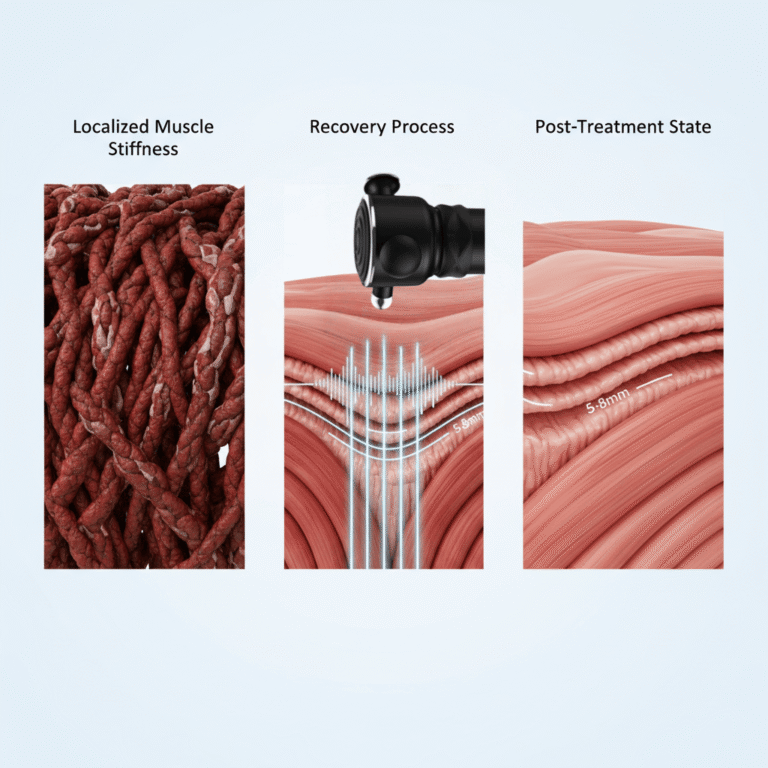

Muscle soreness slowing you down? You need tools that truly work. Modern recovery goes beyond just soothing aching muscles—it’s about rebuilding your body smarter.
The best muscle recovery tools work holistically, targeting not only muscles but also fascia, nerves, and circulation for faster and fuller recovery. These advanced tools improve tissue hydration, neural feedback1, and metabolic waste clearance2 efficiently.
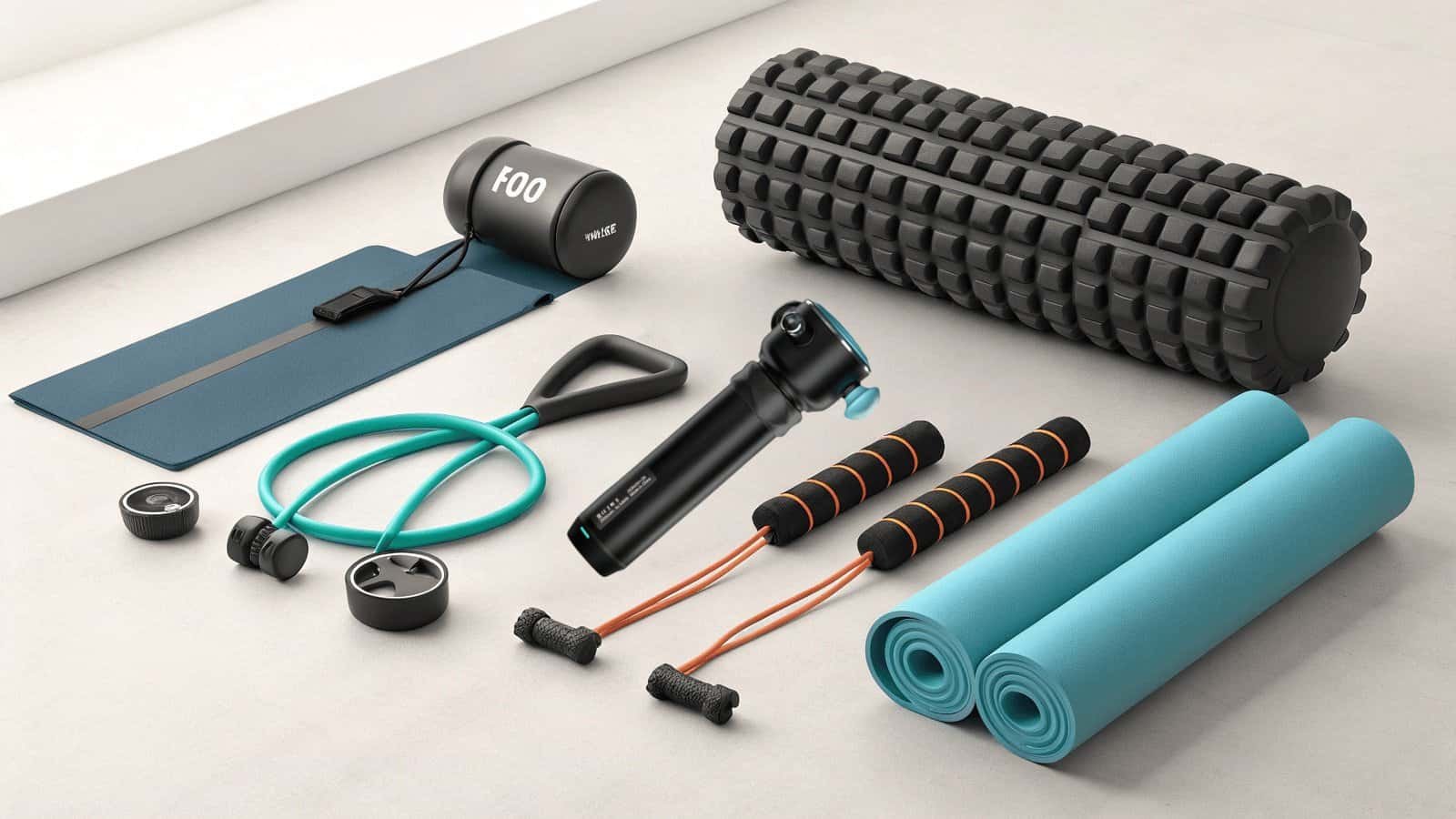
Transitioning from temporary relief to lasting recovery requires understanding what makes today’s tools stand out. Let’s explore the top options and innovations transforming muscle recovery.
What are the best recovery tools?
Tired of tools that only scratch the surface? Truly effective recovery means reaching deeper tissues for real change.
The best recovery tools integrate high-frequency vibration3, multi-depth penetration, and smart ergonomics to address muscle fatigue, fascial adhesions4, and neural fatigue simultaneously, delivering measurable gains in mobility and reduced soreness.

Key Features of Top Recovery Tools
| Feature | Benefit | Ideal For |
|---|---|---|
| High-frequency vibration | Enhances blood flow and reduces recovery time | Post-workout muscle soreness |
| Adjustable amplitude | Targets both shallow and deep tissue layers | Customized recovery sessions |
| Ergonomic design | Reaches difficult areas like neck and feet | Full-body accessibility |
| Low noise operation | Enables use anywhere without disruption | Home, gym, or travel |
Truly advanced tools operate at frequencies between 4500-7500 RPM, with amplitudes ranging from 2-3.5mm. This combination allows vibrations to penetrate 6-8mm beneath the skin, effectively addressing both superficial and deep fascial layers. Unlike traditional massage guns that primarily work on muscle tissue, these devices create a comprehensive system response. They stimulate fibroblasts—the cells responsible for tissue repair—while simultaneously encouraging lymphatic drainage. The result isnʼt just temporary relaxation; itʼs accelerated cellular recovery5 and improved tissue resilience over time.
What is the best thing to use for muscle recovery?
Still relying on basic foam rollers? The best recovery solutions now offer scientific precision with practical benefits.
The best tool for muscle recovery combines 3D vibration technology6 with targeted amplitude control, providing vertical and horizontal oscillations that enhance fascia hydration, neural adaptation, and metabolic clearance more effectively than single-plane devices.
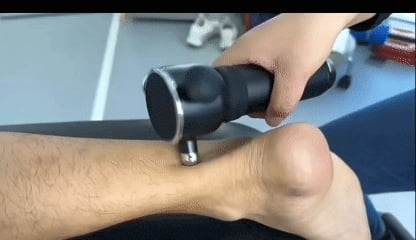
Performance Comparison: Traditional vs. Advanced Tools
| Aspect | Traditional Massage Guns | Advanced 3D Therapy Guns |
|---|---|---|
| Vibration Pattern | Single-direction | Multi-directional (3D) |
| Treatable Areas | Limited major muscle groups | 15% more areas including neck, knees |
| Maximum RPM | Lower frequency range | 160% higher revolutions |
| Recovery Efficiency | Basic muscle relaxation | 180% improved recovery speed |
| Noise Level | Typically louder | 23% quieter operation |
The revolutionary difference lies in the 3D technology—simultaneous vertical and horizontal vibrations create a wavelike motion through tissues. This motion doesnʼt just relax muscles; it gently separates fascial adhesions4, much like kneading dough to remove lumps. The improved hydration of fascial tissues allows for better nutrient delivery and waste removal at cellular level. Meanwhile, the nervous system receives enhanced proprioceptive feedback7, helping reset muscle tension patterns. For athletes, this means not just recovery from yesterdayʼs workout, but improved performance in tomorrowʼs session due to better neural muscle communication and reduced physiological barriers.
What do professional athletes use for muscle recovery?
Wondering how elites recover so quickly? They use technology that addresses their entire kinetic chain.
Professional athletes use advanced rapid release therapy guns that operate at 4500-7500 RPM with 3D vibration technology, specifically designed to reduce DOMS, enhance blood circulation, break down scar tissue, and restore functional movement patterns faster than conventional methods.

Why Professionals Choose Advanced Tools
| Reason | How It Helps Athletes | Result |
|---|---|---|
| Faster lactate clearance8 | Reduces muscle fatigue and soreness | Quicker return to training |
| Enhanced flexibility | Improves range of motion | Better performance and injury prevention |
| Scar tissue management | Breaks down adhesions from previous injuries | Long-term tissue health |
| Neural recovery | Resets muscle spindle sensitivity | Improved coordination and power output |
Elite athletes donʼt just seek comfort; they demand measurable physiological changes. The rapid release technology professionals use creates microscopic oscillations in tissues that stimulate cellular repair mechanisms. This process accelerates the removal of metabolic waste like lactic acid while simultaneously increasing oxygenated blood flow to fatigued areas. The 3D movement pattern proves particularly valuable for addressing complex muscle groups like rotator cuffs, hip flexors, and spinal erectors—areas where traditional linear devices struggle. For professionals facing constant travel and tight schedules, the 23% noise reduction means they can use these devices anywhere without disturbing others, making consistent recovery possible regardless of environment.
Conclusion
Modern recovery tools work holistically across muscles, fascia, nerves and circulation for complete, lasting recovery benefits.
-
Understanding neural feedback can help you optimize your recovery strategy for better results. ↩
-
This resource explains the importance of metabolic waste clearance in enhancing recovery efficiency. ↩
-
Learn how high-frequency vibration can significantly improve blood flow and reduce recovery time. ↩
-
Explore this link to understand fascial adhesions and their role in muscle recovery. ↩ ↩
-
Learn about cellular recovery and its significance in achieving optimal muscle health. ↩
-
Discover how 3D vibration technology can revolutionize your recovery process with its unique benefits. ↩
-
Learn about proprioceptive feedback and its crucial role in muscle recovery and performance. ↩
-
This resource provides insights into lactate clearance and its impact on recovery and performance. ↩