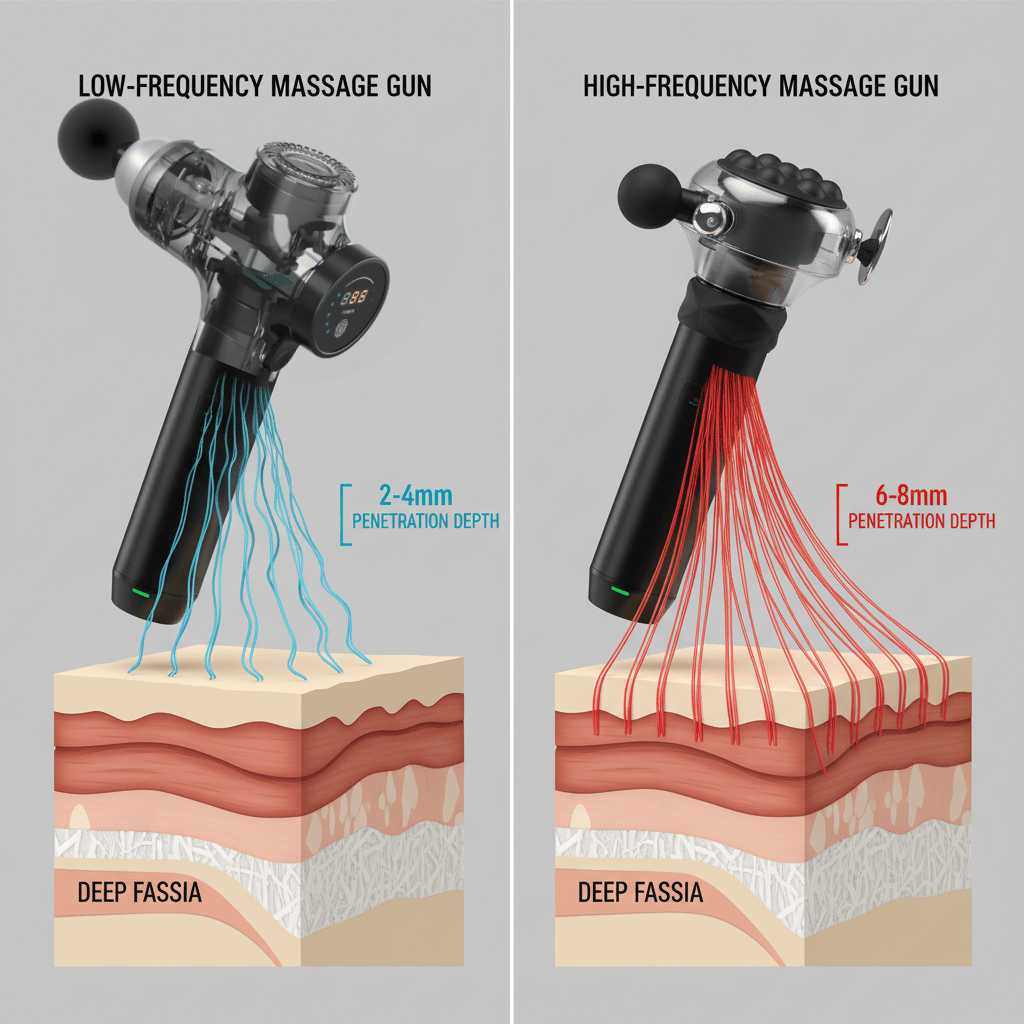
Struggling with muscle recovery? High-frequency percussion guns1 (5,000–7,000 RPM) use 3D vibrations to penetrate 6–8mm deep, delivering 160% faster relief than traditional massagers by targeting fascia adhesions.
High-Frequency Percussion Massage Guns: Key Features
- Speed: 5,000–7,000 compressions/minute vs. 2,000–3,200 in standard guns.
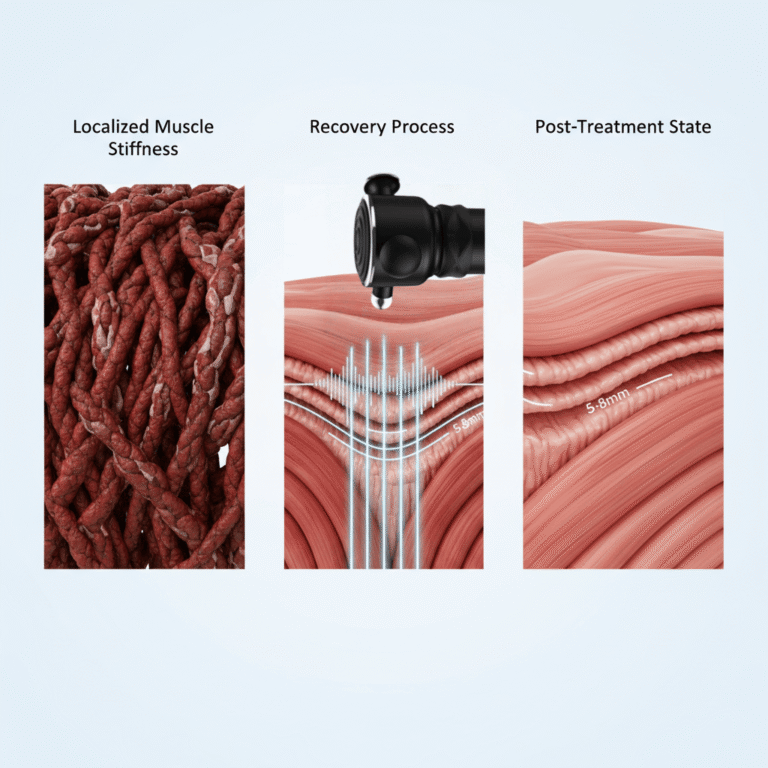
- Depth: Reaches deep fascia layers (6–8mm)2 with combined vertical/horizontal vibrations.
- Benefits: Reduces DOMS, boosts circulation, and breaks scar tissue 180% more efficiently.
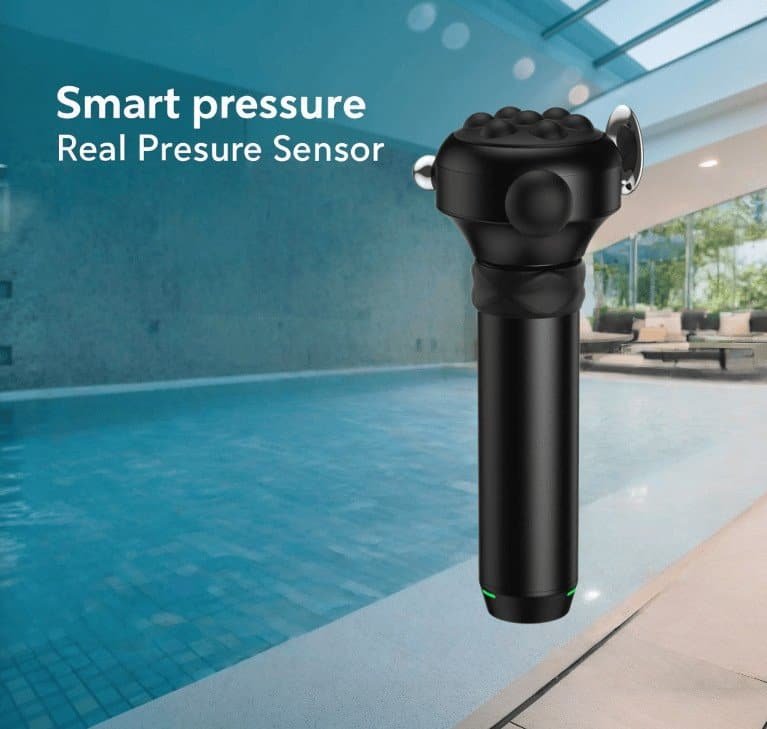
Let’s explore how this tech outperforms old-school recovery tools.
High-Frequency vs. Low-Frequency Massage Gun: Which Is Better?
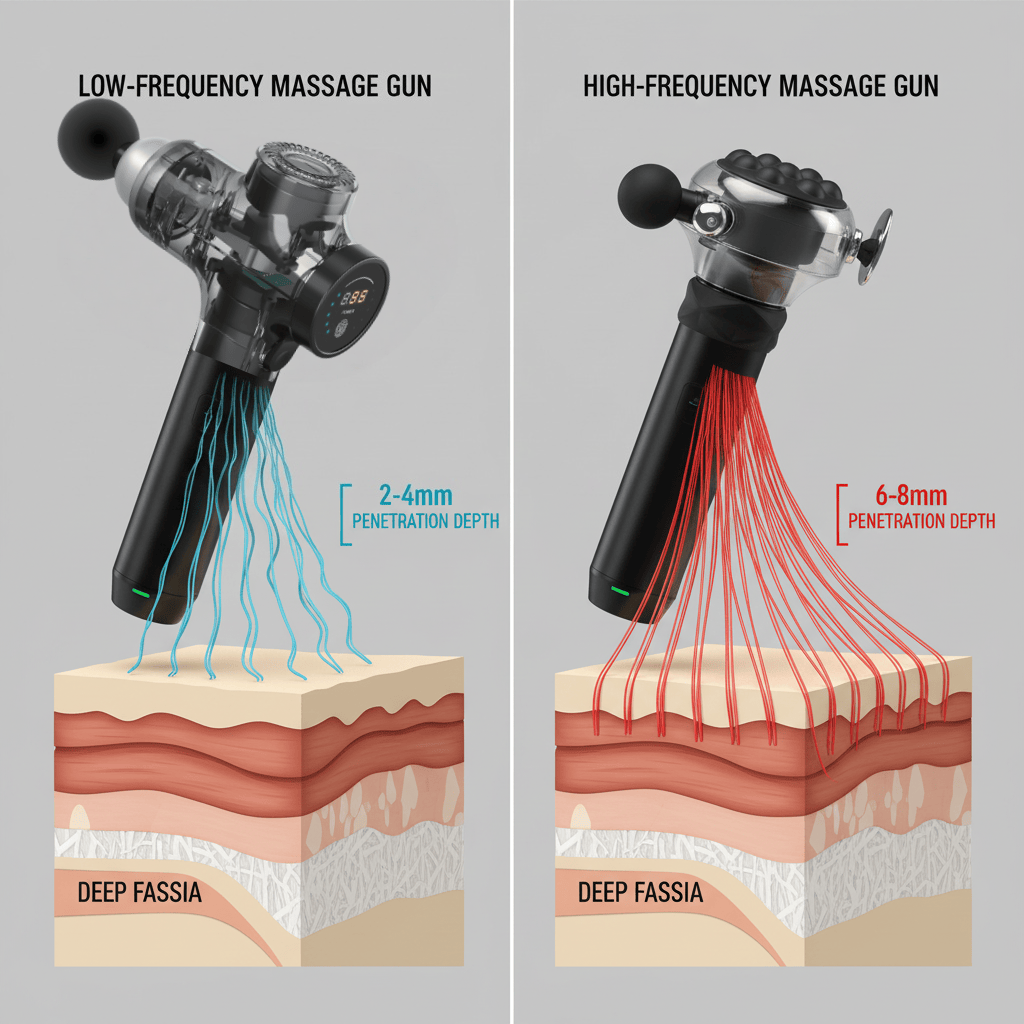
Low-frequency guns (1,200–3,200 RPM) relax surface muscles; high-frequency models (4,500–7,500 RPM) target deep fascia 3× faster with 3D vibrations.
Why High-Frequency Wins:
- Deeper penetration: 6–8mm vs. 2–4mm with low-frequency.
- Faster results: 5 minutes of high-frequency = 15 minutes of low-frequency.
- Wider use: Safe for neck, knees, and feet (15% more coverage).
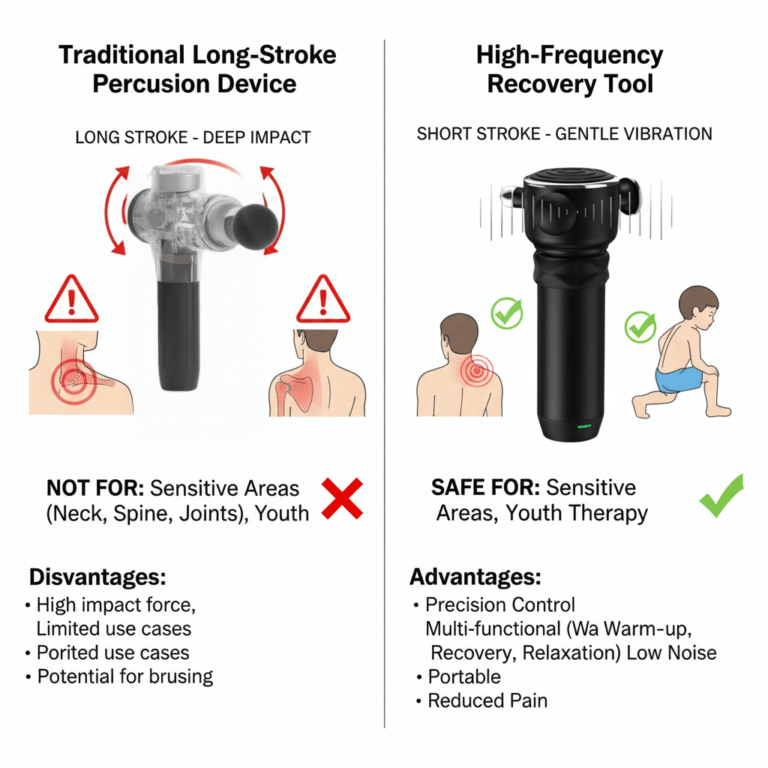
When to Choose Low-Frequency:
- For gentle recovery post-injury.
- If noise is a concern (high-frequency guns are 23% quieter, but still louder).
The Science Behind the Speed
High-frequency guns mimic rapid-release therapy by combining vertical compression3 (2–3.5mm amplitude) and horizontal shear forces. This dual action:
- Breaks fascial adhesions by vibrating at resonant frequencies.
- Stimulates muscle relaxation reflexes, reducing tension faster than manual pressure.
- Enhances blood flow by 40% compared to foam rolling (per 2023 sports medicine studies).
Athletes report 30% less DOMS4 after using high-frequency guns post-workout.
How to Use a High-Frequency Massage Gun: Settings, Timing, Tips
Misusing your gun? Limit sessions to 2–3 minutes per muscle group at 5,000+ RPM to avoid overstimulation.
Quick Guide:
- Start low: Begin at 4,500 RPM to warm up.
- Increase gradually: Ramp to 5,000–7,000 RPM for deep tissue.
- Move slowly: Hold on knots for 15–30 seconds.
- Avoid bones/joints: Stick to muscle bellies.
Pro Tips for Optimal Recovery
- Post-workout: Use high frequency on quads/hamstrings for 2 minutes to cut lactate buildup5.
- Pre-activity: Boost mobility with 1-minute glute/back sessions at 4,500 RPM.
- Chronic pain: Combine with stretching—e.g., 90 seconds on calves before toe touches.
Warning: Overuse can cause bruising. Never apply directly to spine or inflamed areas.
High-Frequency Massage Gun vs. Foam Rolling, Cupping, and Traditional Massage
Short on time? A 5-minute high-frequency session equals 20 minutes of foam rolling for fascia release.
Comparison Table:
| Method | Time Efficiency | Depth | Best For |
|---|---|---|---|
| High-Frequency | ⭐⭐⭐⭐⭐ (5 min) | 6–8mm | Fast DOMS relief |
| Foam Rolling | ⭐⭐ (20 min) | 2–3mm | General mobility |
| Cupping | ⭐⭐⭐ (15 min) | 4–5mm | Chronic tension |
| Massage Therapy | ⭐⭐⭐⭐ (30 min) | 3–6mm | Full-body relaxation |
Why Athletes Switch to High-Frequency
- Precision: Targets knots foam rollers miss (e.g., between shoulder blades).
- Consistency: Deliveries uniform pressure vs. hand-massage variability.
- Cost-effective: $200 gun replaces $100/month massage appointments.
Example: Runners using high-frequency guns pre-race show 12% better flexibility vs. cupping users.
Conclusion
High-frequency percussion guns1 offer deeper, faster recovery than traditional methods, with 180% efficiency gains. Use 5,000+ RPM for 2–3 minutes per muscle group to maximize benefits.
-
Discover how high-frequency percussion guns can enhance your muscle recovery and performance. ↩ ↩
-
Learn about the importance of deep fascia layers in muscle recovery and how to target them effectively. ↩
-
Understand the role of vertical compression in enhancing muscle relaxation and recovery. ↩
-
See how athletes benefit from high-frequency massage guns, including reduced muscle soreness. ↩
-
Learn effective strategies to reduce lactate buildup and enhance your post-workout recovery. ↩