Muscle tension1 can be a real pain, but choosing the right massage tool can make all the difference. Let’s break down the key differences between percussion and vibration massage.
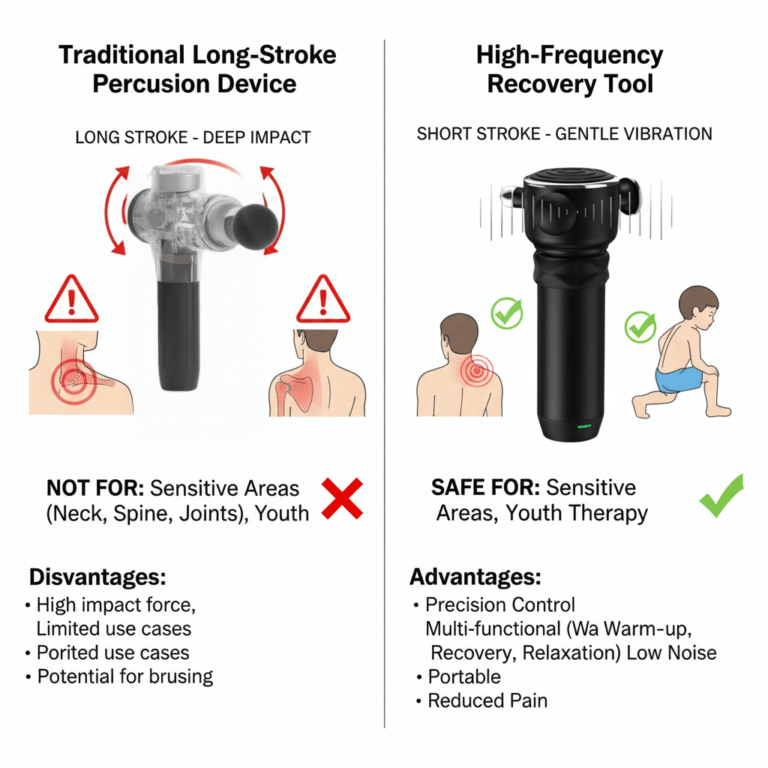
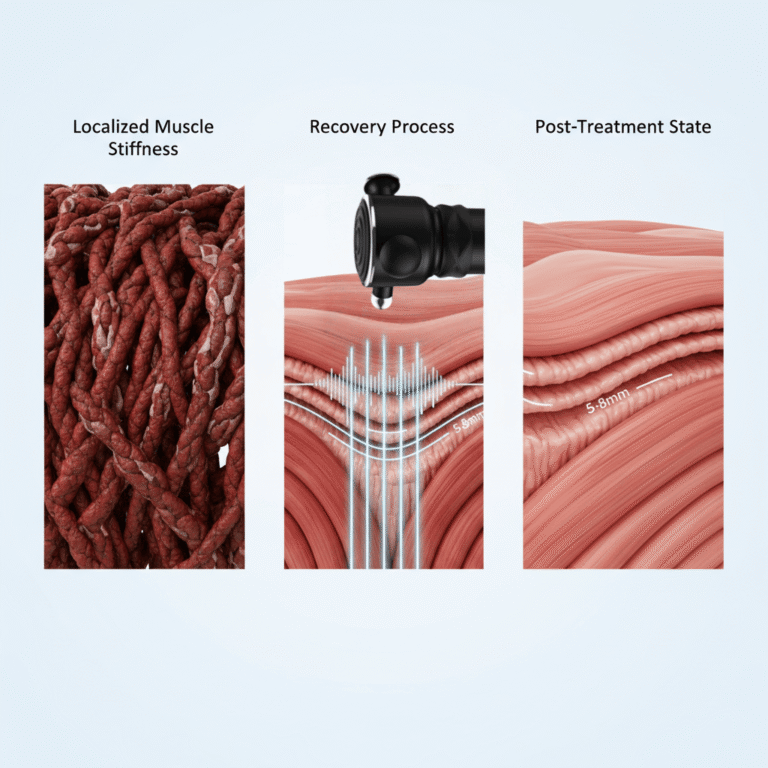
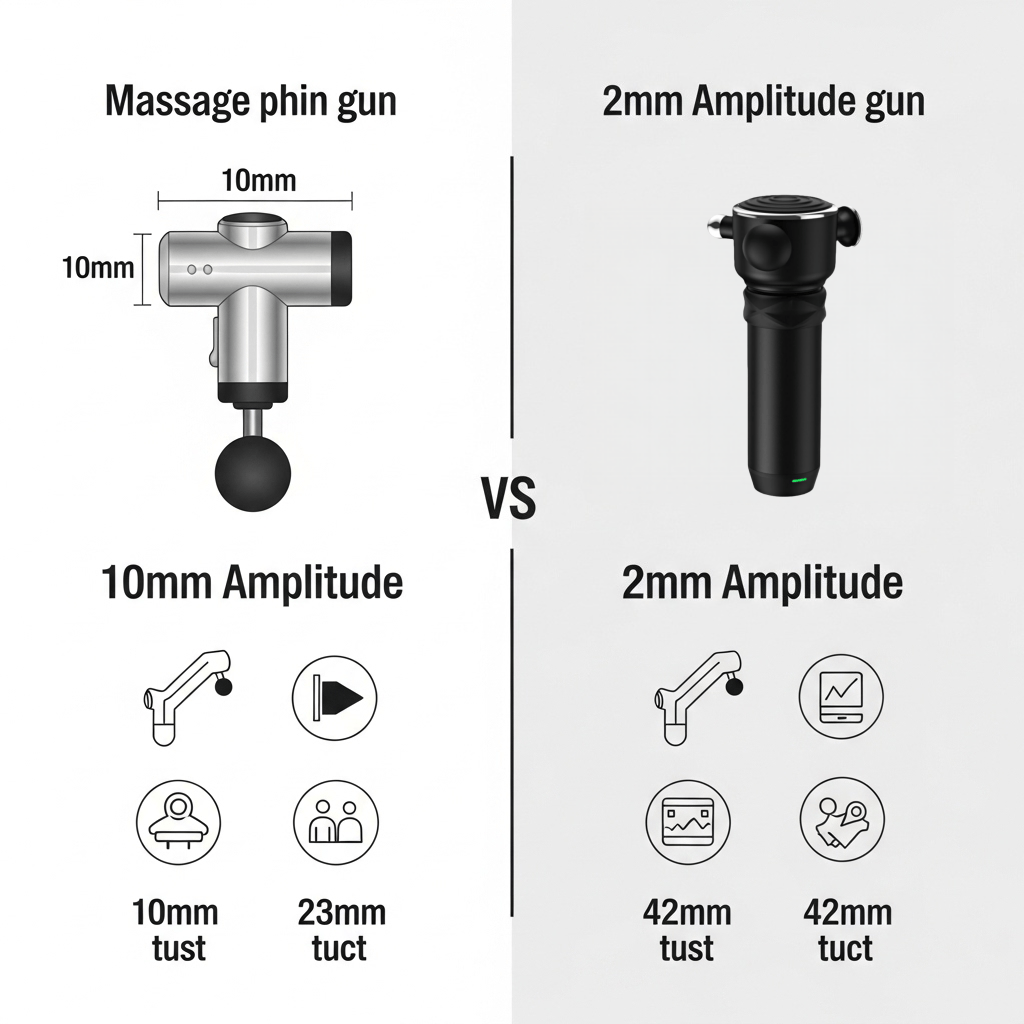
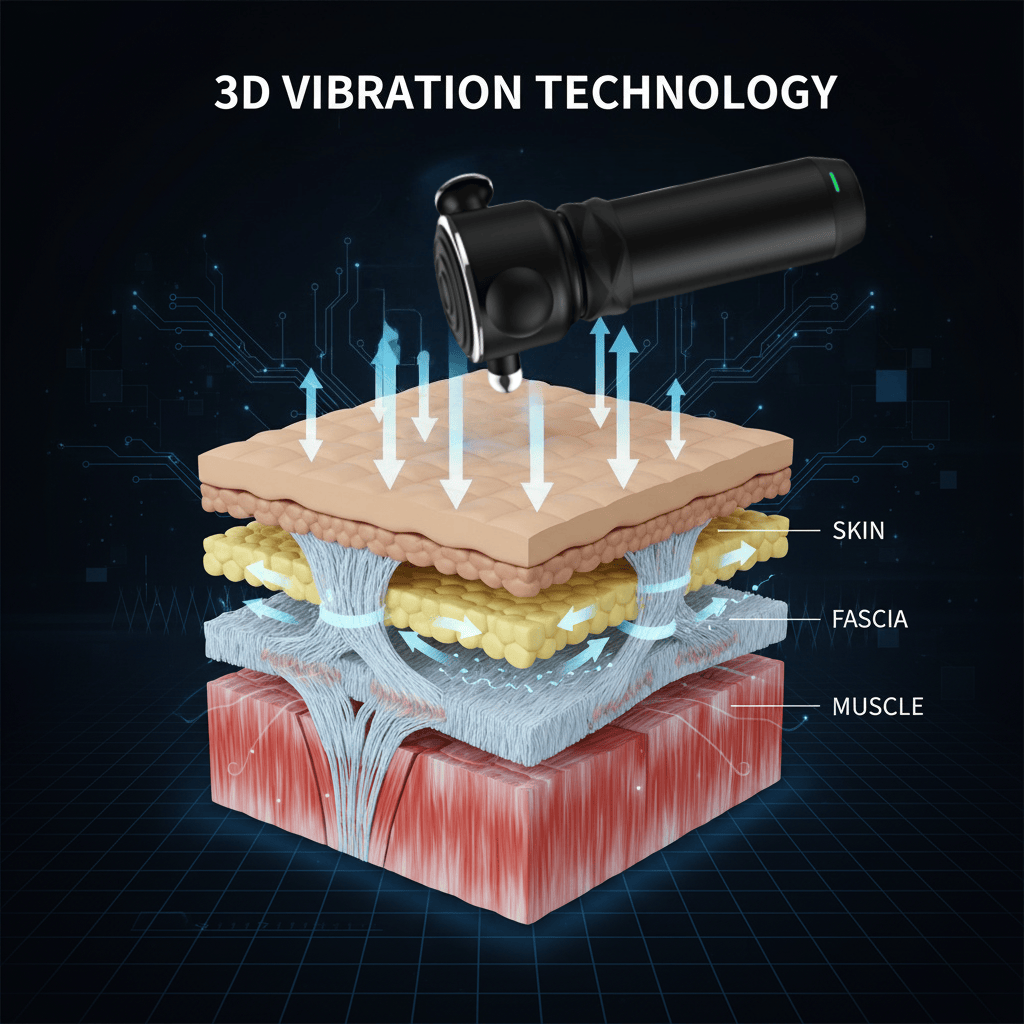
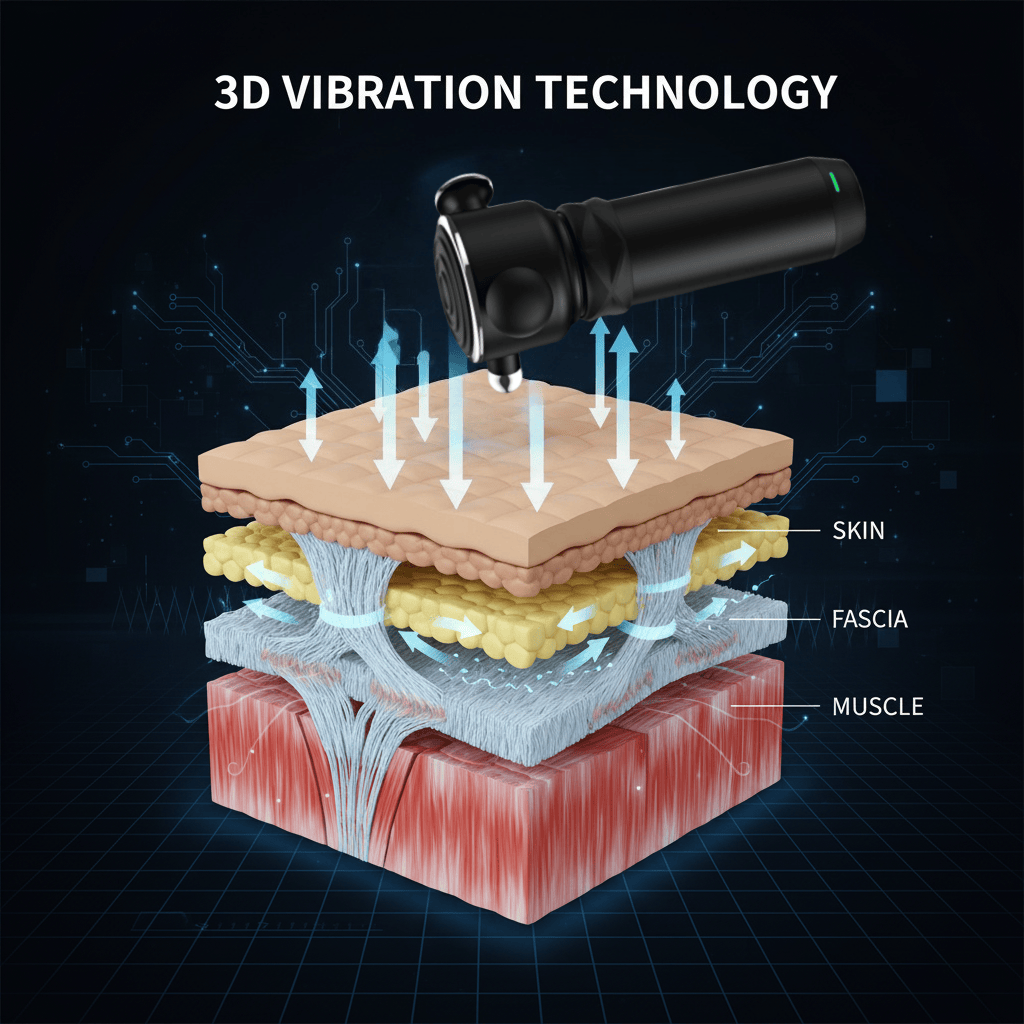
Percussion massage2 uses rapid, targeted pulses to penetrate deep into muscles, while vibration massage relies on high-frequency oscillations to relax tissues gently. The former forces its way in, while the latter encourages natural release.

If you’ve ever wondered which type of massage is right for you, keep reading. We’ll explore how each works, how they feel, and who benefits most from them.
Percussion vs. Vibration Massage: How the Mechanisms Actually Work Differently?
Percussion massage2 guns feel intense because they’re designed to push through muscle resistance. But vibration massagers work differently—they coax your muscles into relaxing.
Percussion massage2 delivers rapid, repetitive strikes to break up tightness, while vibration massage uses high-speed oscillations to reduce tissue resistance. One forces change, the other invites it.

Understanding the Science Behind Each Technique
-
Percussion Massage:
- Mechanism: Delivers quick, forceful pulses (like a mini jackhammer).
- Depth: Targets deep muscle layers.
- Best for: Athletes or those with chronic tightness.
-
Vibration Massage:
- Mechanism: Uses rapid back-and-forth movements (like a gentle shake).
- Depth: Works on surface layers and fascia.
- Best for: Relaxation or post-workout recovery.
| Feature | Percussion Massage | Vibration Massage |
|---|---|---|
| Mechanism | Rapid pulses | High-frequency oscillations |
| Depth | Deep | Surface to mid-layer |
| Intensity | High | Low to moderate |
| Best For | Chronic tightness3 | General relaxation |
How Each Feels on the Body: When to Choose Deep Percussion and When Gentle Vibration Wins?
Percussion massage2 can feel like a deep tissue workout, while vibration massage is more like a soothing wave. Your choice depends on your needs.
Percussion is ideal for stubborn knots and deep tension, while vibration excels at calming nerves and easing mild soreness. One is a sledgehammer, the other a feather.

Decoding the Sensations
-
Percussion:
- Feels: Intense, sometimes uncomfortable.
- Use Case: Post-heavy workout or for deep muscle relief.
- Avoid If: You have acute injuries or low pain tolerance.
-
Vibration:
- Feels: Gentle, tingling.
- Use Case: Daily relaxation or warm-up.
- Avoid If: You need deep tissue work.
Matching Device to User: Who Should Buy a Percussion Gun, a Vibration Massager, or a 2-in-1 Hybrid4?
Not sure which tool fits your lifestyle? Let’s match you with the perfect massage device.
Athletes and fitness enthusiasts benefit from percussion guns, while casual users or those with sensitivity may prefer vibration massagers. Hybrids offer the best of both worlds.

Who Should Use What?
-
Percussion Gun:
- Ideal for: Gym-goers, runners, or anyone with deep muscle tension.
- Pros: Deep relief, fast results.
- Cons: Can be too intense for some.
-
Vibration Massager:
- Ideal for: Office workers, seniors, or stress relief.
- Pros: Gentle, versatile.
- Cons: Less effective for deep knots.
-
Hybrid Device:
- Ideal for: Those who want flexibility.
- Pros: Combines both techniques.
- Cons: May be pricier.
Conclusion
Percussion and vibration massages serve different needs—one for deep relief, the other for gentle relaxation. Choose based on your body’s demands.
-
Discover the causes of muscle tension and effective methods to alleviate it. ↩
-
Explore the benefits of percussion massage to understand how it can relieve muscle tension effectively. ↩ ↩ ↩ ↩
-
Find out the most effective treatments for chronic tightness to improve your well-being. ↩
-
Learn about the advantages of 2-in-1 hybrid massage devices for versatile muscle relief. ↩