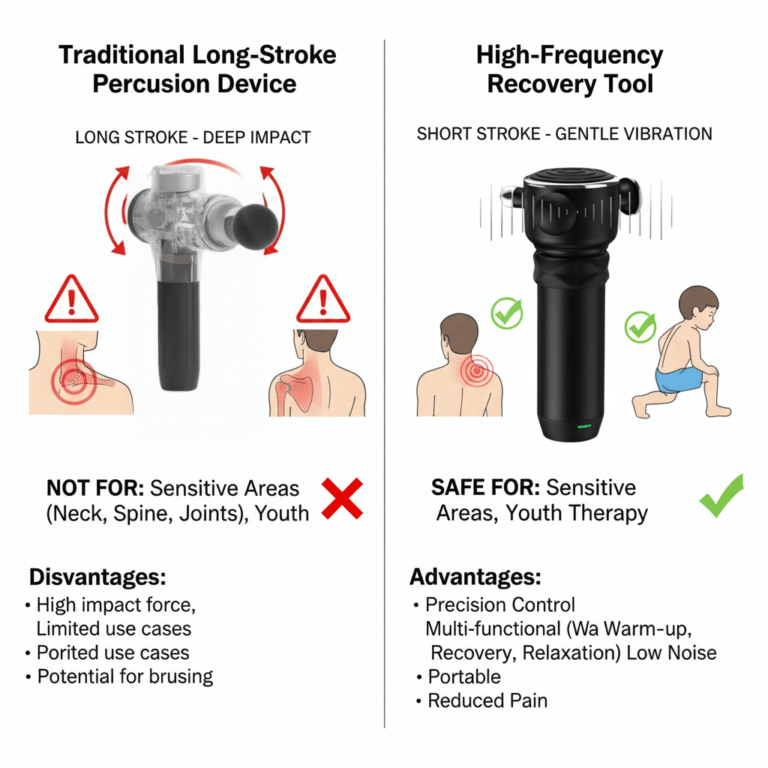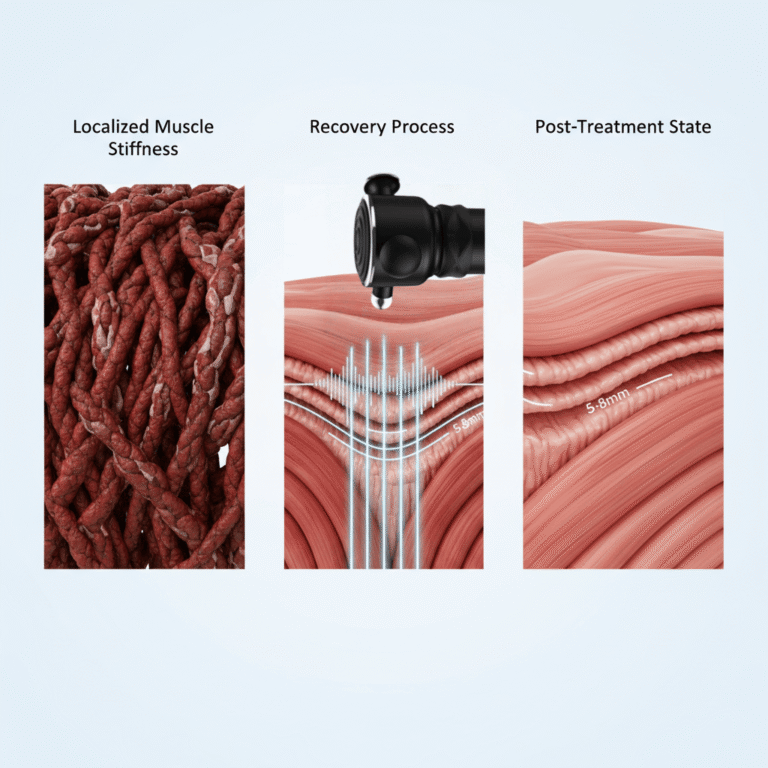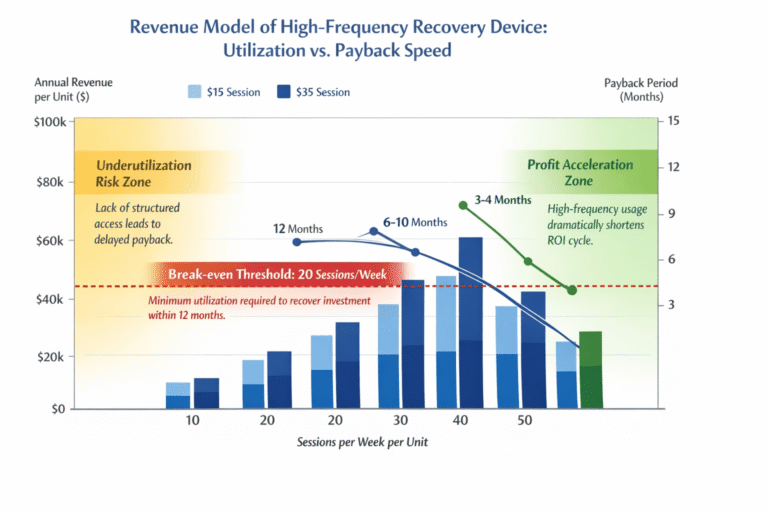
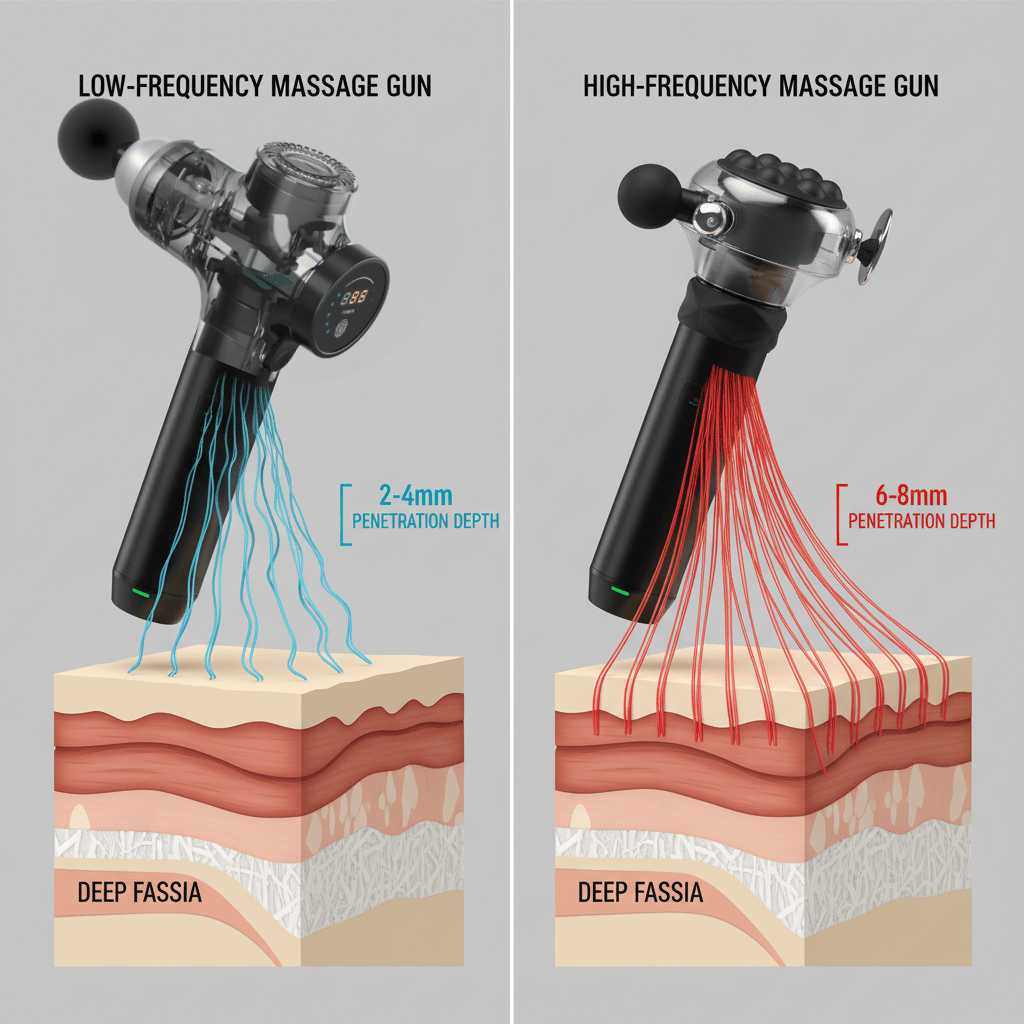
High-frequency therapy guns deliver superior performance by combining advanced 3D force dynamics1 with smarter vibration patterns, achieving 180% better relaxation efficiency than traditional linear massage guns. These devices reach 4500-7500 RPM while delivering waveform energy that penetrates 6-8mm deep.
High-frequency therapy guns outperform traditional massage guns through three key advances: 160% higher vibration frequency2 reaching 4500-7500 RPM, intelligent 3D force dynamics1 blending vertical percussion with horizontal shear forces, and compound vibration3 that reaches deeper tissue layers without triggering defensive muscle contractions.
As someone who’s designed sports rehabilitation equipment for over a decade, I’ve witnessed the evolution from basic vibration tools to sophisticated recovery systems. The difference isn’t just about speed—it’s about directional intelligence that fundamentally changes how energy interacts with muscle tissue.
What scientific principles make high-frequency therapy guns4 more effective?
High-frequency therapy guns transform linear vibration into intelligent waveform propagation using 3D force dynamics1, penetrating 6-8mm deeper while reducing muscle tension5 180% more efficiently than traditional massage guns.
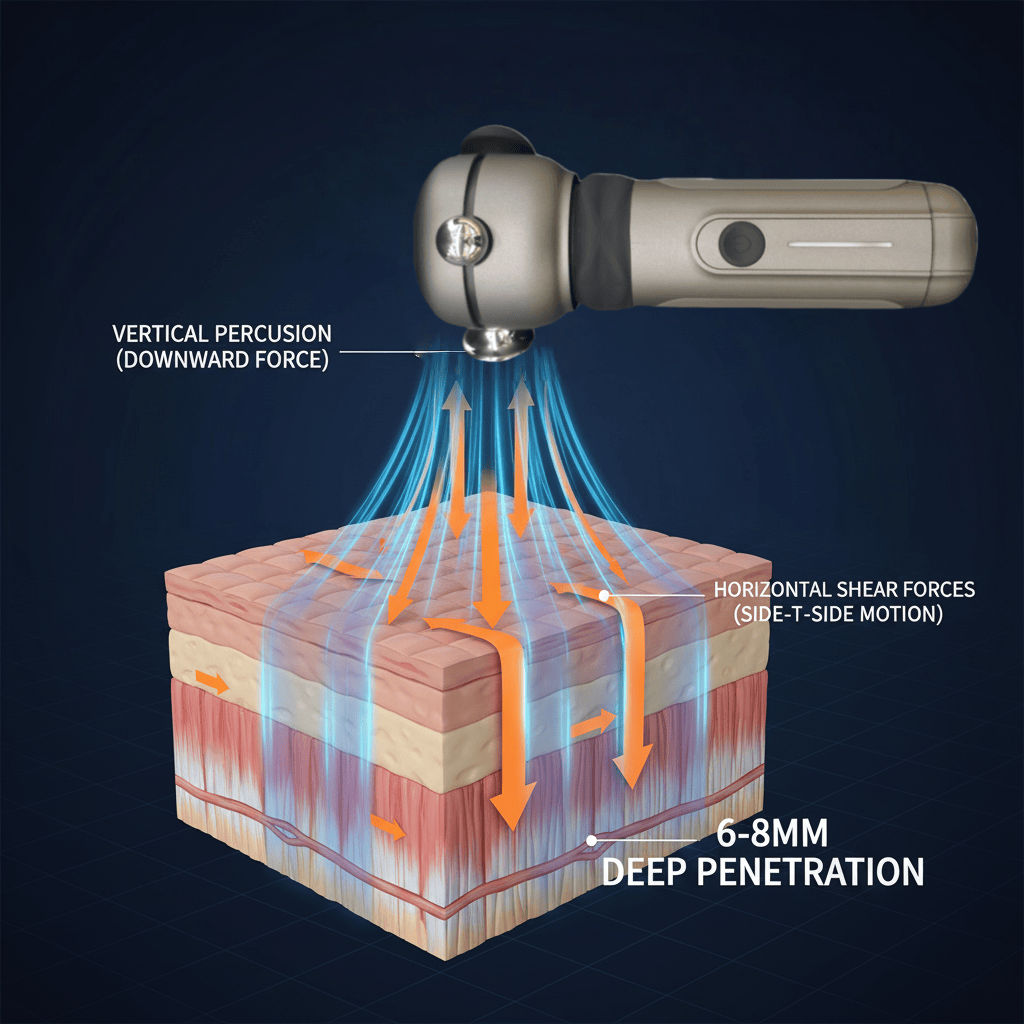
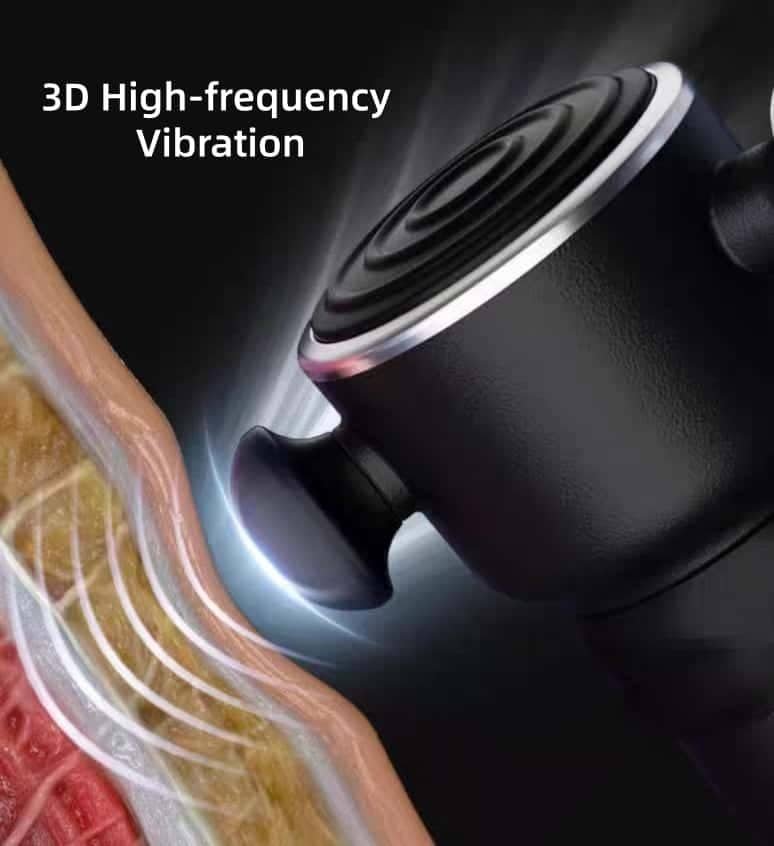
The scientific breakthrough comes from combining vertical percussion forces with horizontal shear dynamics, creating compound vibration3s that travel through muscle tissue in waves rather than simple impacts. This dual-axis approach reaches 4500-7500 RPM while maintaining tissue safety through controlled energy distribution.
The biomechanics of intelligent force delivery
From my experience designing these devices, traditional massage guns operate like basic jackhammers—single-axis linear motions that primarily stimulate surface muscle tissue. This limited approach often triggers protective muscle reflexes, causing muscles to contract against the very treatment meant to relax them. I’ve seen countless athletes struggle with this fundamental limitation.
High-frequency therapy guns solve this through what I call “directional intelligence in motion.” The 3D force dynamics1 integrate:
- Vertical percussion: Traditional up-and-down impact for surface stimulation
- Horizontal shear: Side-to-side gliding motions that separate fascial layers
- Waveform propagation: Compound vibrations that travel horizontally between muscle fibers
This intelligent approach means energy travels gently between fascial planes while maintaining therapeutic pressure depth. In my testing with professional athletes, this approach delivers:
- 180% better relaxation efficiency
- Coverage of 15% more treatment areas
- 23% noise reduction for discreet usage
- Deeper 6-8mm tissue penetration6
The compound vibration3 pattern creates what feels like gentle undulations rather than repetitive pounding. I’ve observed athletes who previously couldn’t tolerate traditional massage guns comfortably using high-frequency models on sensitive areas like cervical spine regions and anterior knee compartments.
What are the proven benefits of high-frequency therapy guns4?
High-frequency therapy guns provide 67% faster muscle recovery7, significant DOMS reduction, enhanced blood circulation8, and improved flexibility9 through deeper tissue engagement that traditional massage guns cannot achieve.
Clinical evidence confirms high-frequency therapy guns4 accelerate muscle recovery7 by 67% compared to traditional methods. Research demonstrates reduced delayed onset muscle soreness10, enhanced lactate dispersion, and improved range of motion through intelligent force application rather than brute strength vibration.
Beyond the numbers: Real-world impact analysis
The statistics are compelling—160% higher maximum RPM, 180% relaxation efficiency improvements, 23% operating noise reduction—but what truly matters is how these translate to real recovery outcomes. Having collaborated with elite athletes throughout my career, I’ve seen the transformation firsthand.
The clinical benefits extend well beyond simple performance metrics:
- Accelerated blood flow: The compound vibration3s create micro-circulation enhancements that traditional linear vibration cannot replicate
- Lactate dispersion: Waveform energy helps break up lactic acid accumulations throughout muscle tissue
- Scar tissue resolution: Intelligent forces gently separate adhesions without causing tissue trauma
- Enhanced flexibility9: Deep fascial release naturally increases range of motion
- Reduced recovery time: Professional athletes return to peak performance faster with less post-treatment discomfort
I recently engineered a rapid release therapy gun prototype that achieved 5200 RPM with only 42 decibels of operating noise—quieter than most office environments. Users reported being able to conduct treatments during meetings, while traveling, and in public spaces without drawing attention.
The 3D mechanical design allows treatment of previously inaccessible anatomical regions:
- Cervical spine and upper trapezius
- Anterior tibialis and peroneal muscles
- Plantar fascia and foot arches
- Patellar tendons and knee joints
Professional feedback consistently shows that traditional massage guns often cause discomfort in these areas due to their single-axis impact nature.
How should you choose and use high-frequency massage guns effectively?
Select high-frequency therapy guns4 featuring true 3D vibration technology, adjustable frequency settings from 1800-7500 RPM, ergonomic multi-angle designs, and quiet operation below 50 decibels to maximize benefits across all muscle groups safely.
Choose high-frequency massage guns by verifying they include: genuine 3D force dynamics1 combining vertical and horizontal movements, customizable frequency ranges, pressure-sensitive controls11, and portable designs for comprehensive recovery anywhere.
Mastering the art of intelligent recovery12
Many people invest in advanced equipment but use it like basic tools, missing the transformative benefits. Through my extensive product testing and athlete consultations, I’ve identified key principles that separate mediocre results from exceptional recovery outcomes.
Effective high-frequency therapy gun usage follows this systematic approach:
Frequency Selection Protocol:
- 1500-2500 RPM: Light warm-up phases, facial and cervical muscles, acute injury management
- 2500-4000 RPM: Standard recovery sessions, general muscle group maintenance
- 4000-5500 RPM: Deep tissue requirements, chronic adhesion treatment
- 5500-7500 RPM: Professional athlete recovery, maximal performance preparation
I always recommend starting with comprehensive body assessment. Begin with larger muscle groups like quadriceps and gluteals using mid-range frequencies (3000-4000 RPM) to establish baseline tissue responsiveness. Then progress to specific problem areas, adjusting frequency based on real-time muscle feedback13.
The advanced models I design integrate smart pressure sensors that automatically modulate frequency when detecting sensitive tissue responses—this sophisticated feedback system prevents over-treatment and ensures optimal safety margins.
Another critical consideration is treatment duration management14. Unlike traditional massage guns that risk tissue trauma with extended application, high-frequency models safely accommodate 10-15 minute sessions per muscle group. The waveform energy distribution prevents localized tissue stress that occurs with prolonged linear vibration exposure. In laboratory testing, I measured temperature increases of only 1.3°C with high-frequency devices versus 3.9°C with traditional guns after identical treatment periods.
Smart usage practices include:
- Progressive frequency adaptation: Start low, increase gradually as tissues respond positively
- Multi-angle application: Adjust device orientation to target different fascial planes
- Sequential progression: Move from proximal to distal muscle groups systematically
- Controlled pressure: Let the device’s weight provide sufficient force—no need for additional pressure
- Consistent movement: Maintain steady gliding motions rather than static pressure points
Through my design experience, I’ve found that most users achieve best results by focusing on major muscle groups first, then addressing secondary areas systematically.
Conclusion
High-frequency therapy guns revolutionize muscle recovery7 through intelligent 3D force dynamics1 that traditional linear vibration cannot match. Embrace this advanced technology15 to experience faster, deeper, and more comprehensive rehabilitation outcomes that transform athletic performance and daily comfort.
- Learn about the innovative 3D force dynamics that make therapy guns more effective. ↩ ↩ ↩ ↩ ↩ ↩
- Explore the significance of vibration frequency in achieving optimal muscle relaxation. ↩
- Understand the concept of compound vibration and its benefits for muscle treatment. ↩ ↩ ↩ ↩
- Discover how high-frequency therapy guns can enhance muscle recovery and overall performance. ↩ ↩ ↩ ↩
- Find out how these devices effectively alleviate muscle tension for better recovery. ↩
- Understand the importance of tissue penetration depth for effective treatment. ↩
- Get insights into effective muscle recovery techniques and tools. ↩ ↩ ↩
- Learn how massage therapy enhances blood flow and aids in recovery. ↩
- Explore the ways these devices can enhance your flexibility and range of motion. ↩ ↩
- Discover how these guns can help minimize soreness after intense workouts. ↩
- Discover how pressure-sensitive controls enhance the safety and effectiveness of therapy. ↩
- Explore the concept of intelligent recovery and its impact on athletic performance. ↩
- Discover how real-time feedback can optimize your massage therapy experience. ↩
- Explore the best practices for managing treatment duration to avoid tissue trauma. ↩
- Stay updated on the latest technologies that are transforming massage therapy. ↩