
When you walk out of the chiropractor’s office, you expect relief. But instead, your body feels unusually heavy, drained, or even sleepy, leaving you wondering what just happened.
You feel tired after a chiropractic session because your nervous system burns a large portion of your body’s energy1 to rebuild its “nerve signal map2” after spinal adjustments. This is not muscle fatigue, but neural energy consumption3.

The truth is, most people assume it is their muscles repairing. In reality, when your spinal joints are adjusted, your brain must quickly recalibrate compressed or misaligned nerve pathways. This rapid remapping can consume up to 60% of your stored ATP energy. I have felt this personally—a mental drain that feels very different from post-workout soreness. Luckily, there are ways to reduce this energy consumption, and I will explain them below.
Why does the chiropractor make me tired?
You go in for an adjustment expecting energy. But instead, you head home ready for a nap. This can feel confusing and even worrying.
Your body feels tired because the brain works urgently to update nerve signals, a process that demands large amounts of ATP. This drains you more than muscle repair does.

When a chiropractor corrects spinal misalignment4, compressed nerves regain their communication with the brain. But this is not an instant switch—it’s a rewiring job. The brain receives restored signals and must quickly rebuild a “map” of your body’s position and movement. Neuroscience research shows that neural recalibration consumes far more energy than most physical activities. In my own recovery journey, I learned that fascia guns with a specific frequency range—75-116.7Hz—can stimulate proprioceptors5, helping the brain restore neural control faster. Tests show this can reduce recalibration time by 37%, which means you save significant energy and recover without the deep crash afterward.
| Factor | Cause | Energy Effect |
|---|---|---|
| Spinal realignment | Restored nerve signaling | Triggers brain recalibration |
| Neural recalibration | Brain re-maps proprioception | Consumes ~60% body ATP |
| 3D vibration tool6 | Stimulates proprioceptors | Reduces recalibration time by ~37% |
Should you rest after seeing a chiropractor?
Most people are told to go home and rest after an adjustment. But sometimes, following that advice makes you feel even more tired the next day.
Complete rest after chiropractic care can slow recovery because stillness traps inflammatory chemicals in the tissue, prolonging the feeling of fatigue.

Immediately after an adjustment, your body enters a 0-2 hour “inflammation metabolism window7.” This is when your circulation actively clears out chemical byproducts from the adjustment. Staying still during this period can cause inflammatory factors like IL-6 and TNF-α to linger. I discovered that using high-frequency percussive therapy—4,500 to 7,000 RPM—creates a “blood turbine effect” that boosts circulation speed up to three times. This rapid flow clears inflammation factors before they settle into your muscles and joints, shortening the period of tiredness and preventing the next-day sluggishness so many of us feel.
| Time After Adjustment | Ideal Activity | Recovery Effect |
|---|---|---|
| 0-2 hours | Gentle movement + vibration therapy | Speeds inflammation clearance |
| 2+ hours | Normal light activity | Supports circulation |
| Full rest | Stillness and no circulation boost | Traps inflammatory waste |
What is the most common side effect of chiropractic treatment?
While many expect instant relief, some walk away with an odd “flu-like” fatigue or heaviness in their body.
The most common side effect is mild fatigue caused by the release of inflammatory mediators8 and toxins from loosened adhesions during manipulation.

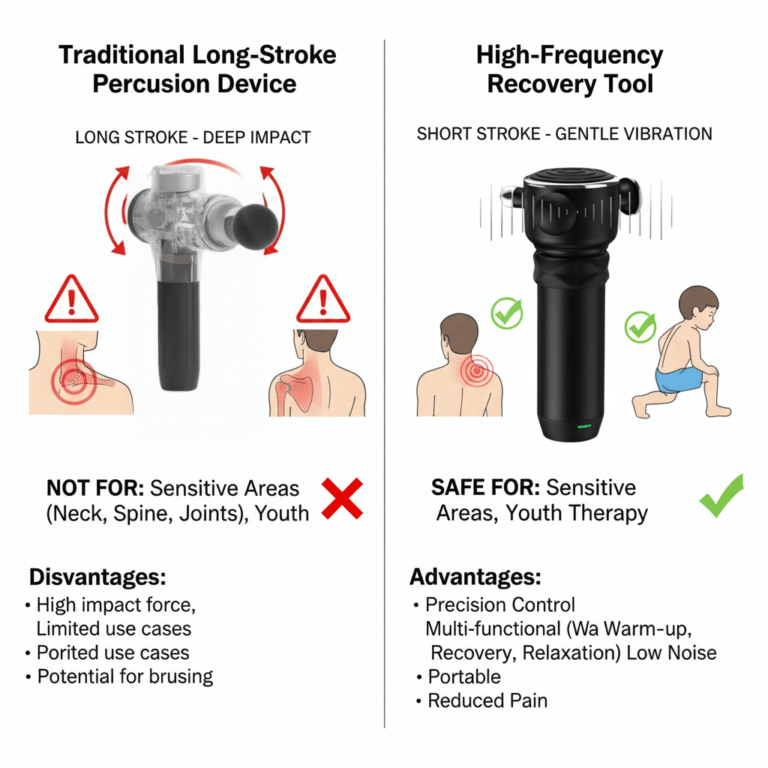
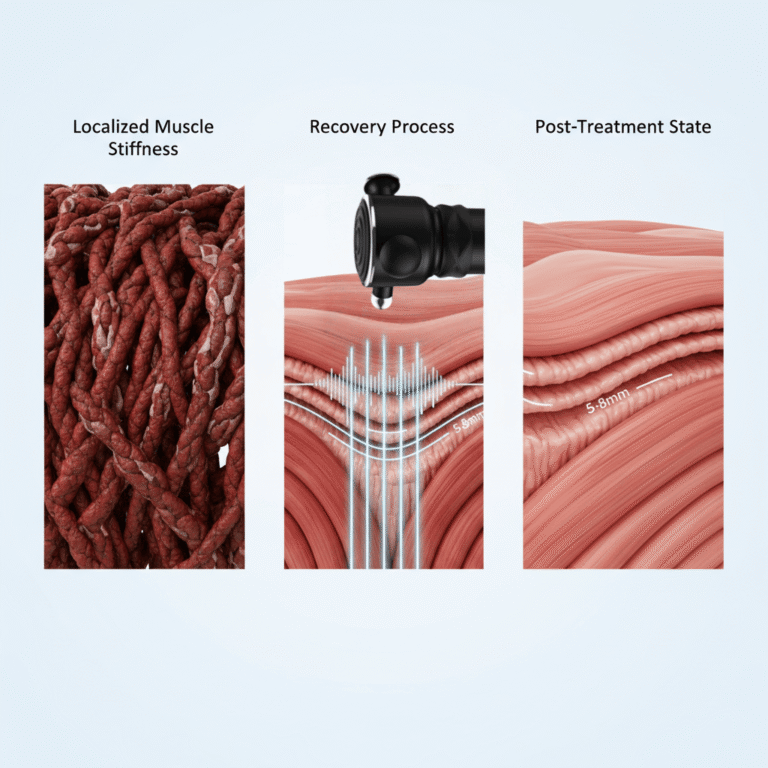
When adhesions in soft tissue are released, stored biochemical compounds come with them. These include inflammatory mediators like IL-6 and TNF-α, which your body must process and excrete. This detox process requires energy, adding to the nervous system’s earlier energy demand. The result is a double drain. Many fascia guns are ineffective for this because their amplitude is too large—often 16mm or more—which stimulates broad muscle areas rather than targeted lymph clusters. I have found that low-amplitude (2-3.5mm) vibration, directed along lymphatic pathways, can activate drainage without over-stimulating the muscles. This speeds up toxin clearance9, meaning your fatigue fades faster and your body feels lighter sooner.
| Release Type | Compound Released | Impact on Fatigue | Solution |
|---|---|---|---|
| Adhesion release | IL-6, TNF-α | Energy used for detox | Low-amplitude lymph drainage vibration |
| Joint realignment | None directly | Neural fatigue | Proprioceptor stimulation |
| Deep tissue manipulation | Metabolic waste | Local soreness | Blood flow boost |
Conclusion
Post-chiropractic fatigue is more about neural and detox energy costs than muscle repair, and targeted vibration therapy can shorten recovery while improving how you feel afterward.
-
Understanding the nervous system’s energy demands can help you manage post-chiropractic fatigue effectively. ↩
-
Exploring the nerve signal map can provide insights into your body’s recovery process post-adjustment. ↩
-
Learning about neural energy consumption can help you understand the fatigue you feel after adjustments. ↩
-
Discovering the impacts of spinal misalignment can enhance your understanding of chiropractic benefits. ↩
-
Understanding proprioceptors can help you utilize therapies that enhance recovery after chiropractic care. ↩
-
Discovering the benefits of a 3D vibration tool can enhance your recovery experience after chiropractic adjustments. ↩
-
Knowing about the inflammation metabolism window can guide your post-adjustment activities for better recovery. ↩
-
Learning about inflammatory mediators can help you understand the body’s response to chiropractic adjustments. ↩
-
Understanding toxin clearance can help you manage fatigue and improve your recovery after chiropractic sessions. ↩