For years, recovery devices were designed around a single core assumption:
one dominant function could cover most recovery needs.
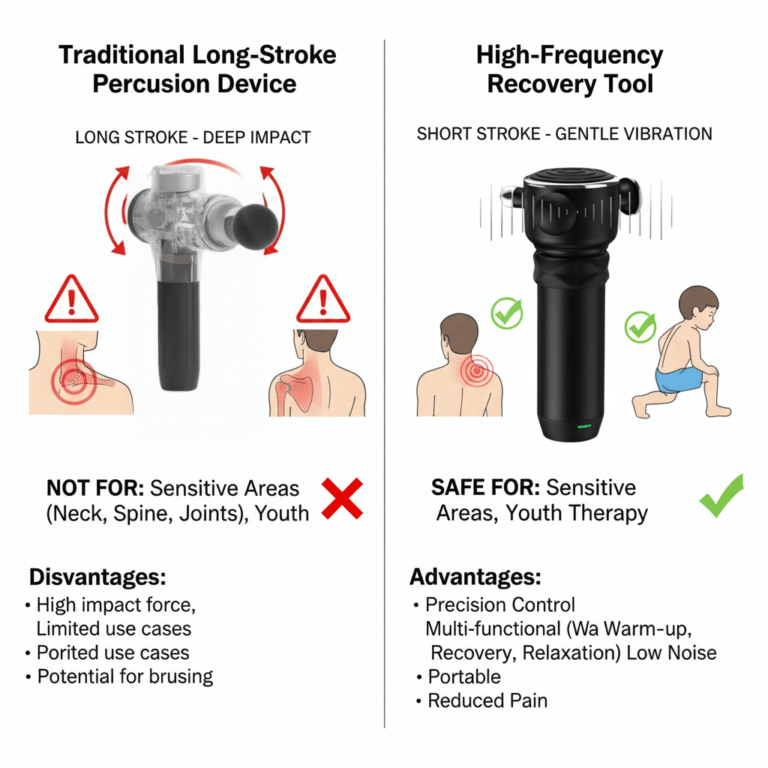
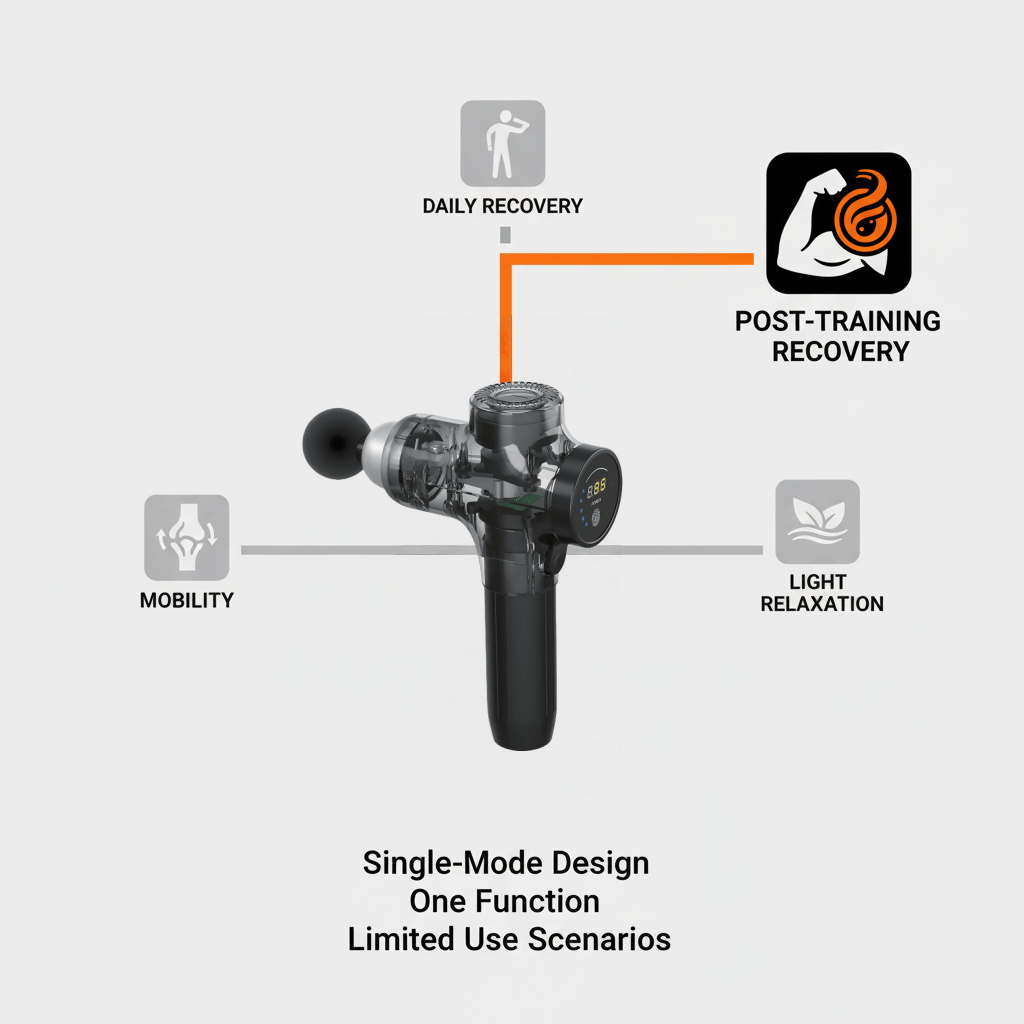
Whether it was long-stroke percussion or fixed-frequency vibration, most devices followed a single-mode design logic — optimized for one type of stimulation, one usage intensity, and one primary scenario.
As recovery use expanded, this assumption began to break down.
This article explains why dual-mode recovery devices emerged, and how they address the growing gap between real-world recovery needs and single-function device limitations.
The Single-Mode Era: Optimized for One Job
Single-mode recovery devices were originally built with clarity of purpose:
- One stimulation method
- One mechanical structure
- One dominant use case
This made them:
- Easier to engineer
- Easier to explain
- Easier to demonstrate
In controlled environments or narrow applications, this approach worked.
When Recovery Became Multi-Dimensional
Over time, recovery stopped being defined by a single moment or intensity level.
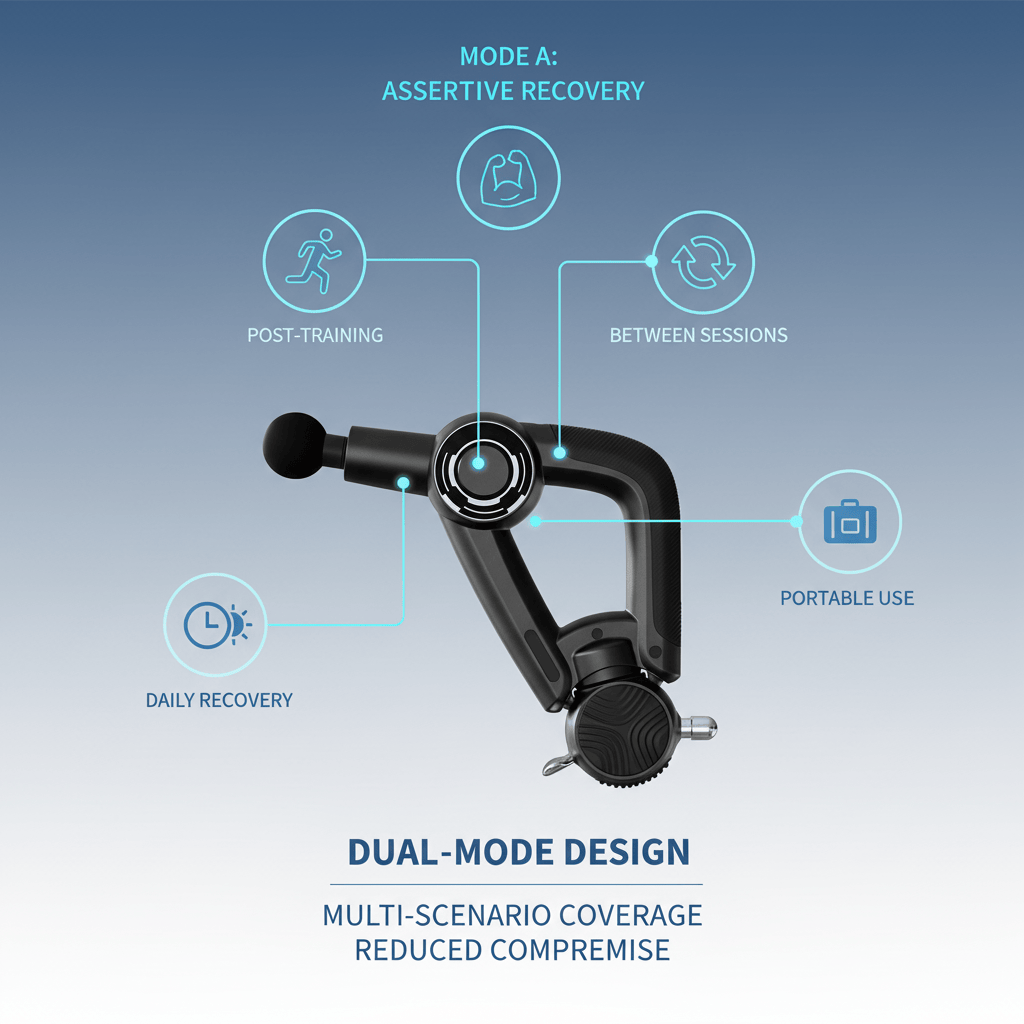
Modern recovery now includes:
- Pre-activity preparation
- Post-training muscle release
- Daily tension management
- Light recovery between sessions
- Portable, on-the-go use
This expansion of recovery use aligns with broader discussions around workload management and recovery frequency in performance systems, where recovery is increasingly treated as a continuous process rather than an isolated intervention
(American College of Sports Medicine – Training Load & Recovery).
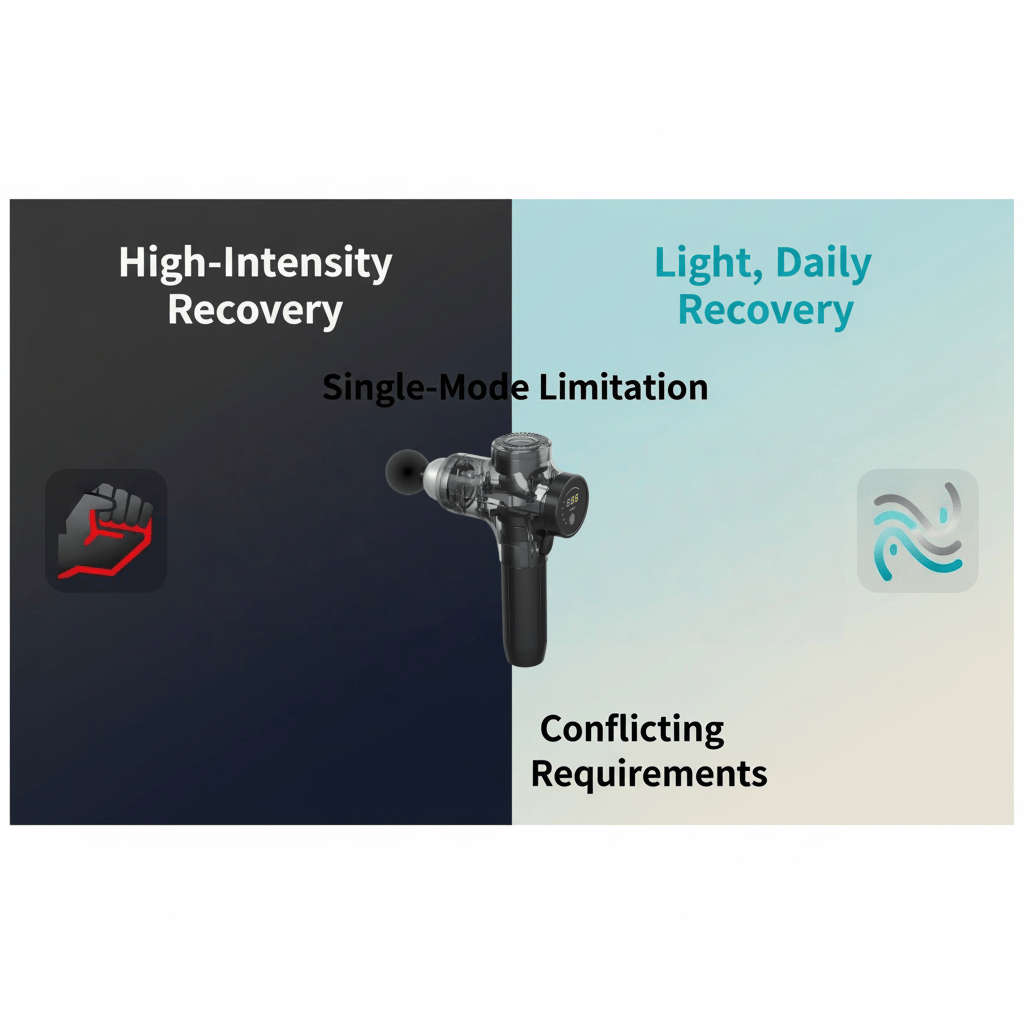
The Core Problem: One Mode Cannot Serve Conflicting Needs
Single-function designs face an unavoidable trade-off.
High-Intensity Focus Creates Limitations
Devices optimized for strong stimulation often:
- Lack fine control at lower intensities
- Fatigue users during extended sessions
- Perform poorly in sensitive or localized areas
Low-Intensity Optimization Reduces Versatility
Conversely, devices designed for gentle, continuous stimulation may:
- Fail to deliver sufficient activation for large muscle groups
- Lack adaptability for post-exertion recovery
- Require longer sessions to achieve noticeable effect
This reflects a common limitation in single-parameter system design, where optimization for one condition reduces performance across others
(a principle widely discussed in applied performance system design, including guidance from the
National Strength and Conditioning Association).
Dual-Mode Design: A Structural Response, Not a Feature Add-On
Dual-mode recovery devices did not emerge as a cosmetic upgrade.
They emerged as a structural response to incompatible recovery requirements.
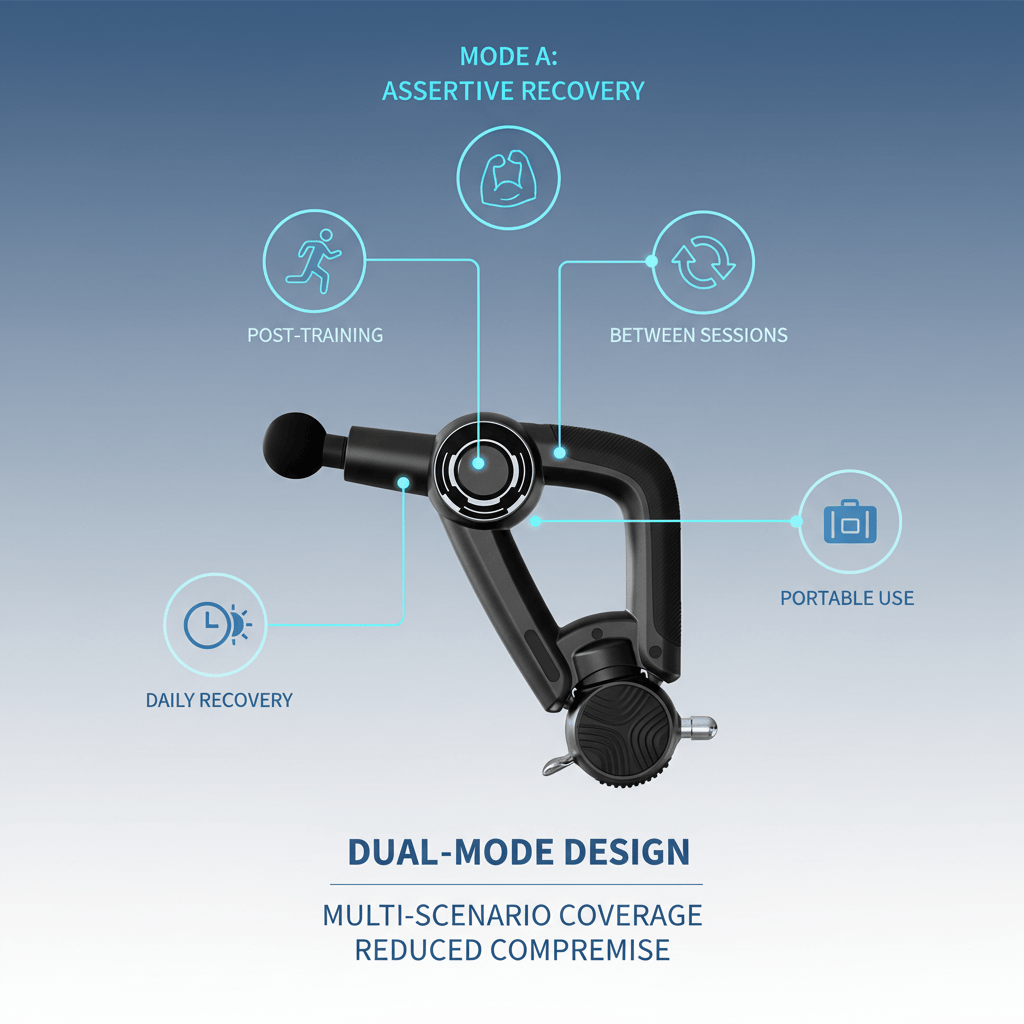
By separating recovery into two complementary modes, designers can:
- Preserve effectiveness at higher intensities
- Maintain control and safety at lower loads
- Reduce compromise across scenarios
This mirrors broader engineering and rehabilitation trends where mode separation is used to improve system reliability and adaptability
(see similar principles referenced in rehabilitation technology discussions by the
World Physiotherapy organization).
How Dual-Mode Aligns With Modern Recovery Behavior
Dual-mode systems reflect how recovery is actually used today:
- One mode supports deeper, more assertive recovery
- Another supports lighter, repeatable daily use
- Transitions between modes reduce over-reliance on a single stimulation pattern
Rather than forcing one behavior onto all users, the system adapts to context.
Beyond Power: Why Structural Flexibility Matters
As recovery integrates into daily routines, effectiveness is no longer measured by:
- Maximum output
- Immediate sensation
- Demo impact
Instead, it is measured by:
- Consistency across sessions
- Adaptability to different body areas
- Ease of long-term use
Dual-mode recovery devices address these requirements at the structural level, not through parameter adjustment alone.
What Dual-Mode Signals About the Future of Recovery Devices
The emergence of dual-mode systems signals a broader shift:
- From single-purpose tools to adaptable platforms
- From intensity-driven design to behavior-driven design
- From short-term impact to long-term usability
Future recovery devices will be evaluated less by what they can do at their peak,
and more by how well they integrate into real recovery systems.
Final Thought
Recovery is no longer defined by one moment, one intensity, or one mode.
As recovery becomes continuous, adaptive, and personal,
the tools supporting it must reflect that complexity.
Dual-mode recovery did not emerge to add features.
It emerged to remove compromise.
Interested in discussing recovery system architecture or multi-scenario recovery design?
Feel free to reach out for a professional conversation.