Fascia recovery after training depends on restoring tissue glide, hydration, and neuromuscular balance. 3D vibration technology improves fascia recovery by delivering multi-directional mechanical stimulation — combining vertical compression with horizontal shear forces. This dual-vector input increases fluid exchange, reduces fascial adhesions, and accelerates post-training relaxation more effectively than single-axis stimulation methods.
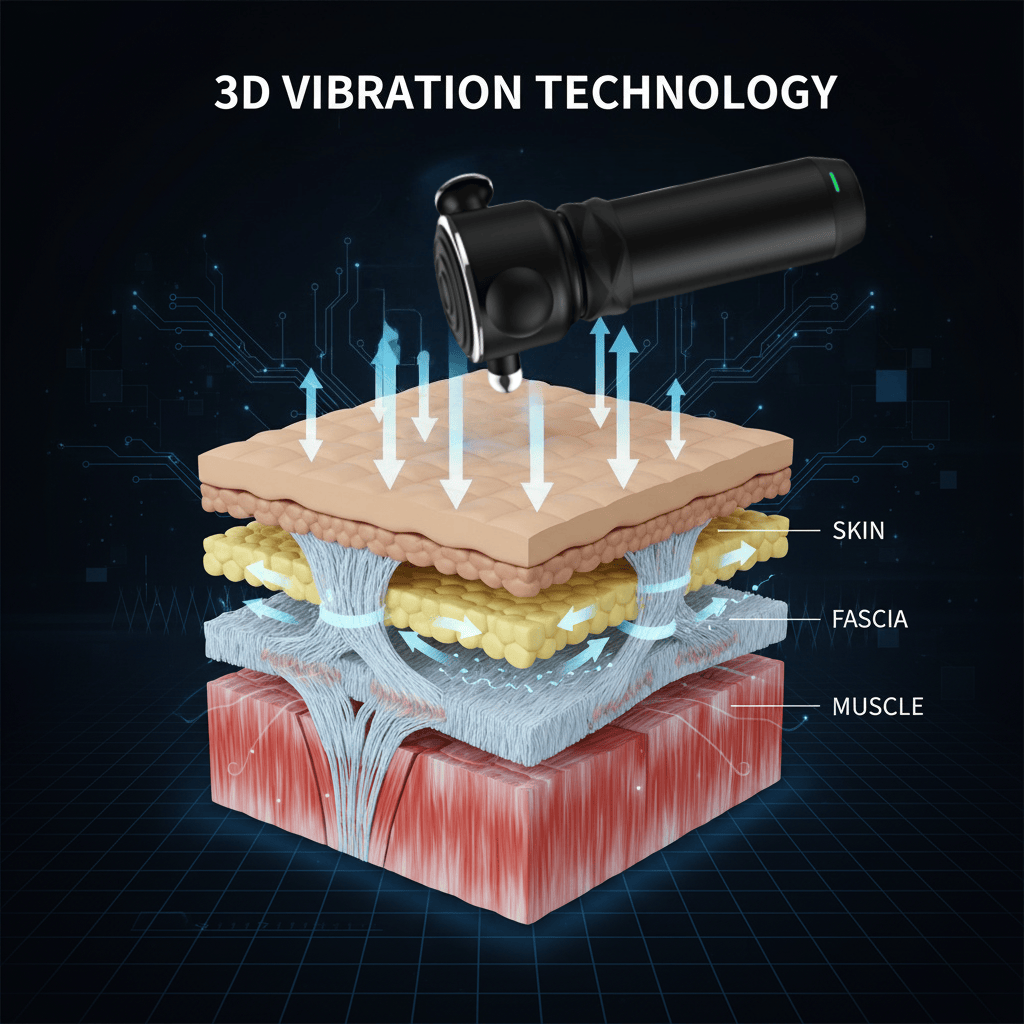
This guide explains the mechanisms behind 3D vibration, compares recovery approaches, and provides practical application protocols for training environments.
Quick Answer: How Does 3D Vibration Improve Fascia Recovery?
3D vibration improves fascia recovery by:
- Delivering multi-directional mechanical stimulation
- Creating cross-fiber shear forces
- Increasing interstitial fluid exchange
- Enhancing micro-circulation
- Supporting neuromuscular down-regulation
- Reducing fascial stiffness and tissue restriction
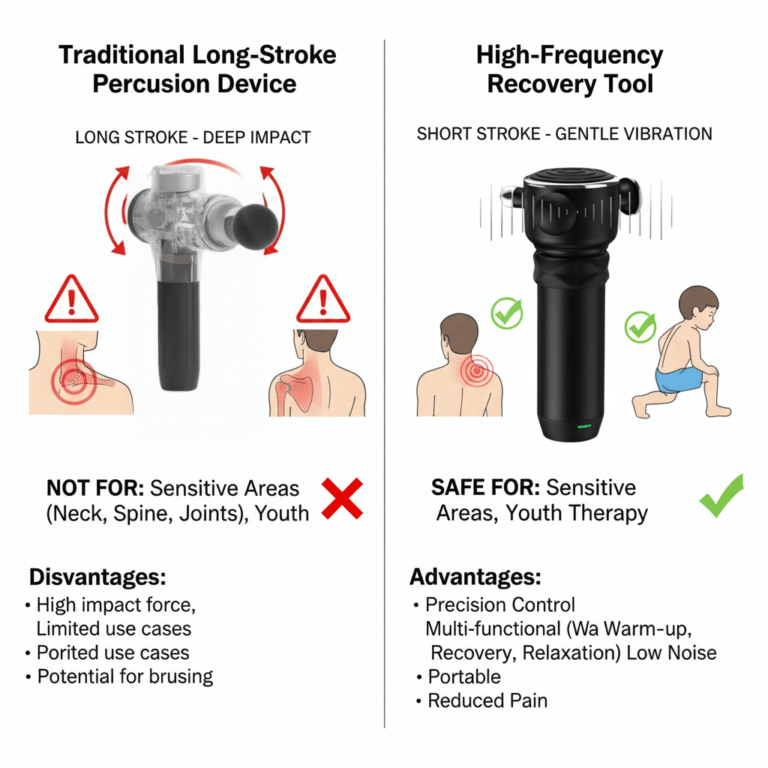
Compared with single-direction percussion devices, multi-axis vibration produces broader connective tissue response in shorter recovery windows.
For a technical device comparison, see:
👉 Massage Gun vs High Frequency Vibration: Key Differences in Recovery Devices
What Is Fascia and Why Does It Need Targeted Recovery?
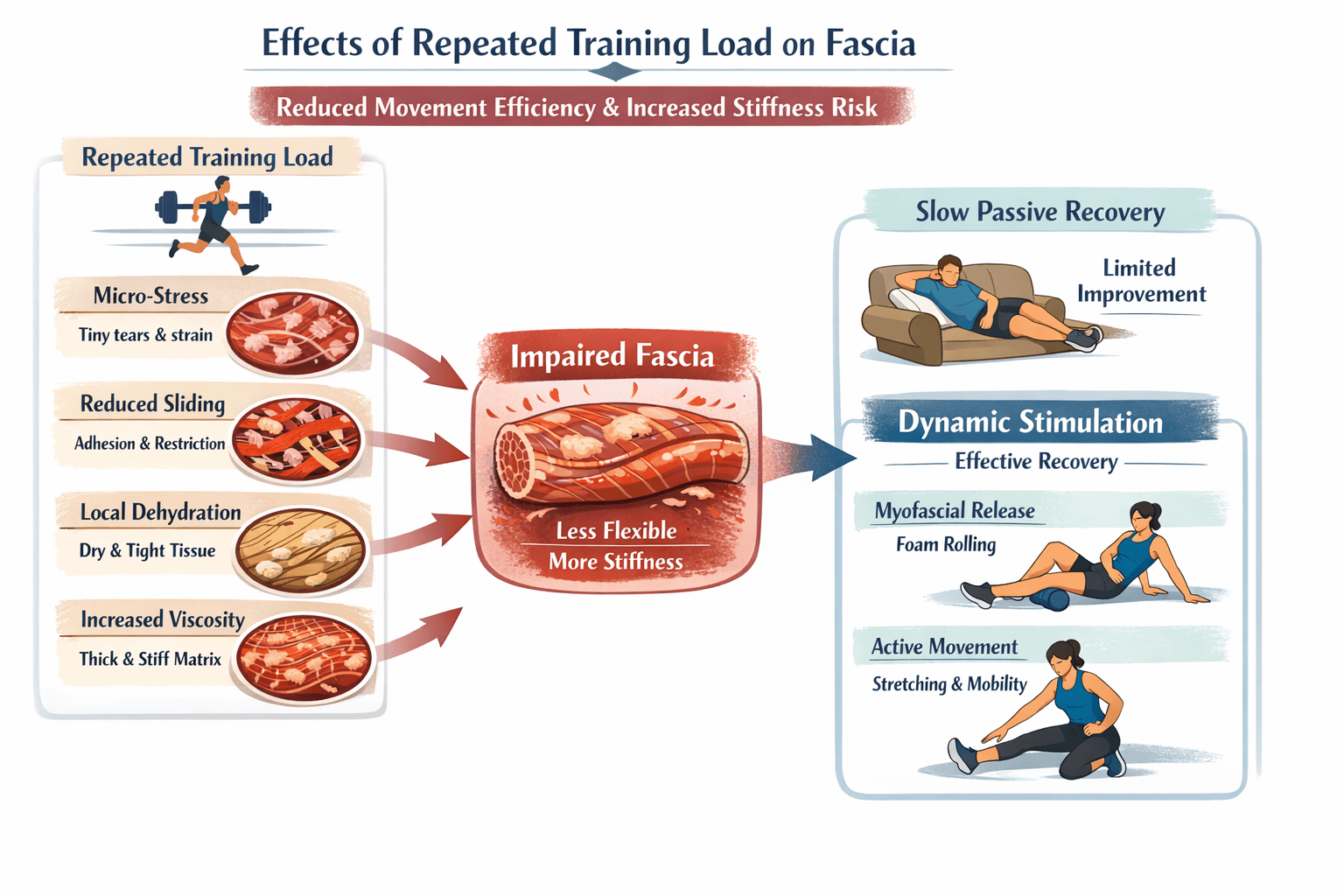
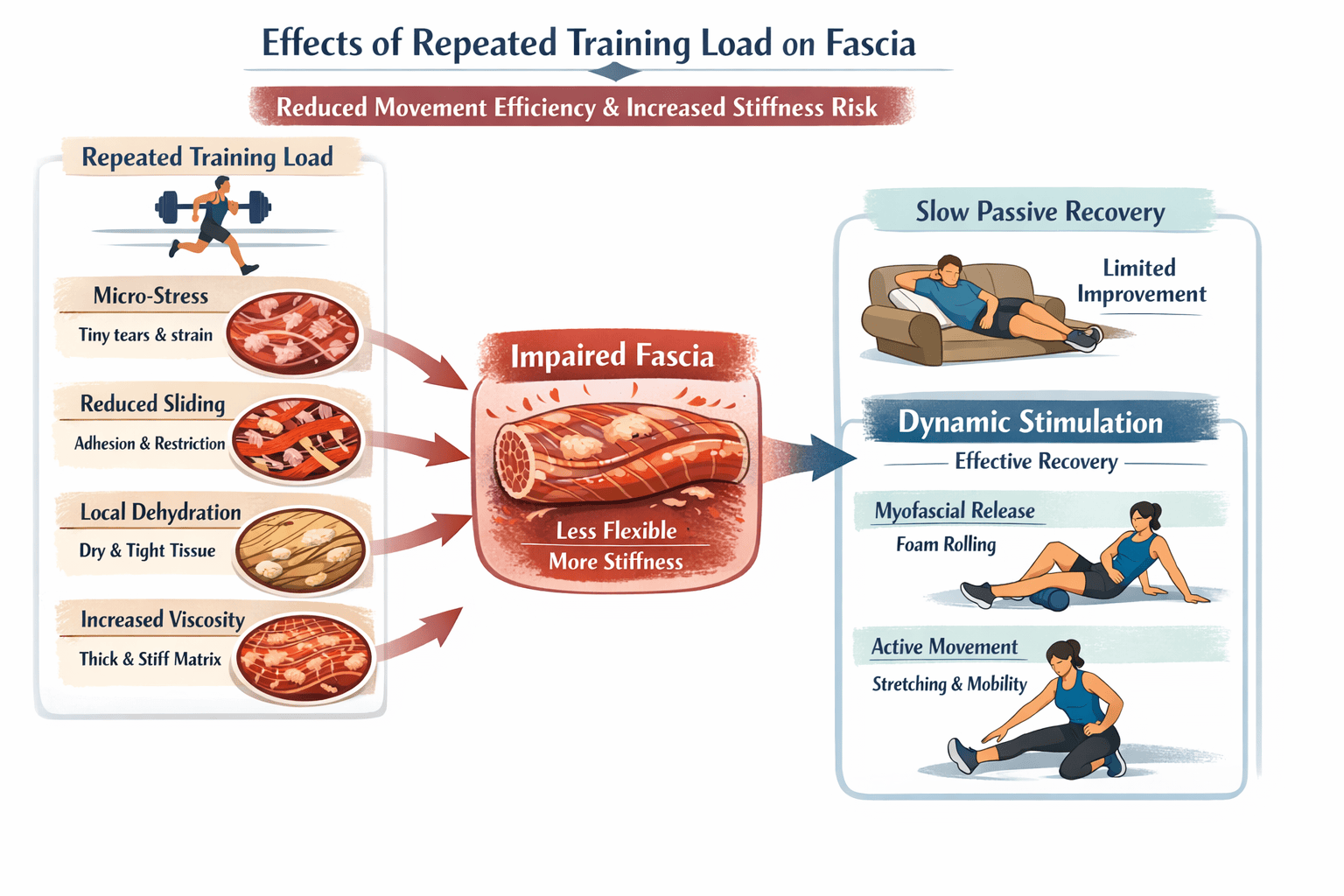
Fascia is a connective tissue network that surrounds muscles, tendons, and joints. Under repeated training load, fascia experiences:
- Micro-stress accumulation
- Reduced sliding capacity
- Local dehydration
- Increased matrix viscosity
These changes reduce movement efficiency and increase stiffness risk. Unlike muscle fibers, fascia responds slowly to passive recovery and benefits more from dynamic mechanical stimulation.
Clinical background overview:
https://my.clevelandclinic.org/health/body/23179-fascia
What Is 3D Vibration Technology?
3D vibration is a multi-axis oscillation method that produces force in more than one direction at the same time.
Instead of only vertical impact, it combines:
- Vertical compression waves
- Horizontal shear motion
- Lateral micro-oscillation
This produces layered tissue deformation rather than surface-only stimulation.
Key principle: Directional complexity changes tissue response.
If you are evaluating device categories and technology types, see:
👉 How Buyers Should Evaluate Recovery Devices Today: A Practical Framework for Modern Procurement
Mechanism 1 — Multi-Directional Shear Reduces Fascial Adhesions
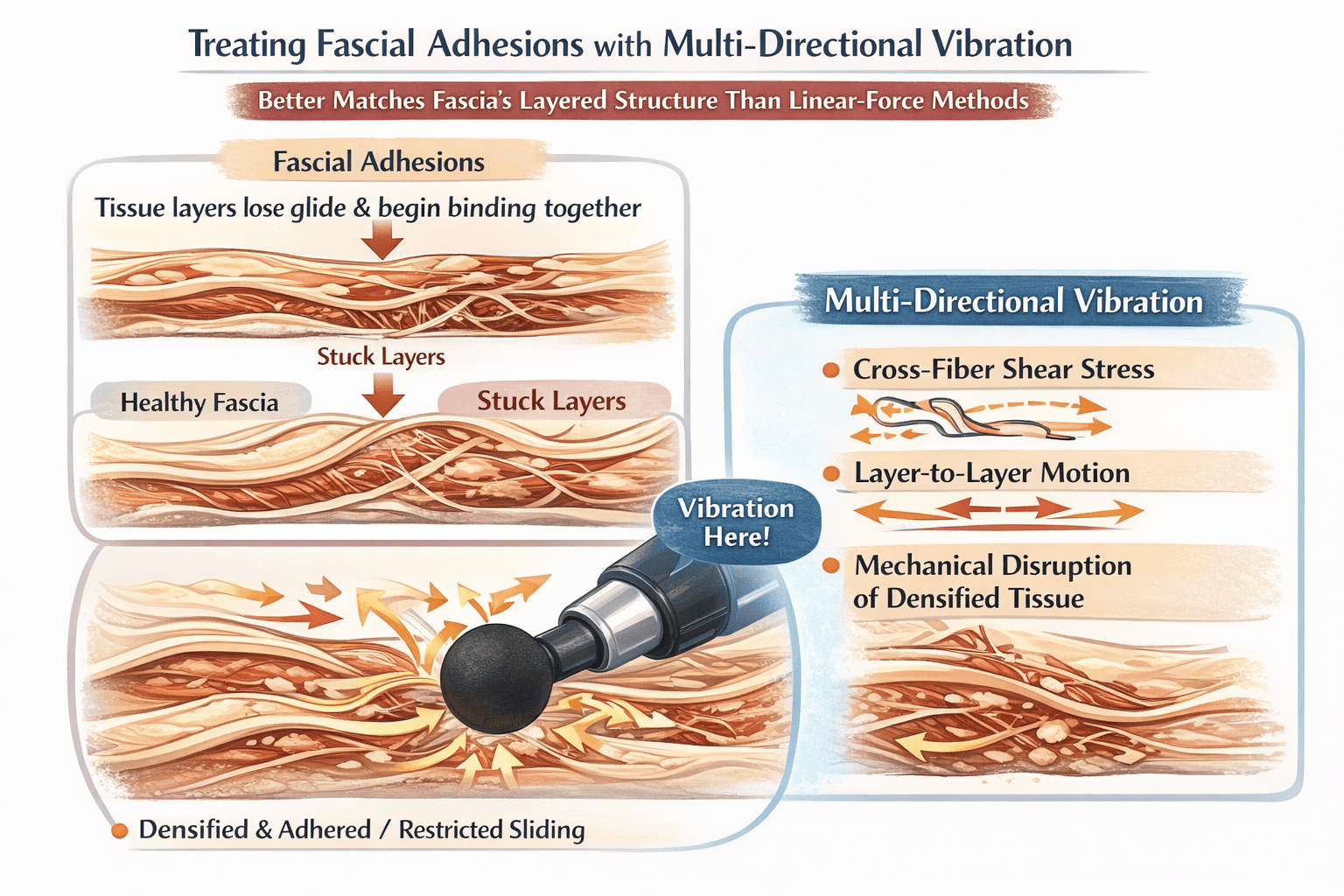
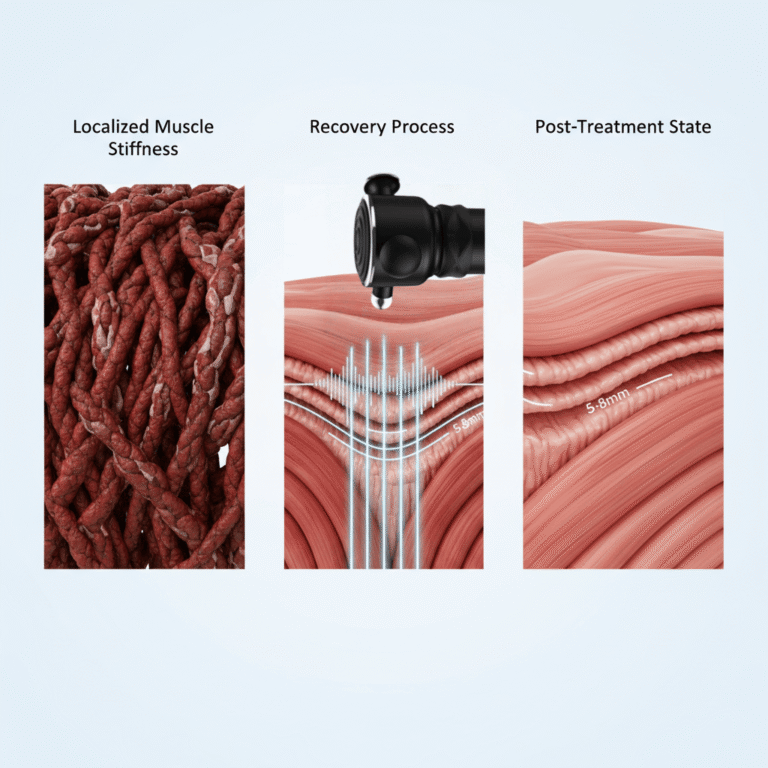
Fascial adhesions develop when tissue layers lose glide and begin binding together.
Multi-directional vibration introduces:
- Cross-fiber shear stress
- Layer-to-layer motion
- Mechanical disruption of densified tissue
This better matches fascia’s layered structure than linear-force methods.
Reference background:
https://www.physio-pedia.com/Myofascial_Tissue
Mechanism 2 — Vertical Oscillation Supports Tissue Hydration
Vertical oscillation produces rhythmic compression–decompression cycles that help:
- Improve interstitial fluid exchange
- Enhance fascia lubrication
- Reduce localized stiffness
Mechanical pumping improves connective tissue elasticity and sliding behavior.
Related comparison reading:
👉 Massage Gun vs High Frequency Vibration: Key Differences in Recovery Devices
Mechanism 3 — Vibration Enhances Micro-Circulation
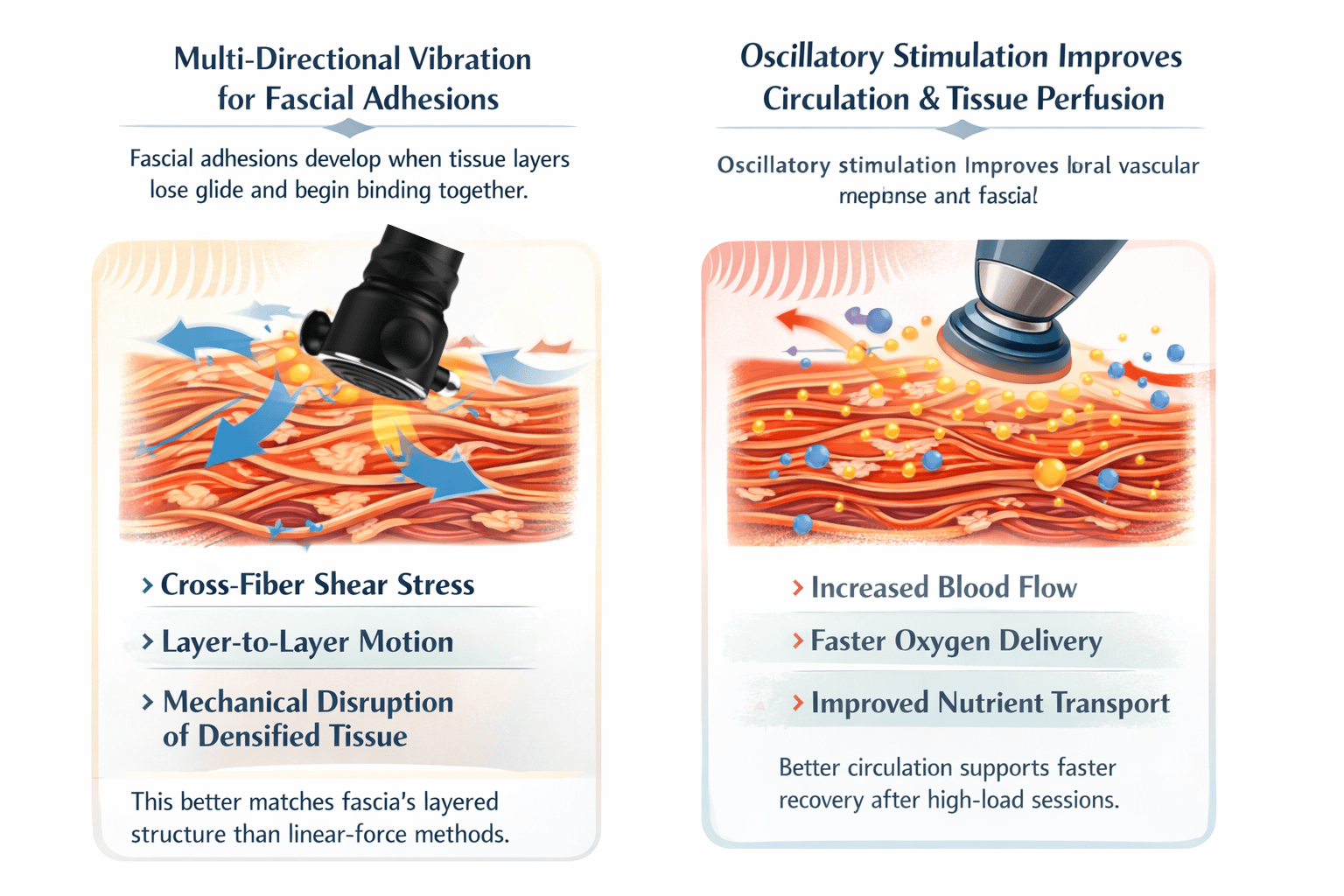
Oscillatory stimulation improves local vascular response and tissue perfusion.
Effects include:
- Increased blood flow
- Faster oxygen delivery
- Improved nutrient transport
Better circulation supports faster recovery after high-load sessions.
General health reference:
https://www.health.harvard.edu/staying-healthy/the-importance-of-stretching
Mechanism 4 — Lymphatic and Metabolic Support
Rhythmic tissue deformation supports lymphatic flow and metabolic clearance.
This contributes to:
- Reduced post-exercise congestion
- Faster metabolic waste removal
- Lower soreness perception
This mechanism is especially valuable in high-frequency training cycles.
Procurement-side recovery descriptions are discussed in:
👉 How Buyers Should Evaluate Recovery Devices Today: A Practical Framework for Modern Procurement
Mechanism 5 — Neuromuscular Down-Regulation
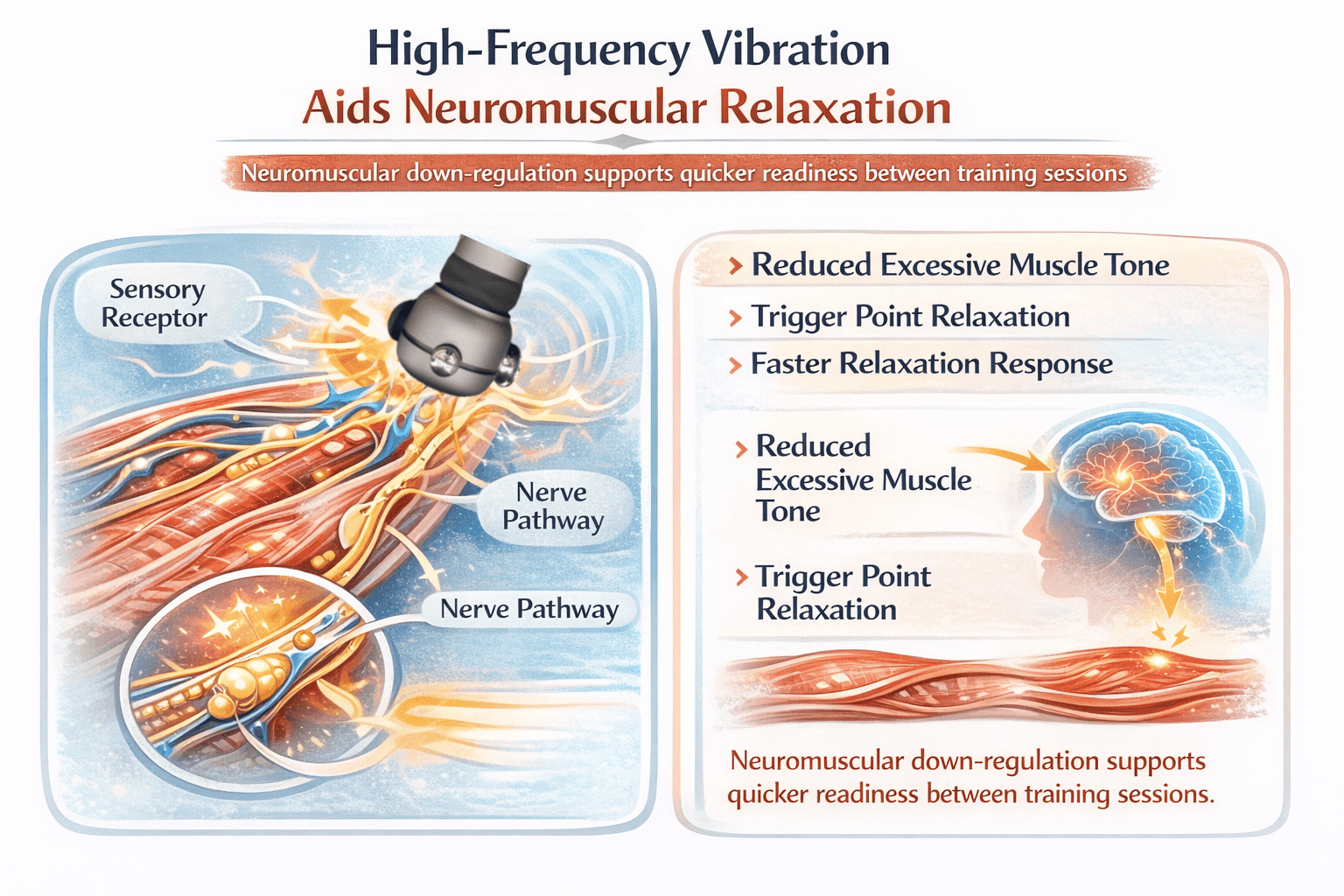
High-frequency vibration stimulates sensory receptors and neuromuscular pathways.
This contributes to:
- Reduced excessive muscle tone
- Trigger point relaxation
- Faster relaxation response
Neuromuscular down-regulation supports quicker readiness between training sessions.
Research portal:
https://www.frontiersin.org/
3D Vibration vs Traditional Recovery Methods
| Method | Direction | Primary Effect | Fascia Response |
|---|---|---|---|
| Percussion only | Vertical | Impact compression | Limited shear |
| Static stretching | Linear | Passive elongation | Slow adaptation |
| Foam rolling | Broad | Surface compression | Partial effect |
| 3D vibration | Multi-directional | Compression + shear | Cross-layer stimulation |
Detailed buyer-side comparison:
👉 How Buyers Should Evaluate Recovery Devices Today: A Practical Framework for Modern Procurement
Best Training Settings for 3D Vibration Fascia Recovery
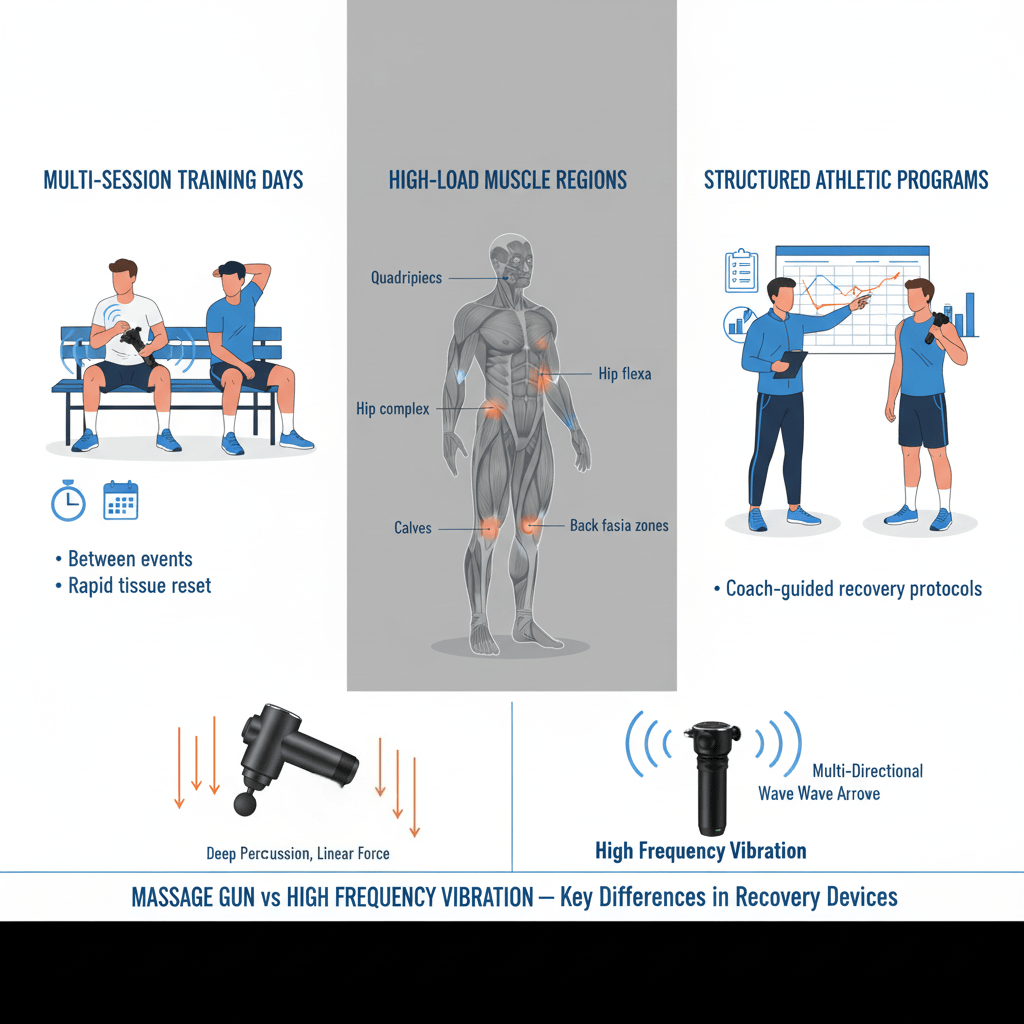
3D vibration is especially effective in:
Post-Training Recovery Blocks
- Immediately after load sessions
- Short targeted duration
Multi-Session Training Days
- Between events
- Rapid tissue reset
High-Load Muscle Regions
- Quadriceps
- Calves
- Hip complex
- Back fascia zones
Structured Athletic Programs
- Coach-guided recovery protocols
Device category selection considerations:
👉 Massage Gun vs High Frequency Vibration: Key Differences in Recovery Devices
Practical Use Protocol (Field Format)
Per muscle group:
30–90 seconds
Application order:
- Large muscle groups
- High-load zones
- Restriction points
Pressure level:
Moderate — directionality and frequency matter more than force.
Timing:
- After training
- Recovery days
- Before mobility work
Buyer evaluation framework:
👉 How Buyers Should Evaluate Recovery Devices Today: A Practical Framework for Modern Procurement
Safety Considerations
Avoid or modify use when:
- Acute injury is present
- Severe inflammation exists
- Joint instability exists
- Vibration sensitivity is present
Medical overview:
https://www.mayoclinic.org/
FAQ — 3D Vibration and Fascia Recovery
Does vibration therapy help fascia recovery?
Yes. Mechanical vibration supports fluid exchange, circulation, and tissue glide — all critical factors in fascia recovery.
Is multi-directional vibration better than percussion only?
Multi-directional vibration adds shear stimulation, which better matches fascia structure and produces broader tissue response.
How often should vibration be used after training?
Typically after training sessions and on recovery days using short targeted intervals.
Key Takeaways
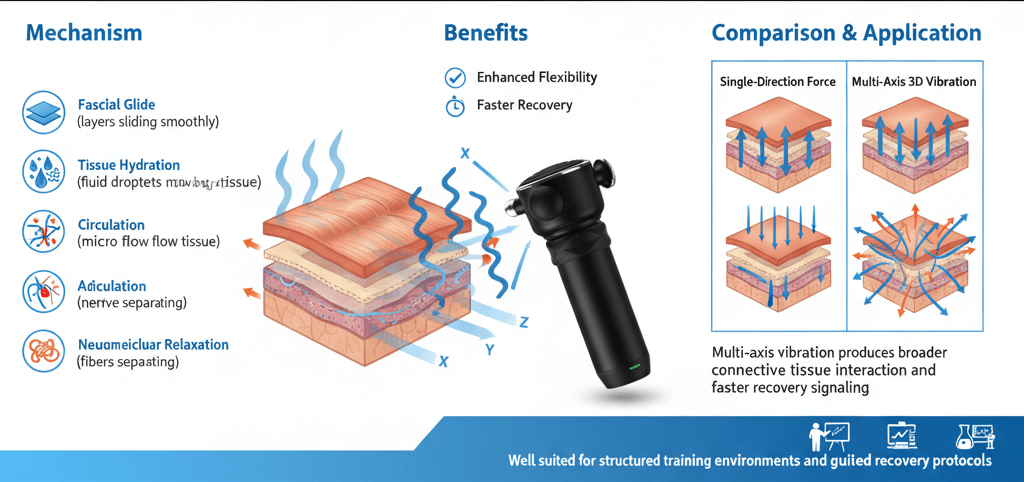
3D vibration improves fascia recovery by delivering multi-directional mechanical stimulation that supports:
- Fascial glide
- Tissue hydration
- Circulation
- Neuromuscular relaxation
- Adhesion reduction
Compared with single-direction methods, multi-axis vibration produces broader connective tissue interaction and faster recovery signaling — making it well suited for structured training environments.
For device selection and procurement criteria, review the two related guides linked above.