A Practical Comparison for Performance and Training Environments
Sports recovery devices have evolved rapidly over the past decade. Among the most widely used technologies today are percussion-based devices and high-frequency vibration devices.
Both are used in training and recovery environments, but they operate through different mechanical principles and produce different user experiences. Understanding these differences helps buyers, coaches, and equipment distributors choose tools that match specific usage scenarios.
This article explains how each technology works, where each performs well, and how the category is evolving.
What Is Percussion Technology?
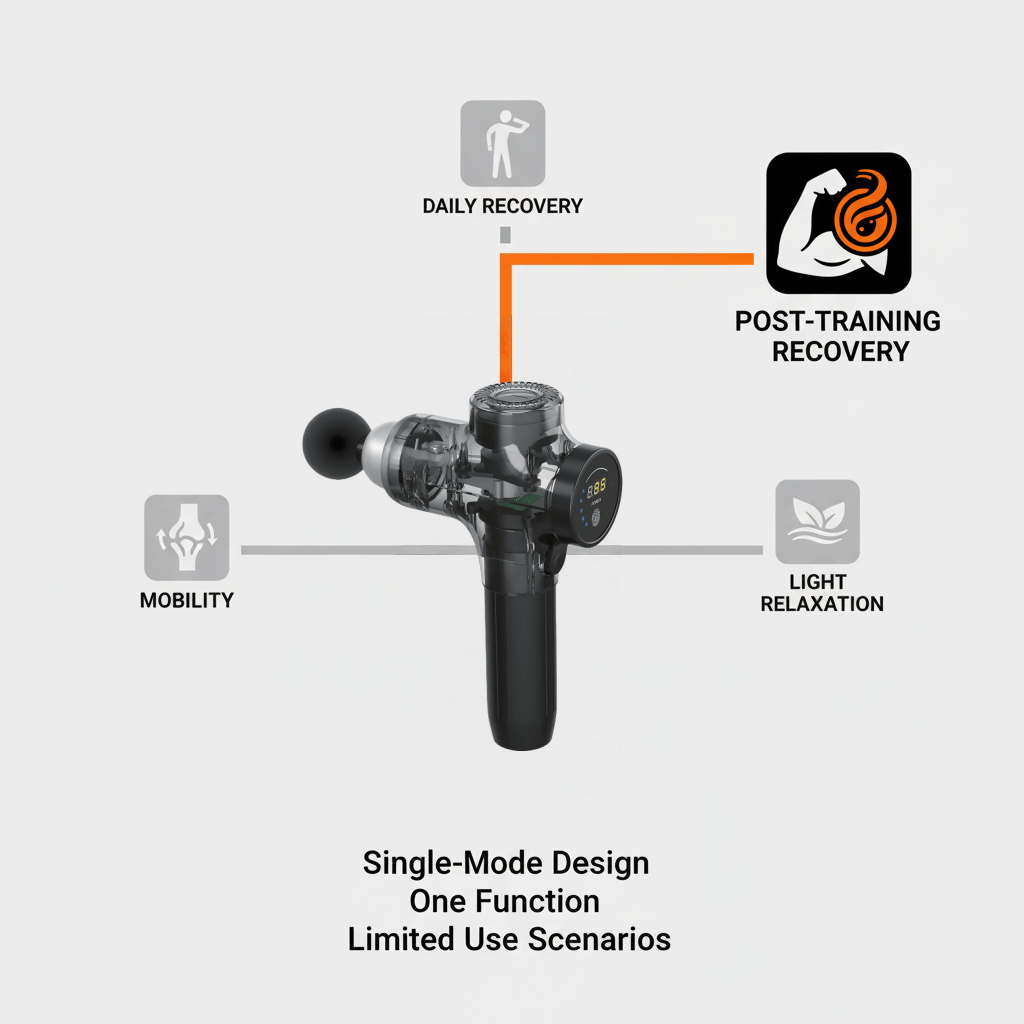
Percussion recovery devices use a repeated striking motion to deliver mechanical pulses into muscle tissue. The movement is typically driven by a motor that pushes the attachment head forward and backward with noticeable stroke depth. This mechanism is commonly associated with percussion-based devices found in muscle recovery tool portfolios.
Key Mechanical Features
- Larger stroke amplitude
- Repetitive forward impact motion
- Lower frequency compared with vibration tools
- Strong vertical force delivery
- Noticeable tapping or pounding sensation
Typical Usage Contexts
Percussion devices are often selected for:
- Large muscle groups after intense training
- Short-duration, high-intensity recovery sessions
- Situations where users prefer stronger mechanical feedback
- Facilities already familiar with percussion tools
According to general usage descriptions, percussion devices often use slower, high-amplitude strokes that work well for larger muscle coverage and broad engagement.
What Is High-Frequency Vibration Technology?
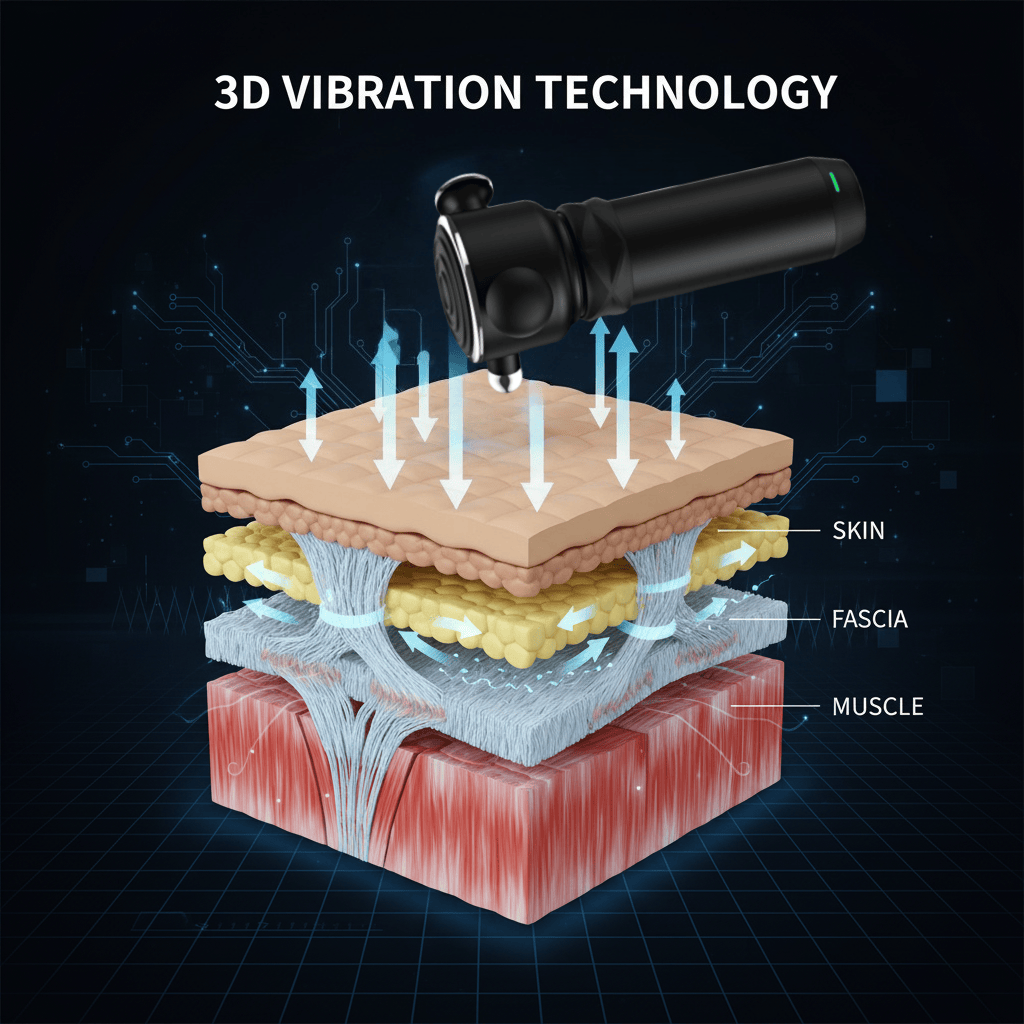
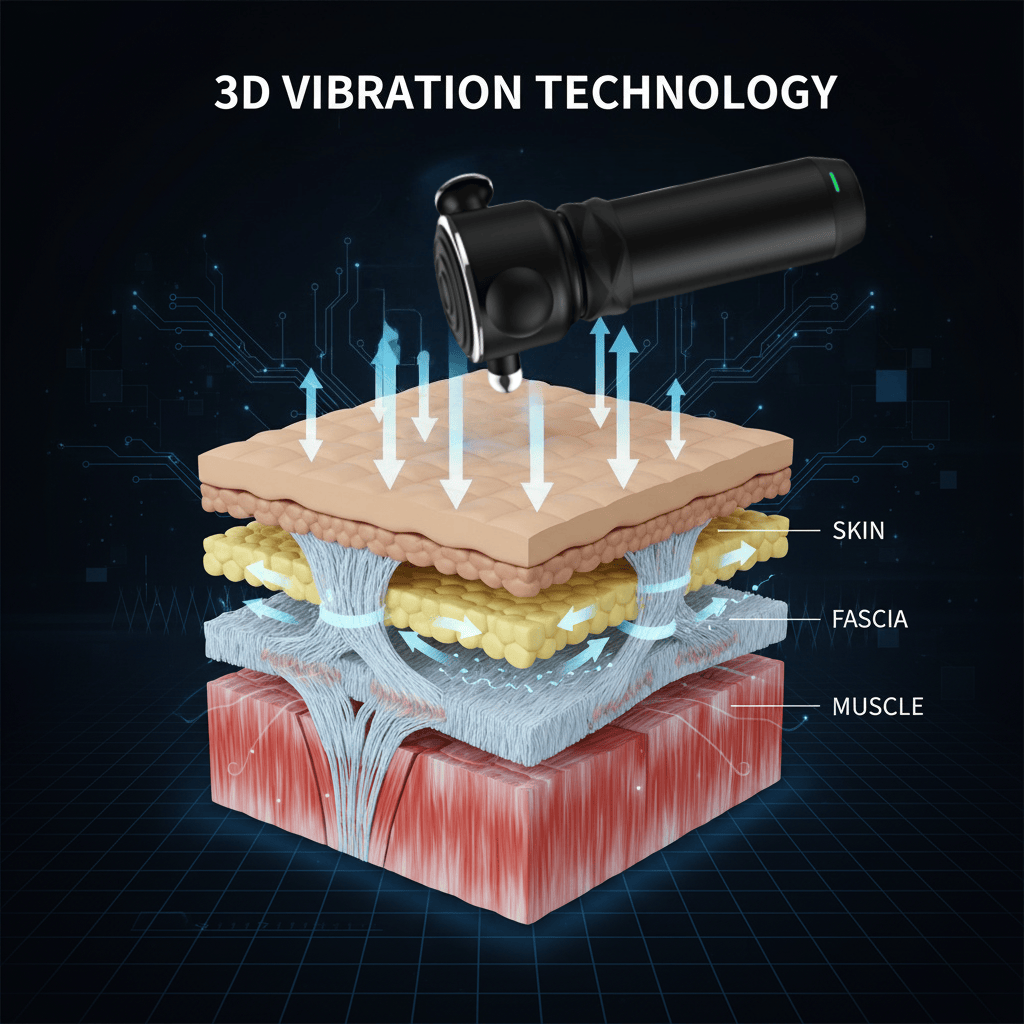
High-frequency vibration devices operate using small-amplitude, rapid oscillations rather than deep stroke impacts. The movement is typically faster and more controlled, with less visible displacement of the attachment head. This is the defining principle behind many high-frequency recovery tools in the product collection optimizing precision and comfort.
Key Mechanical Features
- Small stroke amplitude
- Very high oscillation speed
- Lower peak impact force
- More continuous contact feel
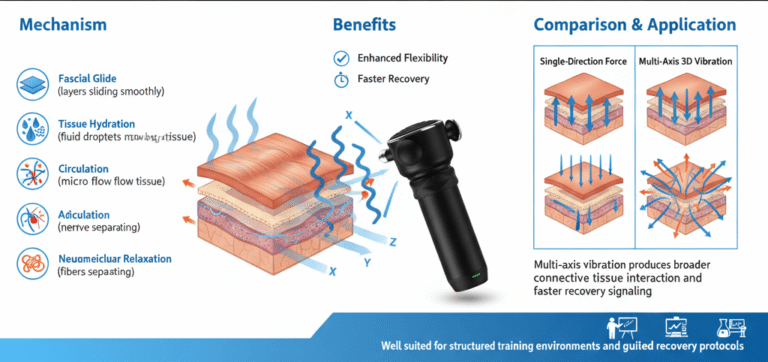
- Often includes multi-directional vibration patterns in newer designs
Typical Usage Contexts
High-frequency vibration devices are commonly used for:
- Warm-up stimulation
- Daily recovery routines
- Areas that require more controlled force
- Multi-user environments
- Situations where comfort and precision are priorities
This broad application scenario aligns with how high-frequency stimulation is described in various recovery equipment discussions. :contentReference[oaicite:1]{index=1}
Core Mechanical Difference: Stroke Depth vs Oscillation Speed
The most important distinction is not brand or appearance — it is how force is delivered.
Percussion Devices
- Deliver force through deeper stroke movement
- Each cycle produces a distinct impact
- Emphasis on penetration depth and strong tactile feedback
High-Frequency Devices
- Deliver force through rapid oscillation
- Each cycle produces smaller displacement
- Emphasis on stimulation density and control
Neither approach is universally better — they are optimized for different interaction styles, and many modern recovery systems offer adjustable options that incorporate both mechanisms.
Scenario-Based Comparison
| Scenario | Percussion Devices | High-Frequency Devices |
|---|---|---|
| Large muscle areas | Strong fit | Good fit |
| Quick post-training sessions | Strong fit | Good fit |
| Daily use routines | Moderate | Strong fit |
| Multi-user environments | Moderate | Strong fit |
| Precision areas | Moderate | Strong fit |
| User comfort priority | Moderate | Strong fit |
| Strong tactile feedback preference | Strong fit | Moderate |
User Experience Differences
From a user perspective, the difference is often described as:
- Percussion: stronger, deeper, more punch-like feedback
- High-frequency: faster, smoother, more surface-dense stimulation
Preference often depends on training style, tolerance level, and session goals rather than technology superiority. General overviews of these technologies emphasize their distinct interaction styles and applications. :contentReference[oaicite:2]{index=2}
Device Selection Factors for Buyers and Distributors
When evaluating recovery devices for product lines or facility use, decision makers often consider:
Mechanical Factors
- Stroke amplitude
- Frequency range
- Force control stability
- Attachment compatibility
Operational Factors
- Noise level
- Device weight
- Ease of handling
- Training required for correct use
Commercial Factors
- Product differentiation
- Target customer profile
- Repeat purchase potential
- Category growth trend
Refer to your internal product catalog for detailed specifications that align with these selection criteria.
Market Direction: Blended and Adjustable Technologies
A visible trend in newer recovery devices is the combination of:
- adjustable frequency
- controlled amplitude
- multi-mode operation
- interchangeable stimulation profiles
Instead of choosing only one mechanism, some next-generation designs allow broader operating ranges to support different training phases and user preferences.
This flexibility is increasingly valued in professional training and performance settings.
Practical Takeaway
Percussion and high-frequency vibration devices are built on different mechanical strategies. Each serves useful roles in sports recovery and performance routines.
Choosing between them should be based on:
- usage scenario
- user comfort preference
- operational environment
- product positioning goals
As recovery technology continues to evolve, buyers who understand mechanism-level differences — not just speed or power numbers — will make more effective equipment decisions.
FAQ
Are percussion and high-frequency devices interchangeable?
They overlap in purpose but differ in mechanical delivery and user experience. Many facilities use both depending on session goals.
Is higher speed always better?
Not necessarily. Effectiveness depends on how speed, amplitude, and control are combined.
Are newer devices combining both approaches?
Yes. Adjustable and multi-mode designs are becoming more common in newer product generations.