Force-heavy devices often create guarding instead of glide. When the signal is unstable, deep fascial mobilization becomes inconsistent, uncomfortable, and hard to standardize across users.
I find that myofascial mobilization1 is facilitated less by peak force and more by a stable 175Hz harmonic signal2, which supports smoother tissue interaction3, better control, and more repeatable fascial shear4 in professional recovery and wellness applications.
When I evaluate mechanotherapy design, I focus on signal integrity5, frequency stability6, and contact behavior. These factors matter more than raw impact in sports recovery devices and sourcing decisions.
The Science of Resonance: Why 175Hz Stable Frequency is the "Gold Standard" for Deep Fascial Thixotropy?
Many buyers still equate stronger impact with deeper release. That assumption often creates poor user tolerance, inconsistent output, and limited control near sensitive or narrow treatment areas.
I see 175Hz stable frequency as the practical benchmark because it improves harmonic consistency, supports impedance matching with soft tissue, and enables more effective fascial mobilization than unstable high-power percussion.
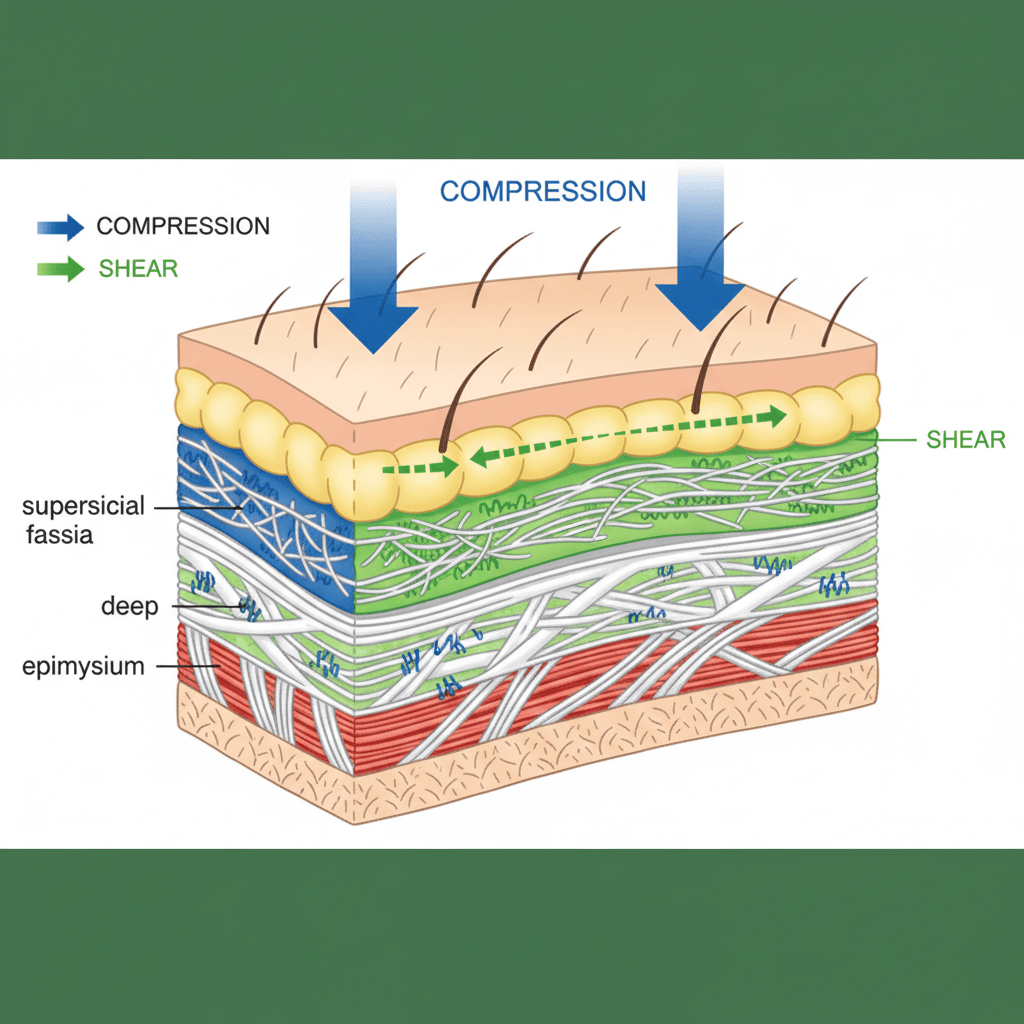
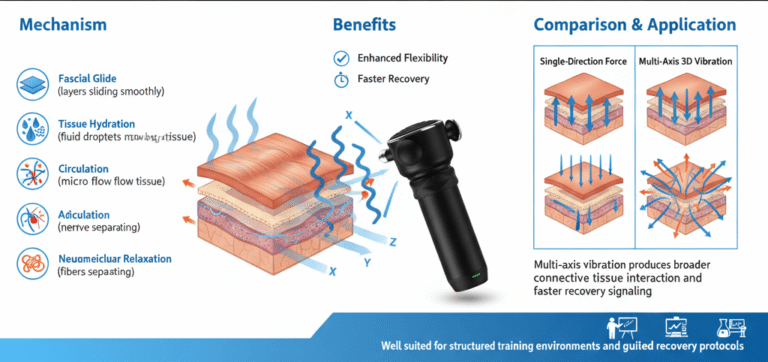
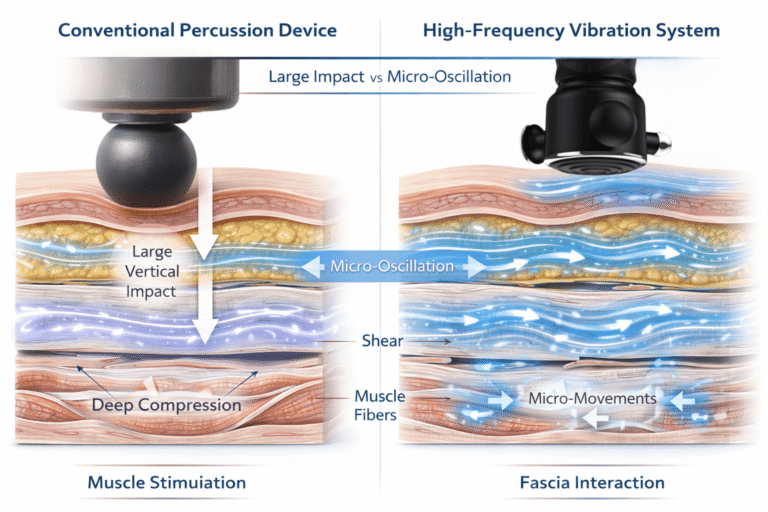
In product design terms, I do not treat deep fascial work as a simple power problem. I treat it as a signal transmission problem. Traditional low-frequency percussion systems rely on long-stroke impact. That can create strong displacement, but it can also trigger protective muscle tightening when the input is too abrupt. In real use, this reduces glide quality and makes fine control harder. By contrast, a stable 175Hz harmonic pattern changes how energy is delivered into tissue. The goal is not violent compression. The goal is a more continuous, more predictable oscillatory input7.
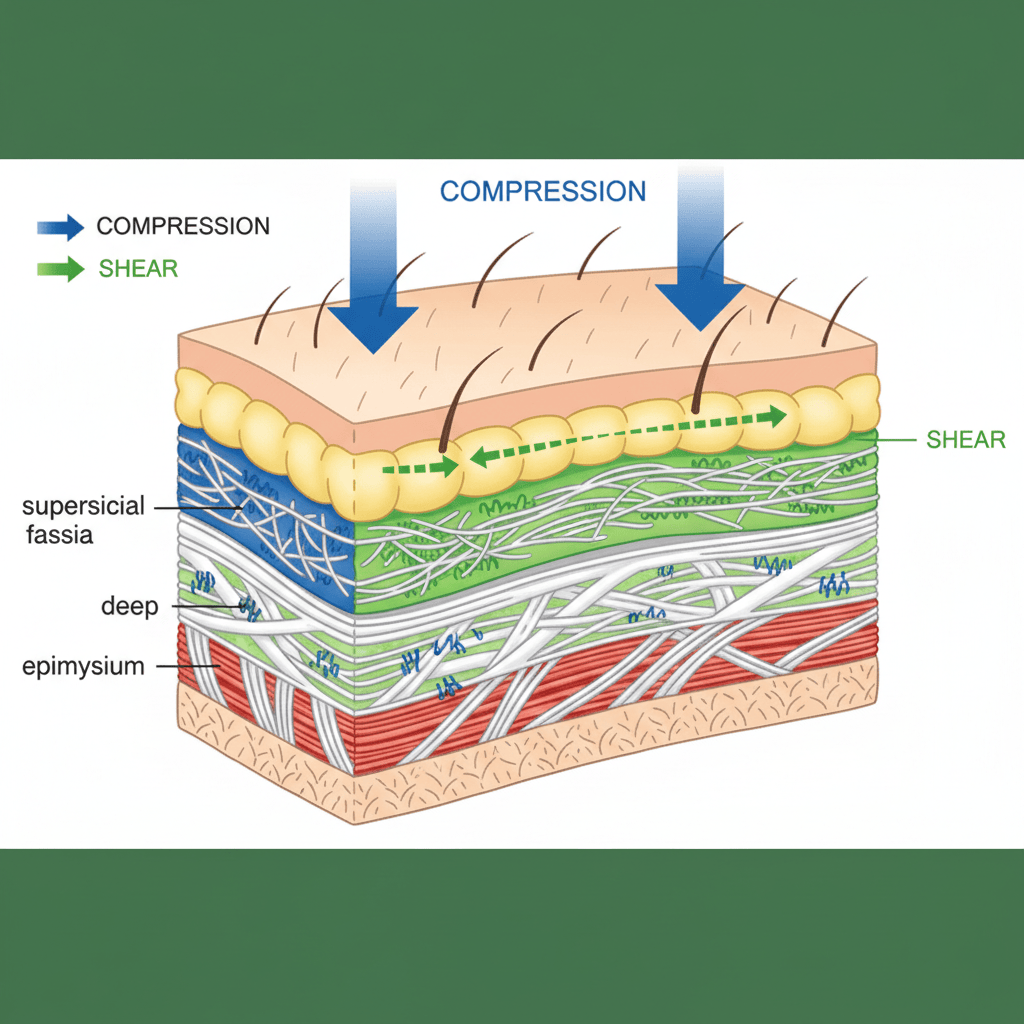
This matters because fascial layers depend on sliding behavior. When the contact signal is stable, localized friction and shear can be introduced with less bounce and less interruption. Buyers often describe this as a smoother feel, but the engineering issue is waveform integrity. If RPM fluctuates under load, the intended resonance effect is lost. The user then feels inconsistency, and the operator loses repeatability.
I usually frame sourcing decisions like this:
| Design factor | Stable 175Hz approach | Unstable high-force approach |
|---|---|---|
| Energy delivery | Harmonic and repeatable | Abrupt and variable |
| User tolerance | Higher in sensitive areas | Lower under strong impact |
| Tissue interaction | More controlled shear | More vertical shock |
| Operator consistency | Easier to standardize | Technique-dependent |
| Procurement value | Better for professional protocols | Better only for force-focused positioning |
For distributors and recovery teams, the practical keyword is not just "deep tissue vibration device". It is stable frequency output under load. That is what determines whether High-Frequency 3D Vibration Therapy remains effective when pressure changes, angles shift, or different heads are used. In my view, 175Hz becomes a gold standard not because it sounds premium, but because it balances tissue compatibility, controllability, and repeatable performance.
Mechanical Advantage: Maximizing Myofascial Mobilization through 16mm Amplitude and High-Frequency Synchronization?
Many products promise depth by increasing stroke alone. In practice, large amplitude without synchronization can reduce control, raise fatigue, and make results highly dependent on operator technique.
I find that 16mm amplitude8 works best when it is synchronized with high-frequency output9, because synchronized motion10 improves mechanical transfer11, broadens application range, and creates more usable myofascial mobilization1 across different tissue densities.
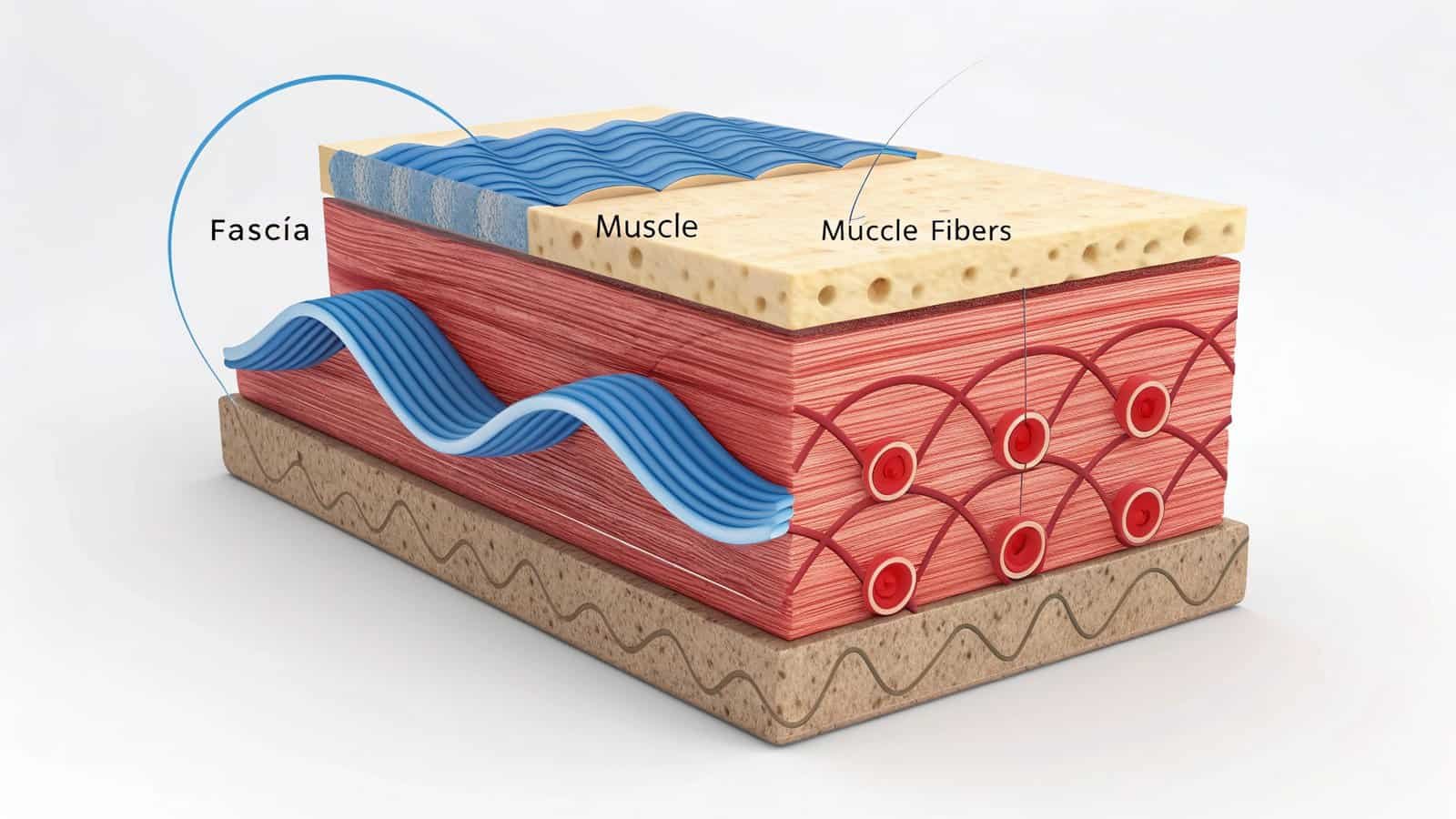
Amplitude is only one part of the mechanical system. A 16mm stroke can be useful for large muscle groups and thicker tissue regions, but by itself it does not guarantee better mobilization. The key is synchronization between amplitude, frequency, and head contact stability. If these elements are misaligned, the user gets bounce, inconsistent penetration, and excessive surface impact. In procurement terms, that means a product may look powerful on paper but underperform in real sessions.
This is where I see the value of a dual-mode architecture12. A long-stroke mode can serve broad, high-load areas. A high-frequency, low-amplitude mode can handle precise regions, joint-adjacent zones, and users who do not tolerate heavy percussion well. When both modes are designed around stable drive behavior, the device covers more use cases without forcing one mechanical profile onto every application.
For example, a 16mm amplitude8 system is mechanically advantageous when the operator needs more excursion and larger displacement. But the trade-off is always mass, recoil management, noise, and user fatigue. Higher stroke usually requires a stronger transmission structure and better machining tolerance. If the internal drive train is weak, amplitude becomes marketing rather than functional output. That is why I pay attention to CNC-machined transmission components, not just motor wattage.
I compare the two mechanical profiles this way:
| Mechanical profile | Typical advantage | Main constraint | Best fit |
|---|---|---|---|
| 16mm amplitude8, lower frequency | Larger displacement, broad tissue engagement | More recoil, less precision | Large muscle groups |
| 2.5-3.5mm amplitude, 175Hz class frequency | Smoother contact, higher precision | Less dramatic impact feel | Fine areas and controlled fascial work |
| Synchronized dual-mode system | Wider application range | Higher design complexity | Professional recovery teams |
In B2B evaluation, "myofascial mobilization1 device" should not be reduced to a single spec. I look for whether the high-frequency mode keeps a stable harmonic signal and whether the long-stroke mode remains mechanically efficient without excessive vibration loss13. High-Frequency 3D Vibration Therapy adds another layer here. A combined vertical and horizontal motion path can reduce the sense of pure impact and improve rubbing, pressing, and sliding behavior. That matters when buyers want one platform that works across gyms, wellness operators, and recovery teams without constant device switching.
B2B Procurement Benchmarks: Why Professional Recovery Teams Prioritize Frequency Stability over Peak Power?
Many sourcing decisions still start with watts and stall force. That usually creates spec-heavy comparisons but misses the operating consistency professionals need in daily, multi-user environments.
I prioritize frequency stability6 over peak power because professional buyers need repeatable output, lower failure risk, better user tolerance, and clearer product positioning across wellness, fitness, and recovery settings.
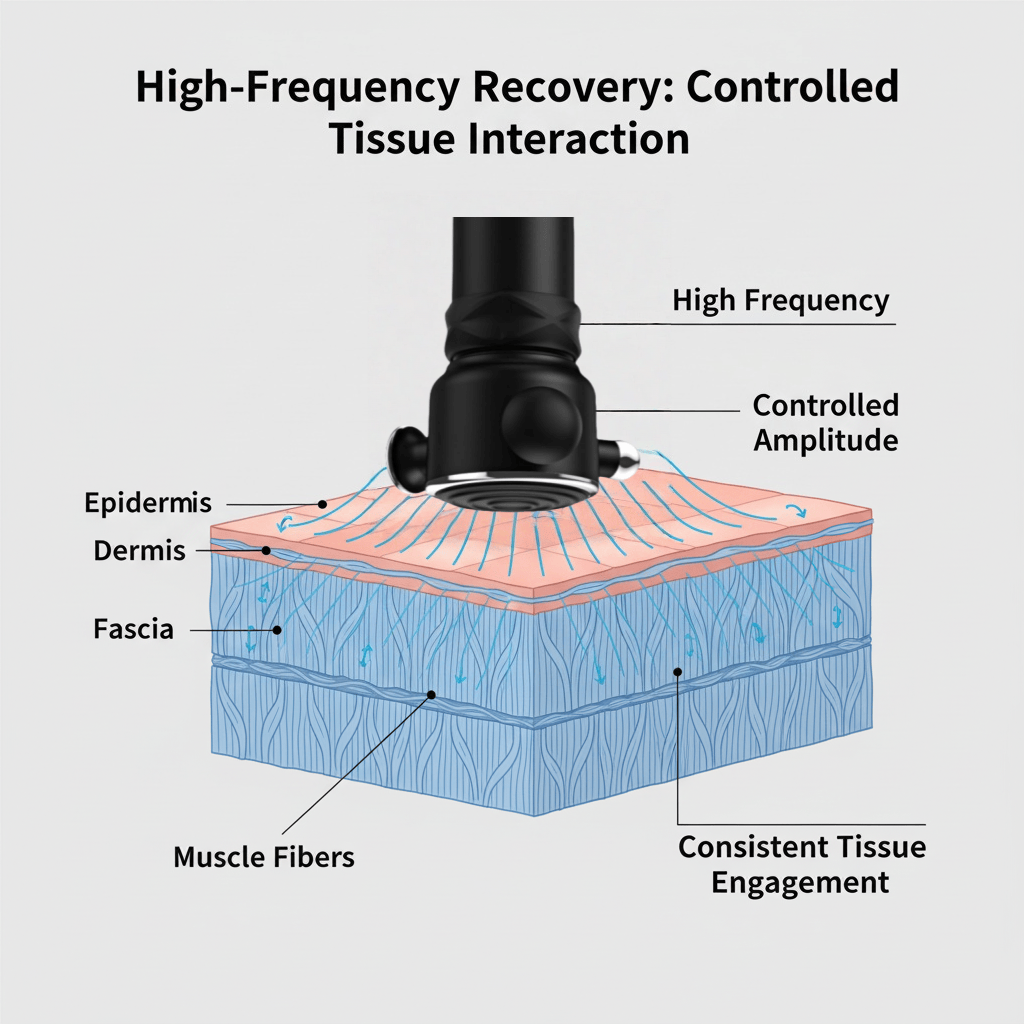
In B2B procurement14, peak power is easy to advertise but hard to interpret. A device can show high wattage and still perform poorly if frequency drops under pressure, if the housing transfers too much vibration into the hand, or if the transmission structure wears quickly. Professional recovery teams do not buy headline specs alone. They buy consistency across repeated sessions, multiple operators, and mixed user groups.
That is why frequency stability6 becomes a real benchmark. If the output stays close to target under changing load, the operator can use a predictable rhythm. This improves training consistency, reduces adaptation time, and lowers the chance that one session feels completely different from the next. For distributors, it also reduces return risk because customer expectations are closer to actual use.
I usually assess procurement benchmarks across five dimensions:
| Procurement benchmark | Why I use it | What it reveals |
|---|---|---|
| Frequency stability under load | Core performance metric | Real signal integrity5 |
| Transmission structure quality | Durability indicator | Service life and noise trend |
| Amplitude-to-weight balance | Usability metric | Operator fatigue and control |
| Pressure response logic | Safety and consistency | Whether output adapts predictably |
| Mode differentiation | Product line clarity | Whether it fits multiple channels |
A good example is a device family that offers lightweight high-frequency models for sensitive or precise areas, plus a dual-mode platform with both high-frequency and 16mm percussion capability. That lets procurement teams match the device to the use case instead of forcing a single profile into every workflow. For gyms and clubs, lighter models improve accessibility. For recovery operators, dual-mode tools increase flexibility. For OEM and ODM buyers, this kind of architecture supports clearer channel segmentation.
I also look at manufacturing signals. Weight range, battery capacity, charging standard, runtime, auto shutoff logic, and monthly production capacity all affect channel suitability. A sourcing manager may care less about "maximum hit" and more about whether the device remains quiet, durable, and stable across volume orders. This is where High-Frequency 3D Vibration Therapy stands out. Its value is not a dramatic sensation. Its value is better controllability, more refined application logic, and clearer differentiation from conventional percussion-only products. In my experience, that is why serious buyers often prioritize stable frequency over peak power.
Conclusion
I make this decision around signal integrity5, synchronized mechanics, and sourcing reliability. Stable 175Hz output usually tells me more than force claims when I evaluate professional recovery devices.
-
Explore the benefits of myofascial mobilization to understand its impact on recovery and wellness. ↩ ↩ ↩
-
Learn about the significance of a 175Hz harmonic signal in enhancing tissue interaction. ↩
-
Discover the key factors that enhance tissue interaction during therapy. ↩
-
Discover how fascial shear plays a crucial role in effective recovery techniques. ↩
-
Understand the importance of signal integrity in ensuring effective mechanotherapy outcomes. ↩ ↩ ↩
-
Explore how frequency stability enhances the performance of recovery devices. ↩ ↩ ↩
-
Learn about the benefits of oscillatory input for effective tissue mobilization. ↩
-
Learn why 16mm amplitude is crucial for effective tissue engagement in therapy. ↩ ↩ ↩
-
Discover the benefits of high-frequency output in therapeutic applications. ↩
-
Understand how synchronized motion improves the effectiveness of recovery devices. ↩
-
Explore the role of mechanical transfer in optimizing myofascial mobilization techniques. ↩
-
Explore the advantages of dual-mode architecture for versatile therapy applications. ↩
-
Learn about vibration loss and its implications for effective therapy. ↩
-
Learn about effective B2B procurement strategies for recovery devices. ↩