Professional recovery tools and consumer massage guns serve different needs. The engineering differences become apparent under sustained use.
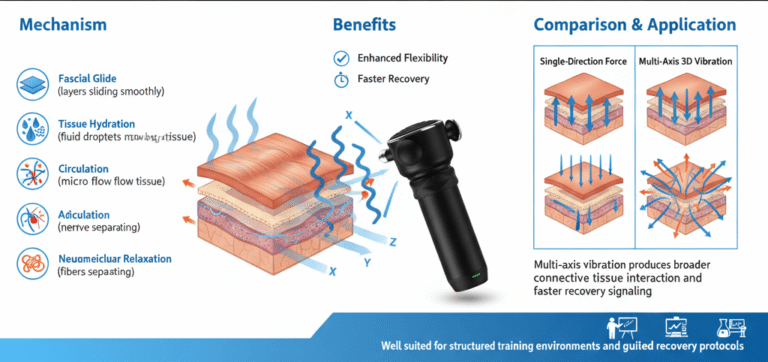
Professional-grade High-Frequency 3D Vibration Therapy1 devices are built for durability, precision, and clinical protocols, while consumer massage guns prioritize affordability and casual use. The gap manifests in noise levels, force consistency, and component lifespans.
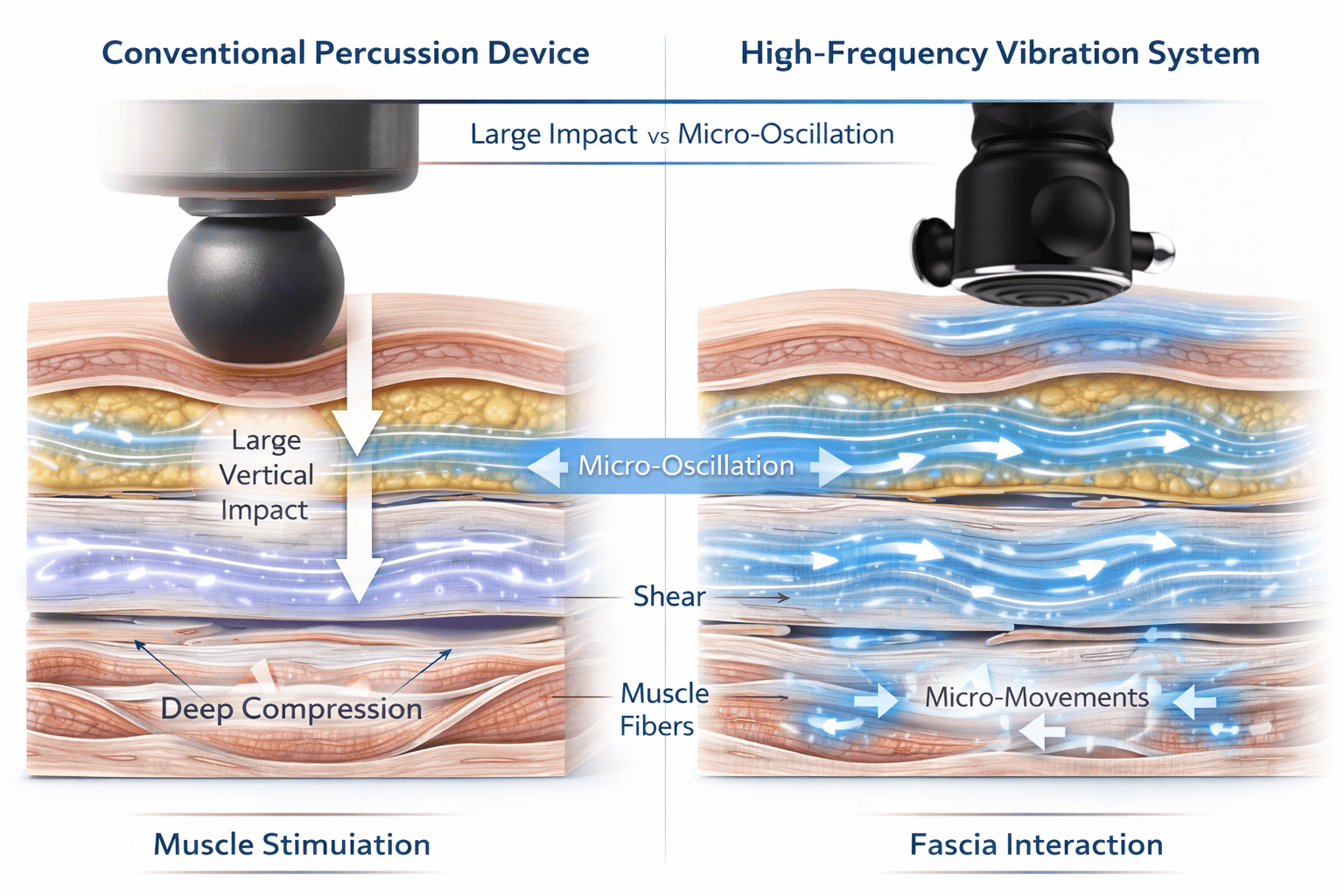
For facilities managing multiple users daily, the cost analysis extends beyond initial purchase price. Let’s examine the critical engineering distinctions.
Engineering for Endurance: Why 55dB2 and Stall Force Matter in High-Traffic Professional Settings?
Noise and torque reveal build quality. Professional environments demand consistent performance.
The 55dB2 threshold indicates superior gear meshing and bearing tolerances in High-Frequency 3D Vibration Therapy1 devices, while consumer models often exceed 65dB under load. This 10dB difference represents 10x perceived noise reduction in clinical environments.
| Specification | Professional Grade | Consumer Grade |
|---|---|---|
| Noise at max load | ≤55dB2 | 65-75dB |
| Stall force | ≥25kg | 10-15kg |
| Continuous duty cycle | 60+ minutes | 15-20 minutes |
| Bearing lifespan | 800+ hours | 200-300 hours |
The decibel metric isn’t just about comfort – it’s a proxy for mechanical precision. Lower noise indicates tighter tolerances in the motor’s planetary gear system and CNC-machined aluminum housing. Professional devices maintain torque output even when pressed firmly against dense muscle tissue, while consumer models stall or overheat. This stall force3 difference (25kg vs. 10-15kg) determines whether a device can effectively address professional athletes’ recovery needs or merely provide superficial relaxation.
The Hidden Cost of Consumer Models: Durability and Battery Life Cycles for Commercial Fleets
Purchase price becomes irrelevant when devices fail prematurely. Commercial operations need predictable cost structures.
Consumer massage guns average 300 charge cycles before significant battery degradation, while professional High-Frequency 3D Vibration Therapy1 devices use industrial-grade cells rated for 800+ cycles. The battery isn’t the only point of failure – switch mechanisms and motor brushes wear faster in cheaper models.
Three durability factors4 impact total cost of ownership:
- Battery chemistry: Professional tools use lithium-ion packs with thermal management systems, while consumer models often omit protective circuitry
- Connector quality: Commercial devices employ gold-plated contacts for the 10,000+ insertions required in multi-user environments
- Impact resistance: Aluminum housings on pro devices withstand 1.5m drops versus plastic consumer counterparts that crack under 0.5m falls
For a facility with 20 daily users, consumer-grade devices may require replacement every 4-6 months, while professional tools typically last 2-3 years under similar conditions.
Precision Over Power: Matching Specific Ergonomics and Amplitude for Professional Recovery Protocols
Effective recovery requires more than brute force. Clinical applications demand controlled parameters.
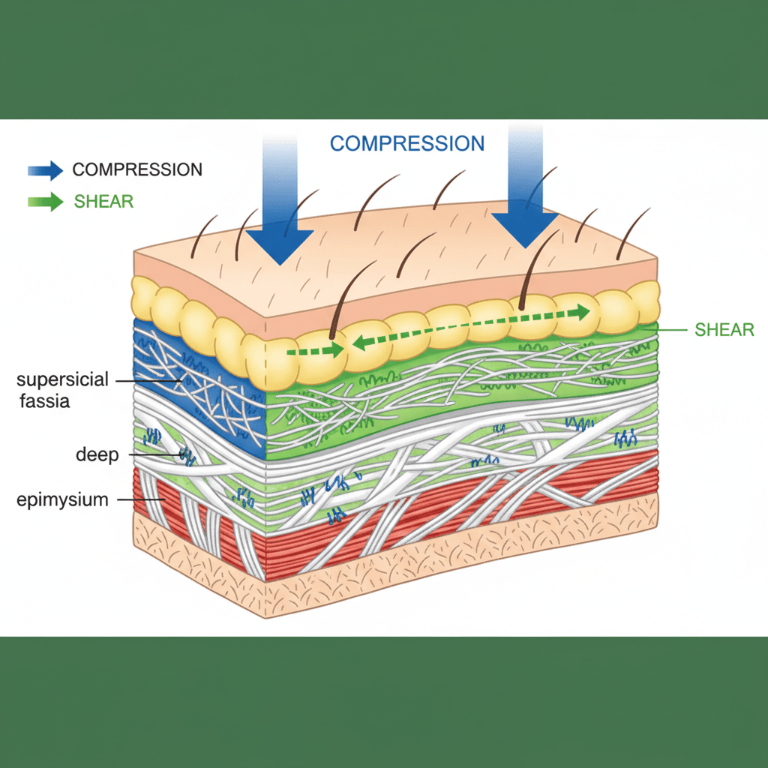
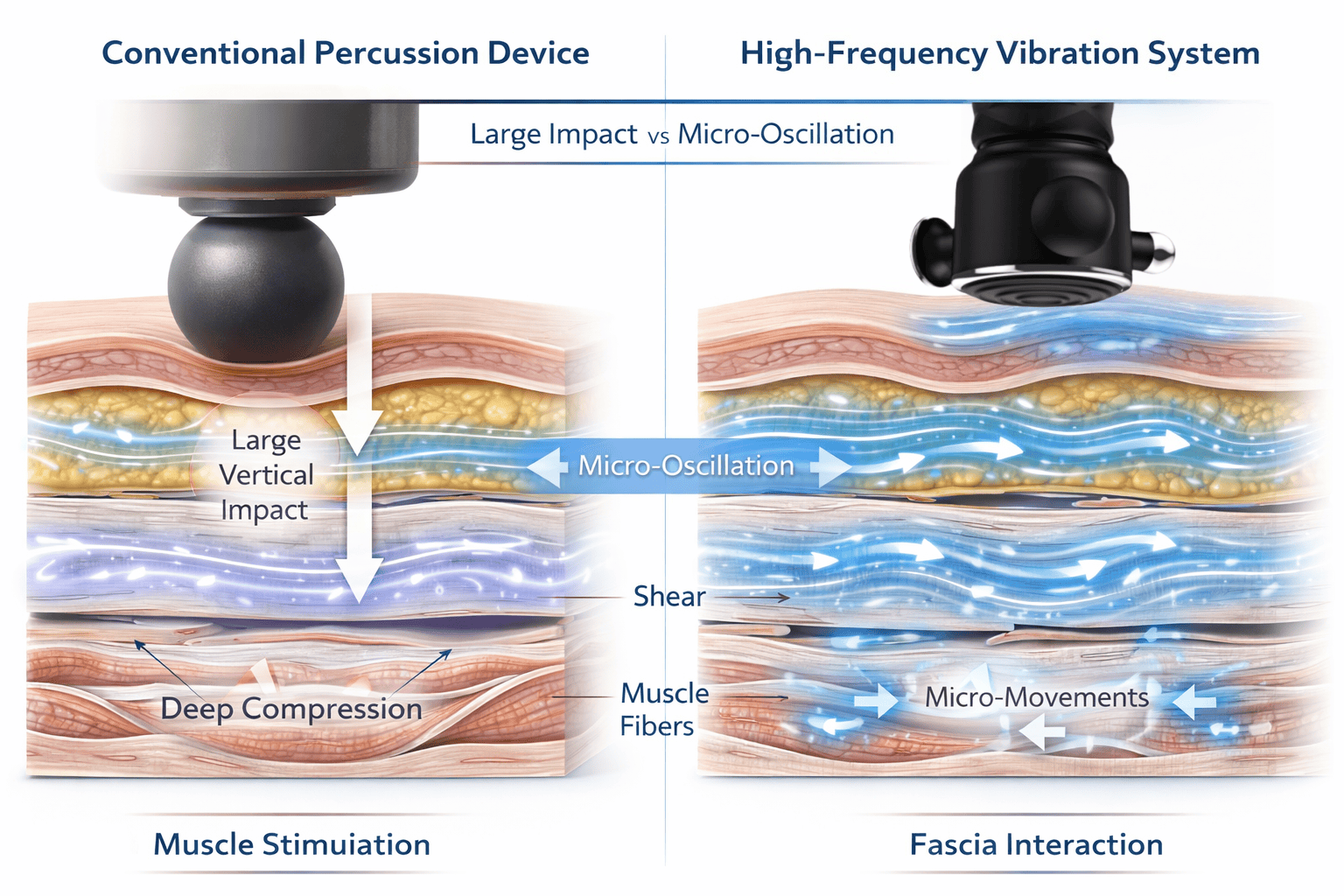
High-Frequency 3D Vibration Therapy1 devices offer 0.5mm amplitude increments from 2-3.5mm, while consumer massage guns provide fixed 10-16mm strokes unsuitable for precise work. This precision enables therapists to target specific tissue layers without overstimulating neural structures.
Key ergonomic differences include:
- Grip angles: Professional tools feature 15° offset handles for wrist-neutral operation during prolonged use
- Button placement: Tactile controls remain accessible when holding the device at multiple angles
- Weight distribution: Pro models balance mass closer to the grip to reduce therapist fatigue
The amplitude control proves particularly crucial for:
- Cervical spine applications (requires ≤3mm amplitude)
- Post-surgical recovery (controlled low-intensity stimulation)
- Elderly patients (reduced risk of tissue trauma)
Conclusion
Professional recovery tools justify their higher initial cost through extended service life, clinical precision5, and reduced maintenance. For commercial operations, the total cost calculation must include replacement frequency and treatment efficacy.
-
Explore the advantages of this advanced therapy for enhanced recovery and performance. ↩ ↩ ↩ ↩
-
Learn how noise levels impact the effectiveness and comfort of recovery devices. ↩ ↩ ↩
-
Understand the significance of stall force in ensuring effective muscle recovery. ↩
-
Explore the essential durability aspects that ensure long-lasting performance. ↩
-
Understand the role of precision in achieving effective recovery outcomes. ↩